Ep 133: Daniella - Homebirth, partner support, the love she felt meeting her baby.
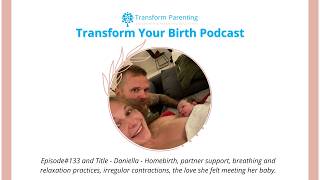
In this episode, host Tracey Anderson Askew interviews first‑time mother Daniela about her recent home birth in Canberra. Daniela shares how a lifelong desire for a home birth, sparked by her mother’s hospital experience and a Hungarian midwife’s story, led her to join the public hospital’s home‑birth program. She entered labor with optimism, believing her body was designed for birth, and prepared using Tracey’s course, breathwork, and audio recordings. Her partner Bryce acted as a doula, learning to advocate for her, using a TENS machine, and supporting her through variable contractions that shifted dramatically between shower, pool, and bed. When contractions became irregular, Daniela hesitated but eventually called midwives; they arrived while she was pushing, and the baby was born in the caul, allowing immediate skin‑to‑skin contact. Daniela reflects on trusting her body, the power of mental training, and the importance of partner support. The conversation concludes with advice for families considering home birth: realistic expectations, mental preparation, flexibility, and embracing physiological birth while being open to help if needed.
Chapters
Well, welcome back everyone. I have another wonderful story for you today from beautiful Daniela who had little Torvi about 5 weeks ago, so she's nice and fresh out of the birthing space and she had a home birth. So welcome Daniela, how are you darling?
I'm doing very well, thank you.
Yeah, she's got little Torvi on her lap, he's very quiet at the moment, so she makes noises, you know what that's all about. Um, Daniela, you chose to have a home birth, and you managed to get into the public hospital's home birth program here in Canberra. So tell us about that decision as a first-time mother and what was behind it.
Um, interestingly, I've always wanted a home birth ever since I was a teenager, which I know sounds really odd. Yeah. Um, but every time my mum told me her story with me being her first child. I recognized even as a kid that she probably would have had slightly better outcomes if she didn't go into the hospital or if she didn't get the epidural, right? But regardless of all of that, she still had quite a positive experience. So I just had that over the years from a young age in the back of my mind that, you know, this would have turned out different if she didn't have the intervention or help or if she didn't go into the hospital. Possibly. And so that's where the desire came from to just—
wow, how did you know that?
Like, I don't know, maybe, maybe something around the wording of it, or, um, even just, uh, at, at that time when I was a teenager, there was a, um, home birth with midwife. Hungary, where I'm from, who gained a lot of attraction and got put into jail, unfortunately, a couple times. Um, just, um, the government was really against it. Yeah. And I thought, that's not right, everyone should be allowed to birth the way they want to birth. Um, so yeah, maybe just those experiences together.
Yeah, interesting. Yeah, to wake you up to, to possibilities even when you were very young. That's quite amazing. When I had my first son, I didn't even know home birth was a thing. I didn't even know, like, I just thought everybody had their babies in hospitals, and I ended up choosing home births as well. So, um, it's really interesting how we come to those conclusions. So how were you feeling then about the idea of giving birth, and what sort of preparation did you do?
I felt very optimistic, very positive about giving birth. I said to myself during pregnancy a lot that I feel so lucky that I get to give birth to this girl. Um, so that was my mindset the whole time. Even when people asked me towards the end of pregnancy, like, oh, are you scared of giving birth? I'm like, hell no. This is the one thing I was biologically designed to do. My body is meant to be doing this. I'm not scared. Whatever happens, happens. Yeah. Um, but yeah, I know that my body will do it.
I think you're a bit of a unicorn, not having your head full of rubbish about birth from what we see on movies and, you know, how we start to think about birth. And from a very young age, often, you know, we're, we're picking up signals about safety and where to, you know, what's the best way of doing life. And, um, often when I work with women, they've got their heads full of all sorts of different ideas that they've picked up along the way. So the fact that you felt really, really confident in your body and your ability to give birth is, is really quite rare, I think, to come to it that way. Yeah.
Yeah. Well, I always thought that, you know, everyone goes through hardship in their lives and, um, there are things that we intentionally choose to do, hard things intentionally choose to do, and I've done a couple of those things, right? Um, and I thought I chose those things myself, chose the hard path, but this is really something that was just— it's how it's meant to be. People have been doing— women have been doing it for millions of years. Like, it's just it's what it's meant to happen. Yeah, I put myself through those hard things. This will be okay.
What a, what a powerful reference point you gave yourself. I've seen that with like women athletes or people who've done, you know, big hard things where they often use that as a reference point. And that can be part of the issue we have as you know, living in a lot of, you know, in an advantaged sort of living situation where we often live very comfortably and we don't really know what we're made of. So birth is certainly one of those things, and it can be the very first time for some women where they learn that they are so much more than what they think. And that's the design of birth. But it sounds like you came to the birthing room, your birthing room, with some good little things in you. In your toolbox to remind you that, yeah, you, you're pretty hardy. That's awesome. So what sort of prep did you do then?
Well, my husband and I did your course, which was amazing. Um, it was, I think, the most important part of learning in that for me was to be okay with whatever outcome I get, because obviously I was very, um, Even though I was very optimistic about the whole experience, I still just really strongly wanted this home birth to go, to go to plan and not have any interventions or the cascade of interventions, which I was a bit scared of, that things would go down that way. Um, so just becoming okay with whatever ended up happening was the big, biggest learning for me. Yeah, and for my husband, I think all the tools, um, that you talked about and showed us, and then, um, also just, um, the physiologic, uh, the physiology of birth and, and teaching, um, teaching us about that, I think that was really helpful for him. So he became the best support person, and, um, he pretty much led my whole birth. Um, I'll get to the end of it, but we barely had any assistance, only towards—
he had a bigger— he had a bigger role than what he expected by the sounds of it.
Yeah, pretty much. Yeah, he was my doula, almost my midwife. He almost caught the baby. Like, he was there, he was everything. Yeah, the water boy.
Yeah, it's one of the biggest feedback that I get from people who go through my program is, you know, well, two big things seem to come back time and time again. My partner was amazing and the breathing is amazing. They are two very, very big needle movers, and partners need to realize what it is that they can contribute to the situation, because if they don't get supported to learn that, they end up, you know, can be very easy to feel overwhelmed, useless, on the sidelines, freaking out, all those things which can change your labor dramatically. Any stress in the room can influence the laboring woman. So having you both on the same page with a very clear role is very, very powerful thing to aim for. Yeah, well done you. So tell us how it unfolded. Actually, before we go further too, I want to make a point with home birth. For those of you who are listening to this and are considering a home birth, um, Daniela was very realistic about— as much as she wanted to, everything to move towards her being able to birth her baby at home, she was also very realistic knowing that sometimes women need help. And that's an important thing for women who choose home birth to get their minds around, that It's okay to need help, and sometimes we need to transfer women from home into hospital. I often think, you know, if you're very anti-hospital or anti-intervention or anti-anything, you actually fuel it. So the goal is to be, to be very clear on what you want to create, use your mind to move towards what it is that you wish for this, to train your mind to get on board and unload the, the fears that can sort of get in the way, and then to know what to do if things deviate off the normal path and you do need to go to hospital. Once you've, once you've addressed those fears and you've given a bit of an antidote to those fears, they're less likely to play out in your birth. So the ability for home birth women to be okay should they end up needing help is an important part of letting go to be ready for where this birth takes you in the mystery. And I do believe that when, when you kind of address it, not deny it, not be anti it, um, you're less likely to attract it. That's my theory anyway.
Well said. I do feel that way too.
Yeah. Yeah. It's, it's important to be realistic that sometimes we need help. But to still go for the goal of birthing with as little fuss as possible. Yeah, letting it happen undisturbed. Beautiful. So how did it unfold for you, Daniela?
Um, I went into labor, um, at 40+3, about 5 AM on Saturday morning. Well, that's when I started— I woke up with some contractions, which I just thought they were Braxton Hicks. And I just, um, got my husband to make up a heat pack and bring it up to me, and I've kind of went back to sleep with the heat pack. Um, I kept waking up for the Braxton Hicks and then fell back asleep. I don't know how, how frequent they were because I just slept through. And he, he actually went to the gym because he didn't realize that it was the start of contractions. Um, I didn't really realize either, to be honest.
Yeah.
And, um, I had brekkie and I'm like, oh, okay, well, these keep going, they're not really stopping how the Braxton Hicks are. So then we were, um, we went for a walk and, um Yeah, I kind of had to stop when a contraction came, just breathe through it and then keep walking. And then my husband looks at me and he's like, these are not really Braxton Hicks, are they?
Start to get suspicious. What's going on here? Did you know at that point?
Yeah, I had— I, I knew it, but I didn't want to, um, jinx it or just get too enthusiastic about them. Yeah, yeah.
Which, can I just come in there, is very, very wise and very difficult to do. Because if you think you're in early labor, the excitement can get the better of you. But the goal is to be as normal as you can for as long as you can. I love that you just went back to sleep and just allowed it to be what it was, because the biggest challenge we have is we don't know how long we're going to be in labor for. And so you need to pace yourself in that early labor. But he cottoned on that something was going on.
So what happened? Um, we came back home and it was still very manageable, and then a couple hours later they started to, you know, I really needed to stop and breathe. And then Bryce was like, all right, put it on the TENS machine. Um, so I did that, and honestly it was really cruisy with the TENS machine. I quite loved it. Of course, I don't know what it would have been like without it, but, um, I think they It did help a lot because for a long time I was just cruising through it. Yeah, yeah. And, oh, you're okay, you're okay.
TENS machines can be very, very helpful in labor. They— some women say they're amazing, other women say, 'I didn't do much.' Can be a bit hit and miss. You tend to have to commit to them nice and early. But what they do is they interfere with your pain pathways. And so when you get a contraction, you press a button and it sends an electrical current through a wire patched onto your back, or through some wires patched onto your back, and it can just alter the sensation a little bit. Is that how you experienced it?
Yeah, yeah, I think, um, I don't know, maybe I would say I felt them more meaningful, or I felt the contractions more— what's the right word— maybe more productive.
Oh, okay.
But it was easy to go through them.
So they were heating up at that point? You could feel they were intensifying?
Yeah, somewhat. Probably when it really got intense was, um, I had a contraction on the exercise ball and I felt her twist and turn and drop down.
Whoa.
And then I got up into the bathroom and I noticed I lost my mucus plug.
Yeah.
And that's when the following contraction got really intense. I just— yeah, that's when I, I kind of started to go, okay, this is now, this is now something.
Game on.
Yeah. Um, so then I started to use the shower at that point, um, and then not long after the pool. Um, the shower was really interesting for me because it made my contractions very short and fast and very, um, yeah, it was just rapid fire. It was like almost minute on, minute off. Um, and when I got out, straight away they settled down. When I got back into the pool um, they stretched out back to like 4 minutes, 7 minutes apart. Quite, um, quite a big difference. But then the contraction in the pool after that longer break was stronger, right? Yeah. So the—
so that can be influenced by the position of the baby and how they're pushing on the door. And so when we change positions, that can alter that pressure of the baby's head on the cervix because that's what signals the oxytocin production. And more, more, more pressure, more stronger the contractions, the more intense the contractions. So that's interesting. She must have had a little wriggle and presented a bit differently as you change position. Does that feel like what happened?
Um, it's quite possible. I actually had no idea.
Yeah, no, you wouldn't have.
Um, I just knew that that's not something I have heard of or what I was prepared for. I think both my husband and I were quite taken aback by that my contractions were so varied, um, in time. Like how far apart they were. Um, yeah, because what the midwives told us, um, their policy is don't call until you are 3 minutes apart, um, contractions last for a minute, and that has lasted for an hour, right? Then call.
Um, and that didn't play out for you, did it?
Did not work out at all.
Yeah, that's a very— that's very common advice, but it isn't true for every And sometimes with first-time mothers, we don't credit them that they can progress as fast as what they can. In my experience, the more relaxed a woman is, the more likely she is to progress quite— and can— it can be much more rapid than we can give it credit for. So how did it play out with those contractions? Like they were a bit all over the place? Is that what you're saying?
All over the place. And, um, At this point, it's like midnight, I think, and I'm still in the pool and, you know, starting to lose it. And I was really hesitant to start saying, "I can't do this anymore," because I knew, even though I wasn't quite aware of how far apart my contractions were, I knew that they weren't consistent. Yeah, I was really worried to say I can't do this anymore, being in transition, because I'm like, I can't be there yet. My contractions are not there yet, I can't be in transition yet. So I tried to like put it off and other things like, oh, who, who gives birth at home? This is stupid.
Oh, that's so transition behavior. What was I thinking? Who wants to birth at home? What were you thinking was a better option at that point, Daniela? Under a tree?
Or— oh, at the hospital with an epidural. That's what I was thinking. Um, and then finally I gave in and I said, yep, I, I can't do this anymore. Um, and that's when Bryce called the midwives, like, I think she's in transition. Um, this is what she's saying. And they said to him, yeah, well, the contractions are not there yet, so call us back when they—
oh no.
Yeah.
Oh, did they listen to you at all, or listen to you through a contraction?
No.
Oh, well, I hope they learned a valuable lesson, because as a doula, I, I was with a woman whose contractions never got closer than 5 minutes apart, and even 10 minutes, and was pushing at home. So it's not a perfect science, this, you know, when they're this far apart. I mean, it can be relevant for a lot of women. I'm not saying it's completely irrelevant, but birth can be tricky like that, and it sounds like yours was. So gosh, what happened?
Like, um, I continued in the pool for a while, and then, um, because they were— they got so far apart, like 7 to 10 minutes. Even being in transition, um, that said, you know, I think we just need to get you out of the pool, um, because this is slowing you down. And I really didn't want to get out of the pool, um, but he made me. And obviously that was the right thing to do. He got me on the couch and, um, I laid down on my side on the couch and I fell asleep.
Oh, nice.
Sleep for 10 minutes. Yeah. And then a contraction woke me. I got on all fours, propped up on some pillows, and I was like, I need to push. Um, and it was game time.
Yeah. Poor Bryce, he must have crapped his pants after hearing that.
He called the midwives back.
I bet he did. Get your asses over here now, she's pushing.
She's pushing now. The contractions are still not there, but she's pushing. Um, yeah, and actually, surprisingly, I've never heard anyone else say this before, but, um, pushing felt really relieving.
Yeah, women say that.
Yeah, it was, um, I really enjoyed pushing. That was my favorite part. Yeah, you can say it's super intense, but it was relieving. Every push felt relieving. Um, and, um, the midwife— one of the midwives got there 40 minutes before, um, she came out. And when she arrived, she still probably didn't quite believe us that this is happening because she hasn't called the other midwife. Yeah, and then she got there, she saw that, oh no, she's actually really pushing. She quickly called the other midwife like, hey, you gotta come right now. Yeah. Um, so the other midwife arrived 20 minutes before she came out.
Nice.
Um, yeah, it was— I, um, I gave birth to her. The only thing, um, that didn't go to plan was because these midwives actually weren't our continuity midwives. They were, um, they were other midwives who were on, on call on that weekend, not out. Yeah, right. So they didn't quite know our birth plan and our— what, what, um, we really wanted. And originally our plan was for Bryce to to catch Bub, but that didn't happen. But it was, it was okay. It's not a massive deal breaker. Um, and she was born in her sac, so the water always broke. She arrived and they put— well, they just said, just move your leg over, over here, and gave me— they gave me Bub into my hands and, um, No one rubbed her, no one, um, you know, tried to start cleaning her, which was exactly what we wanted. Um, she gave a good cry and then she was on my chest.
Um, can you describe more about— was she— so she was born in the caul? Yeah. And did they then open the caul or did they give it to you?
Um, her head was born still with the sack around her, right? Tracey Anderson Askew said that she looked like a little alien. And then with the next push, when her body came out, that broke the water, right?
Wow. Yeah, very interesting. And what was that like when they placed her on you?
Oh, it was amazing. Um, I was in a different world. In, you know, in a different state. Yeah, it's, it's something else. There's all these things going around you, but you're not, not aware of anything else. Just tunnel vision looking at this baba. Um, and Brice said that it's the most beautiful thing he has ever seen because when I pulled her up Um, I just said, I love you, I love you. And obviously I was in, in a, in a state. And he said that it was the most beautiful, um, thing. And, and the meaning behind how I said that, like, he will never forget it.
Wow. Gosh, that's bringing tears to my eyes. That's amazing.
Wow.
And what was that like for Bryce?
Um, I think he was really relieved. Yeah, technically pulled the whole birth, um, alone. So he was— I didn't realize at the time, but after birth I realized how anxious he was and, um, how tired he was because it was an all-nighter. Obviously I was running on hormonal highs, but he wasn't.
Yeah.
Um, and, and he was tearing up. Um, so I think it was a big relief for him, but also probably the most beautiful experience.
Wow, my goodness. So what did you learn about yourself?
Um, to trust my body. To believe, um, that, you know, when I feel like I need to push, and even if it's not how textbook says it's meant to be, I need to push. That's what, that's what's happening now. And really just trust that, that my body knows what's going on. And yeah, I should just follow it.
Absolutely. There's a deep, deep intelligence in the woman's body, and Sometimes medicine forgets that, and they forget to listen to the mother. I've heard many stories similar to yours. A woman, um, that's come to mind who came into the hospital, and she was very calm, and they said, 'Oh no, you're too calm, you know, go home.' And she refused to go home, and then her labor stalled, and then she said Your words kept echoing in my head. When women feel safe, loved, and supported, they labor really well. And she realized, I don't feel safe or loved or supported, because she'd refused to go home and they had to find her a place to be. And she ended up having the baby within an hour of arriving. She was, she was at the, the end. But because she presented differently, she tricked the midwives. And the midwife came and saw her the next day and apologized and said, I'm so sorry, I just I've not ever seen a woman as calm as you in, you know, that phase of the labor. It was her first birth, the baby too. So, you know, every woman has to walk into the mystery, and every birth is a mystery. So whilst we can get caught up in these ideas that progress is a linear thing, you know, we progress and progress, and it isn't linear, you know, sometimes the, the progress can be where the contractions, um, can be a long way apart and not much dilation for a few hours. And then, you know, I've seen many a woman go from 5 to 10 in an hour, or, you know, even 4 to 10, like 4 centimeters to 10, and fully dilated depending on the position of the baby, how their head is presenting, what sort of pressure is on the cervix, and just how that mother's body responds. To the labor process sort of things in her mind. Um, whether her body is really, um, responding to those performance-enhancing hormones in a powerful way or a more gentle way. There's such a mystery to this, and I think your birth, Daniela, is a great lesson in appreciating that every birth is different, and we never know what sort of a ride we're going to go on. Yeah, what, what advice would you give to a family who are preparing for birth?
Um, do the mental work. Yeah, mental work, definitely. So I used a lot of the tools from, um, from your course, the breathwork, the recordings that you, um, shared with us as well.
Yeah.
And I use them in my day-to-day life during pregnancy. So I actually did the course quite early. I think I was 27 weeks pregnant. Yeah, plenty of time to not even, you know, do it as like a, I'm gonna prepare for birth now and start doing these regularly. Just— I just did them because they felt good. So the breathing in through, um, the nose and out through the nose, and, um, I did that during work because why not? You can, you can do that easily. And then, um, in between patients while I was seeing patients at work as well, I sometimes put on one of your, um, recordings and really just did a 5-minute, um, escape into such a good space for seeing the next patient as well. So it wasn't necessarily I'm prepping for birth, but just constantly being in a safe and calm state, and I knew how to quickly get into that space.
Yeah, in fact, it became automatic.
Yeah, I didn't have to think about— I actually, I didn't think about doing any of that during birth at all.
You didn't have to. Yeah, it was all there. I often say the audio tracks are the, the real needle mover. They do, they operate in 3 ways. They firstly, they brainwash you into believing in yourself. And I like the word brainwash. We tend to think of it as a negative thing, but it's washing out the old beliefs and planting in the new beliefs. And when you hear something, over and over and over again, your mind says, oh, okay, this is the operating principle now. This is how we think. And so that becomes your dialogue, it becomes your belief system, it becomes your physiological response, it becomes the way you perceive birth. When you see stupid birth scenes on TV, you go, what a lot of rot. Like I do, I go off when I see birth scenes. So you become a bit immune to some of the drama that can, can be real around birth, but also often projected on pregnant women. The second thing they do is they help you to move into deeper and deeper states of relaxation. And there are depths of labor land that we can access. I had the experience in my fourth birth that is so, so deep. I call it the path of least resistance, where there's no tension, no resistance, no fear. There's no space for anything other than just pure and utter surrender. And that sounds like you accessed that space. You found those contractions manage— very manageable, even when they got more intense. And then the third thing is they give your subconscious the opportunity to bring to the surface any conflicting beliefs that you have that might get in the way of you really being able to work with the birth, not against it. So It's, it's a very powerful process of mental training, and I love that you've brought that up because I often tell people to do the effing practices because they really can change your physiological response to birth and the way you respond to it. Yeah, well done, you. Well, that, that, um, beautiful birth of Daniela's is a great example of partner support, getting partners on board. And, and good old Bryce had a very big role in your birth, bless his heart. Did you want to say something about that?
Can I say something on that?
Yeah, please do.
I think it's a really good takeaway for partners if they're listening to this. Um, yeah, I was in such a different world that when the midwives asked me questions after the birth, I couldn't even comprehend the question or think about the answer. Like when they asked me, am I happy for the cord to be cut? I couldn't even register what the question was. Bryce immediately went, has it stopped pulsing? Is it white? He just knew what he want— what we wanted and what we have talked before. And he advocate it for me. And, you know, he did all the talking because I just wasn't in a state to do that. So that was really helpful because I have no idea how I would be doing that by myself, or if he wasn't clued on, switched on.
Yeah, yeah. Wow, that's powerful and good preparation. So your birth ended up having an incredible— like, it was both of you in it together doing very important work to get little Torvi here safely. It's a classic story of there's no exact science to progress. Progress and how women dilate and what those contractions look like can be very rhythmic and predictable, and they can also be very unpredictable. And I think Daniela's story highlighted how even changing positions changed the way her contractions managed. But the progress or the opening of the door was still happening even though those contractions were a long, you know, further apart. And she ended up tricking her midwives. It's a beautiful story of physiological birth in the way that Mother Nature's designed it to be, so that when that mother meets the baby, she's just like, I love you, I love you, I love you. And a beautiful, um, story of how the practices of being able to really downregulate the stress response in birth can be so very powerful. So lots of beautiful takeaway lessons from lovely Daniela.
Thank you so much for the gift of your story and the lessons and courses.
It's my pleasure. Best job in the world. And we'll see you again next time. Thanks for tuning in. Bye everyone.
More from Tracey

Ep 140: Kate — A healing VBAC: Facing fears, finding trust and birthing a big baby

Ep 137: Eli - Yoga teacher, two very different births, induction and power of breathing

Episode #136 Dominique: Physiological birth, using the power of the mind, importance of preparation.
Ep 135: Bilal - The importance of the nervous system.Chiropractic care through pregnancy and birth.
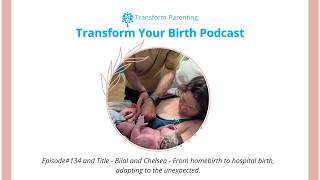
Ep 134: Bilal and Chelsea - From homebirth to hospital birth, adapting to the unexpected.