4 AI Skills you must have in SaaS Sales, to not get replaced
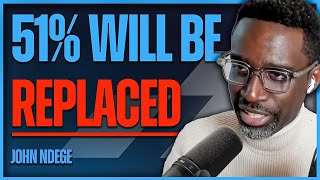
Interview between a host (Speaker A) and John N. Daggy (creator of the Prompt Punk newsletter and AWS principal) about how AI is changing SaaS/tech sales. They cover practical, tactical uses of AI across the sales funnel: prospect research and ICP refinement, prompt design (give examples + guardrails), scaled outbound personalization, discovery-question preparation, AI meeting recording and notes (post-meeting coaching), live coaching/attention products, and speeding demo/build (code agents). Daggy predicts the majority (>51%) of sales reps—especially junior/SDR roles focused on inbound/outbound/qualification—will be replaced by AI within five years, while complex enterprise/relationship selling will remain human-led. Sponsor/tools mentioned: Prompt Punk (newsletter), Kickscale and Granola (meeting recorders/analysis), Attention and Gong (live coaching features), and ChatGPT/web-enabled pro tiers for up-to-date research.
Questions this video answers
December 3, 2025
Prompt Punk
SPIN Selling (Neil Rackham)
The majority (51%+) of sales reps will be replaced by AI within the next five years.
Kickscale, Granola, Attention, Gong
Chapters
What if I told you that in 5 years most sales reps will be replaced by AI?
The majority of sales reps will be replaced by AI in the next 5 years.
Sounds crazy until you listen to what my guest today has to say.
I believe a lot of the work of inbound sales, outbound sales and qualifications can be better done by AI.
He's built a million dollar ARR software business, he's principal at Amazon Web Services and he's the creator of the Prompt Punk newsletter where thousands of SaaS and tech sellers learn how to use AI to sell smart, faster and better. His name is John N. Daggy. In this conversation we go deep into how AI is transforming software and SaaS sales. From research to prospecting, from running better discovery calls to even replacing parts of the SDR role itself.
I'd say what is sales? I think it's some memory, some reasoning and some communication. And AI increasingly can reason, it has knowledge and it can communicate and it works 24 7.
You will hear real world examples, practical tools and an unfiltered look in what's next.
I think we're going to see us going further out on the curve of complexity here today. AI, SDR or even coordinam, basically even receptionist, let's say now I'm seeing them being rolled out for mechanics, for example, auto car dealerships. And I think it's going to creep up, creep up and creep up until we get to.
Because the future of sales isn't human versus AI, it's human with AI. Here is my conversation with John and Daggy. So John, you are doing content for AI, specifically for tech and software sales. And when you look on YouTube, when you look on LinkedIn, there is so much content on AI these days. So where have you seen the gap that you said, okay, it's really important to create an own channel, an own resource for AI for tech sales.
Yeah, sure. Well, my first thought was that I needed something out there that was focused on sales. How can we help sellers out there really leverage AI in their careers, in their day to day jobs so they can thrive and make the most of it and not be a victim to sales. How do they not get replaced by a chatbot? So I want to have some content that focused on how do we aid salespeople so they could be more successful in their careers. So that was the first thing. And then although there's a little bit of content out there about sales, none of it shows the full arc of like a sales career. Like how do you use AI? Not only Just to you know, write some meeting notes or something. But how do you use it to actually support your career over the next decade or two? How do you position yourself to thrive when others are being left behind? So it's more than just here are some tools and go use them to improve your efficiency. It's more about how do you position yourself for a success, successful career. And that's why I focused on in my content focus on AI sales.
Yeah, I think that's, that's a, I think that's a very good reason to do it because you find so much generic AI content on, on YouTube or on LinkedIn. But there is like, but having AI content that is specifically focused how you can use it as a SaaS seller or IT or tech seller. I am, I didn't came across anything so I'm really curious about having the conversation with you to really find out more. And you mentioned really covering the full arc of the career and the full maybe also sales process with your best practices. Now when you look how AI is used by sales reps these days, where do you see the biggest misconceptions or misuse of AI?
Yeah, I think the misconceptions or misuse is underutilization. So people still use it as primarily as a chatbot to get some basic advice. Maybe you can write up some meeting notes, clean up an email, write a basic account plan, but it's not really pushing the limits of what's possible. And we get into that on the podcast. But that is what I see. People still at the basic consumer level usage when it comes to AI in sales.
So they basically type in hey, tell me which problems Chief Information Officer has probably like very simple prompting. Is this what you want to see what you want to say with household usage of ChatGPT?
Exactly. Or they might go to, you know, let's say a little bit more advanced and copy and paste in an account plan they wrote for a previous customer and ask them to write one again for a new customer. You know, that kind of basic level use.
I really, I really appreciate your newsletter that's coming out every week with, with all the different, you know, very in depth explanations of how to use certain tools. Maybe when, when you were doing your research the last couple of weeks or months for a newsletter, what was the one use case, the one thing where you were that, that, that, that blown you. That what I said. How do you say in English that you were blown away by like what, what was the one thing I'd say Wow, this is really possible. What was The Eureka moment for you.
What I'm really liking at the moment and the Eureka for me is definitely the voice agents. So the ability for a customer to call, speak to an AI voice agent, book a meeting, book a call, actually qualify, ask questions, get questions back, no longer waiting. Let's do a call in a week's time. No, they can get their questions answered immediately. That's a breakthrough because that disrupts, of course, a lot of the inbound SDR work, some of the early discovery and qualification work, even enterprise sellers do. So that's a huge, a huge step, I think, for the industry. It's not fully deployed. Most customers and companies are not using it, only some SMBs. But as it gets its way into the enterprise, I can't understand why a prospective customer would wait a week to book a call to speak to an inbound sales rep. It just doesn't make sense anymore.
I mean, speed matters, right? If I'm a customer sending you an inbound inquiry, I want to have ideally a response immediately. And good sales teams are capable of responding to inbounds within, you know, like five to 20, 25 minutes. But that said, when I hear Voice agents and AI aided SDRs or things like that, I become a bit skeptical because I've looked into a few of these solutions. I think one is called AI sdr, just, just to name one that I came across. And yeah, on the one side, it's fascinating what the AI can do and how it can lead the conversation, but for me as a human being, it was very clear for me after five to 10 seconds, okay, this is just a very well rehearsed AI because what was missing is the tonality, the charm, the humor, the ups and downs in my voice, the sparkle, the energy. It's. Everything is clean, everything is perfect, it's very smooth. So if I would be a customer and I would be called by an AI SDR, I think I would notice it probably within 10 to 20 seconds that this is just a great AI. What's your point of view of that?
I think we're going to see us going further on the curve of complexity here today. The AI SDR or even coordinate them. Basically even a receptionist, let's say in dentist's office, at a plumber. Now I'm seeing them being rolled out for mechanics, for example, auto car dealerships. They're starting to get some meaningful traction there and customers are accepting them because you get an immediate answer. Yes, it's a bit mechanical, but usually if you're doing something that's quite Transactional, let's say booking a plumber or a dentist appointment, you actually don't care and you'd rather just get the speed right. So we start off in the lower end of the market. This is the classic disruption as we know, but we'll slowly go up. Yes, the technology is not there, ready to do of course enterprise sales or even maybe mid market sales. But some of these kind of simple transactional one off relationships, like I explained, it's working and I think it's going to creep up, creep up and creep up until we get.
So your hypothesis is that okay, maybe it's not that convincing yet, but wait for another year and you will be blown away. Or what is your hypothesis?
Yes, exactly. But I'll also use it today for those simple transactional, you know, booking a dentist appointment or plumber. I don't care if it sounds robotic, I just want to get my appointment right. And at some point it's going to become high and higher value things, let's say interacting with government, for example, you just call the tax office or driver's license, you know, then it starts becoming things that are maybe a bit more important, a bit more personal and then we'll slowly go up the curve I think until we get more complex products being bought and less transactional products being sold as well. So that's what I'm excited about. I'm looking forward to seeing the evolution, the evolution here. And when it comes to actually the voice, they're getting better and better. We don't have to name drop all the different tools out there, but the voices are much better even than they were three months ago. They really are getting good now they can actually laugh. You know, the tonality changes. It's actually we're seeing great progress here.
They can mimic emotions. Yeah, that's what you want to say. Maybe. Let's speak about something that I think most of the listeners are using. I've read it, I don't know where I read it, but the most used AI tool per se by sales reps in software IT SaaS. Sales and the audience here is really software IT SaaS. Right. So let's focus on that. It said ChatGPT. Most of them use ChatGPT. And what is fascinating about ChatGPT when it comes to overall usage, I think it will replace Google very soon because I know in my surroundings there are a lot of kids and these days kids are no longer using Google. They're looking everything up on ChatGPT. So just an interesting side note here, but when we speak about ChatGPT and when we speak about prompting and interacting with ChatGPT and you would need to share like the 3, 4, 5 most important rules, specifically, you know, for SaaS and IT sellers, how to, how to design the perfect prompts. How would you explain it to sales rep?
Yeah, sure. Well, prompting is obviously quite tactical and we can go high levels later. But a good prompt is explicit, of course, it's specific and it has details. So when you're lazy and you just dash out a quick prompt and hope to get a quick reply, it's not going to be as good as you put some thought into it. Of course. My advice for prompting is to start off with clearly explaining to the AI what you want. Give it an example of what you want and then give it some parameters. So for example, if you want it to, let's say, write you an email, you can say, okay, I want you to write me an email. Okay, here's an example of emails written in the past. You can copy and paste an example and then you have some parameters. Make sure it's not more than 300 words, make sure the tone is professional, courteous and so forth. A simple prompt that's not so hard to construct. Most people can do that, but by being explicit about what you want. Given an example, giving some guardrails, that will work because the models have progressed so far. But back in the days of ChatGPT 3.5, let's say you'd have to be a lot more specific. Give it 10 examples, for example, and really write a long list of guardrails. But now it's becoming a lot more intelligent, especially because these tools now have memory, so they know how you've interacted with them in the past, so they keep a log. And so they actually improve iteratively over time, actually, which is really helpful. So that is the best way I find to construct a prompt. And of course, if you give it more examples, it does get better. We have more guardrails better, but also self improves.
I think you mentioned something that is really important here. You mentioned the examples, right? The experience I did with ChatGPT is that the more thought and time you put into the prompt, the better the outcome will get. So what you could do with ChatGPT is create my ideal customer profile, tell me which problems a Chief Technology Officer has, write an email for me, create a discovery preparation and give me exemplary questions that I can ask my customer. Right. Those are all examples you could, you could ask about. But the less specific you make it, the more superficial the answer will also become, and I think this is, this is where the frustration with a lot of salespeople or yeah, generally people is with AI, they just ask a very generic question that they get a very generic answer and they say, hey look, this thing is not really working, like it's useless, right? And I think the most important game changer for me when I was using ChatGPT was giving it examples. So if you want to get, I don't know, like questions for your discovery, like you need to give, okay, those were questions that I asked last time to my customer. This is actually our discovery framework or these are exemplary questions from our internal sales enablement discovery question bank or something like that. So the AI has something to model the answer around it because otherwise the answer will get useless.
Exactly. And the examples don't have to be examples. You necessarily type yourself. You can dump in a lot of data. For example, you could dump in customer usage data, some thermographic data and say, okay, these are the customers that, that spend the most money with us, use our product the most, who are similar customers. Especially if you're a seller with a large territory, you don't have time to necessarily call on everyone. This can help you really prioritize your activities.
And another thing that I'm thinking about is let's say you are working for Microsoft or SAP or Amazon Web Services, right? Then the large language model of ChatGPT knows what AWS is doing, knows what SAP, what Microsoft is doing. But let's say you're working for a small mid sized software company with 100, 200 employees and you say, hey, please create this and this for my company and product ABC, which is an unknown company. ChatGPT doesn't know the product, doesn't know the context. So also giving a description of your product, you know, maybe a one pager, the product presentation, copy paste what is written on the website, just tell it what your product is all about because then it can match it better to the answer and you will get much better results.
And you don't even have to do that much copying and pasting. You can just share links as well and it will go, is this really working?
So can I just say, hey, this is the website of my company, Crawl it and find out everything that you want perfectly works. That's super. That's sufficient. Oh wow, I already learned something new from you right now.
That's great. No more uploading PDFs, no more upload.
PDF, no more right click print websites and upload. Okay, that's good. Let's get more tactical now. So I think. So you and me were discussing before we actually recorded Hit Record, how to structure the conversation. Right. So that listeners can get the most out of it. I think it was a good idea to structure maybe best practices across the sales funnel or sales process.
Right.
And if we would be speaking about, let's say the outbound phase, you know, the prospecting phase where you want to reach out to the customer, you want to book a meeting, maybe you are an sdr, you are a full cycle account executive, that is booking meetings by cold call or cold emailing. What is the best usage of AI when it comes to prospecting?
Yeah, I love this phase. The hunting phase is great.
Hunting phase.
Wow. There's so many applications. I would start with understanding the prospect or the customer base. So you need to do some research. If you have a large territory, there's a lot of unknowns about what you're selling into, then this is where it can really help you. AI, of course, because it can help you figure out who your ideal customer profile is. You probably have some idea if you're already an established company that has sales, but it might give you maybe some more details on likely Personas within that company that you haven't considered. Maybe you only usually sell to VPs of engineering, but there might be an inroad with a VP of product and you're not maybe used to that Persona. So it can help you also adjust some of your sales approach. Who's the ideal customer profile in a company? Of course. And then you can have multiple, of course, from number one, number two, number three and on. Okay, so then we get the ideal customer profile. Then of course there is the scaled outbound, which is, for example.
Can we just hold your thought for a second? So when you speak about understanding the customer, how to do that, like really on a practical level, like what should I do, where should I go, where should I click? How would it work?
First you need to ask yourself what information is necessary for me to do my job well, because that's the information you want to get from the research. Right. So you might ask yourself, okay, I need to know who the executives are in this company. I need to know what markets they're in. I want to know what products they sell, I want to know how well those products are selling, who's managing those products. AI can help find all of this. Do this at scale. You set up a query and then you get a response in a few minutes. Right. You might learn, for example, in your sales process it's really important to know if the they have ever used Technology A in their company or not. So why don't you ask AI to go look and find out if they've used Technology A. You might find that a VP of engineering said on a YouTube video two years ago that they use Technology A, but you know, you can't see it on their website. You know you haven't spoke to them, so you don't know. But information is there on a transcript on YouTube from two years ago. AI can surface that and they know, wow, okay. This company use Technology A and therefore they're good, a good target for my, for my outbound. So this is how I can help you with the research. Think about all the information I need to be successful. Ask AI to find that information for that customer and it'll be a long list. Obviously it's probably like maybe 20 or 30 different things you probably need as a.
So what you, so what you basically say is I should ask ChatGPT for example, right. Tell me if there is any connections to my product. Tell me what are the best hobby, the biggest hobbies of this person. Tell me what are important company information or news or updates that I could use in my outreach and then ChatGPT will do the research for you.
Yes, I mean some information like the hobbies of the people you're speaking to, probably not so important and helping your deal. I'd hope maybe it is, who knows, unless you've got a very niche hobby. But you could ask it more intelligent questions such as, have there been any new executives appointed in this area? Because we know that when people change, new opportunities can arise in the company. Right. So, you know, questions like that that help get deals done, help get deals open up. I think that's valuable to ask. And I say It'll probably be 30 or 40 things. It starts with basic things like you might want to know, like the headquarters of the company, how many employees they have and so have they raised funding recently, have they not? How that, how well they're doing financially. And then you can even ask what are the email addresses of people? And I can actually guess that if you wanted to, you know, if you wanted to find that out, because AI can for example, find email addresses of they might find that specific person, but colleagues and therefore they know, they'll tell you the format. You know, is it first name, dot, last name, is it first initial, last initial? Now all these things that help you with your outbound when you're in the research phase, before you spoke to Anyone.
What are the limitations of that? I'm wondering because I mean is chatgpt when I, when I do a prompt, going out to the Internet and actually looking for something or is it just solely relying on its LLM to source the data? Because I'm wondering if I want to have up to date data. You know, maybe company updates involves news like how does it work?
If you pay for the pro or advanced plans of many of these platforms, they will go out and do the web search for you. Usually when, when I search for information, it might go to 100 different websites. If you pay for the more expensive tiers. These are usually around 200 US euros a month or something like that. $200 a month? Those are the more expensive ones. It might spend, you know, 10, 12 minutes researching and synthesizing. Why is it valuable to spend money on this? Well, simply because it will save you a lot of time, obviously. Because how long will it take you to go to 2, 300 websites to find information? That will take you a long time. So that's why it can be valuable to find information this way. That's why you pay for it, that's why you get the, the value from it.
So that's a very important distinction that you made. So if I understood you correctly, if I have the free version of ChatGPT Cloud Perplexity AI, what have you? Limited, it's limit, it's limited. But if I pay those 10, €20 I think per month or what it is, then they are actually doing like a web search, like web crawling for me and then I get these up to date results like a Google search. That's what you want to say.
Exactly, yeah. So the information is partly already in the LLM, but partly, let's say web search. Yeah.
Okay, I think that's super important to know. So everyone who is listening, if you are using any of these platforms, you know, it doesn't need to be chatgpt Perplexity cloth. What have you really having this pro plan helps. Helps a lot. And yeah, I'm wondering very often when I speak to very seasoned reps, they actually don't even have a ChatGPT account yet. There's so much potential lying on the floor still for so many people. Okay, so that is one thing. Is there any particular tool that could help an SDR to be more efficient? Like in preparation, outreach, preparing cold calls, gathering information, getting feedback, anything that you came across that, that you think is relevant for the audience?
I think most companies now have some kind of paid subscription to an AI tool for their employees. So I'll use your company mandate product. There's probably some information security policies that you have to adhere to, so make sure you do that. But in the research phase, I am more than happy with a product like ChatGPT. I don't think you really need to pay for some other kind of product at this phase when it's just research, they do it well. Web search +LLM it does the job fine.
Then let's maybe continue to do the classical SaaS IT tech discovery phase. So the discovery meeting is usually the meeting that comes right after the meeting is booked. You know, you speak to the customer first time, maybe you have booked 30, 40, 50 minutes with the, with the customer. And the aim of this first initial discovery meeting is are two things it's first of all find out or actually three, where's the customer right now, where does he wants to be and what is the gap in between? Right. So what is the difference between the current state and the future state? Or very simple terms, what is the problem of the customer? You know like in the discovery phase we want to find out what is the issue the customer has and is there an issue that a problem that we can solve with our state SaaS IT tech cloud solution. And the second aim that we have in the discovery is finding out, okay, are we speaking with a person that could be a potential champion maybe to us and by that qualify the opportunity. So if we would define a discovery like such a conversation, how can AI you think be helpful in specifically preparing but maybe also running a successful discovery meeting?
Yes, in this phase what I like is two aspects. First of all, there's the questions you're going to ask, of course, right. So then you have to choose what is your sales methodology, what do you like? You compare this with your research and have AI come up with some questions that you think are smart to ask. My favorite sales methodology is actually Spin Selling by Neil Rackman. So I like that one. So usually I'll pair that sales methodology with the research that I've done prior to the meeting on the customer and think of some good questions. But also I don't want it to be, I don't want to just be a Q and A where the customer gets irritated because I'm just asking them questions about having a dialogue. So you have to limit the number of questions. You don't just go in and bombard a customer with 30 questions, of course, so you think intelligently about this, but then you then have a question list effectively or a Script a plan of how you're going to find out what the customer problem is. How do you get them from their current state to their future state? Okay, next thing, of course, and we've all heard about this is the, is the meeting notes. The AI meeting notes that records the call and generates notes. Many different tools out there. There's very basic tools that do a summary. I would say this is more in the class of products like Zoom, let's say it's very kind of basic as you can imagine. So because they're servicing, you know, many, they're not just focused on sales, right? They're doing all kinds of meanings that take place in Zoom. It's a decent product, but they're more sales specific meaning note providers, for example. You can use their tools. Now what's great about some of these other tools out there not only did make notes, but you can say, okay, I'm using the spins selling methodology, put the notes into this format and push it to my CRM, for example, right? So then I know every time I check a customer CRM, okay, you know, I can find out the details. For example, you know, how big is their problem, how much is it costing them today? You know, why would they want to switch? And it can be put in the methodology like push to my CRM. So it's also easy not only for me, but my manager, my manager's manager, leaders in the company to see what is going on with this customer. So again, I like AI in this discovery phase for question preparation, mix of the research beforehand and then recording the call and making notes that I can push to my CRM.
Before we continue with the episodes, there is one important tip for you. If you're listening to this, you probably want to negotiate better, communicate smarter and close deals faster. And to do all of that, you need to get more feedback. And to become a negotiation expert, you should be using a meeting recording tool that gives you instant feedback on your sales calls. And that's exactly where our partner kickscale comes in. Kickscale helps sales teams measurably improve their conversations with a platform that records and analyzes your customer calls, provides structured feedback and shows where you can make your conversations even stronger. In just a few minutes, you will see which questions you asked for, where you build trust and when you might have mentioned the price too early. The best sales teams worldwide improve their sales conversations this way based on data and not just gut feeling. And with the link down below in the show notes, you will get an exclusive free version with 50 recorded and analyzed meetings from Kickscale. So get your kickscale access down below with the link. And now let's get back to, to the episode. Let's quickly speak about the preparation of questions because I think asking good questions and, you know, being a good listener, it's, it's a science and an art to itself. And the danger I see when you, you know, you go to ChatGPT, whatever and say, hey, I'm speaking with this customer. I'm selling this product. This is what I know already about this, this, this contact person. This is what I found out in my cold call. Please create a list of questions for me. So I would be, I would be fearful as a manager that it would be more kind of going through a checklist of questions, I think. So this is a potential danger just to look out for. But the question to you is not what do we do with this fear? My question would be, let's take this as an example. Let's say tomorrow I have a discovery meeting with some potential buyer. What would I do specifically? How would I create maybe a prompt or something to get a validated list of good questions to ask to the customer?
Yeah, sure. So what I do start off with is what is my ambition here with this call? Like, what am I trying to do? You can say to AI, okay, I want to, let's say you want to sell a product, or maybe you want to do more than that, actually. Maybe you want to transform a customer's business or help them achieve an important strategic goal for the company that goes beyond selling a product. But let's keep it at the lowest level. Let's say you want to sell a product. You could tell AI that then you would maybe copy and paste in some of the research that you've done or link it to the memory that's already saved or about this customer and say, okay, I believe they could be a good fit for the product. I'm selling product A. Give me some good questions based on X methodology to ask them. Keep it less than 10 questions. Just use it as a guide to help me lead the conversation, for example. So then I've told AI, well, I want to achieve, I've got the example by giving the research, let's say, about this customer and even the individual, for example, because it can look at LinkedIn and give me some information there. You know, of course I have the questions to guide me and then I can go into the core process prepared, following the methodology that I like in order to get the answers that I like and using the suggested questions as a guide. So that's kind of the step by step process I would take in this situation. But I'll add asterisks because you did go down that road a little bit. Of course, the questions, you don't follow them to the letter and you don't want to just make it a checklist. Customers also know when they're being checklisted, let's say. So this is where you have to be smart and be intelligent. You also, there's a lot of non verbal communication. Weren't we always told that 70% of communication is nonverbal? Right. So you got to look at the customer, are they irritated, are they bored, are they distracted? You know, it's one person. You know, let's say you're meeting multiple customers on a. This is assuming this is a video call that AI would be hard to help you on in person meeting. Assume this is a video call. Maybe there's one person leading the call he didn't expect. Maybe this is your internal champion actually rather than the other person you thought. And this is the person that should lead the process internally in their company. So there's a lot of non verbal communication. So of course you can't just rely on the AI to progress the deal.
Yeah, I think this is exactly the point why I'm skeptical when someone tells me, hey, AI might even replace sales reps. Because I mean, at least the current state of AI, it's not able to that extent to understand and feel the counterpart and adapt communication. You know, maybe, yeah, maybe it is. Maybe I didn't came across that. But let's save that for the end because I also want to ask you a bit about the outlook and future. But, but let's stick with this. So let's stick with the discovery, right? So the three tips that you mentioned, how to write a good prompt to prepare for a discovery is first, what is the aim for of the discovery? You know, the obvious aim is hey, find out if there's a potential problem that has a business impact that the customer needs to solve. But maybe the aim could also be to, you know, maybe find out who the potential decision maker is in that business unit. You know, maybe it is, maybe you already know they work together with a certain competitor. So a third aim in that meeting could be to, you know, establish some differentiators towards potential competitor. So what are the aims? Yeah, the second is attach everything that you know already about the potential contact person, the company, the potential project that you are speaking about as an attachment or just As a note copy paste below the prompt. Yeah, it could also work. And then the third point is which methodology do you use? Like a discovery methodology. So do you use spin selling? Do you use maybe more like something spiced, for example, do you use command of the message? That would be like a medic, like discovery methodology. So I really like that. I think what would also help in this scenario is if you would attach maybe some type of internal framework that is for example, showing exemplary questions from your sales enablement or maybe some value propositions that you have or some USPs that you have. So I think the more you feed the AI with information that you already have about your own product, I think the better, probably the results will be.
Yeah.
What do you think?
I think you gotta be careful.
You seem to be skeptical.
It depends on discovery and how much time you have on the call because you want to make sure it's them doing a bit more of the talking. And you don't want to be talking too much about your own product at this stage. But yeah, balance.
I think there's a misunderstanding. I didn't mean like feed the AI with your value proposition so the AI creates a pitch for you. It's more like the questions can be framed even better if the. If the AI understands your product. That's what I wanted to say. Okay, now we are aligned again. Meeting, recording. Important, important topic. Because I need to mention something about my partner or the partner of the podcast. If you don't record your meetings currently, if you still don't record your online meetings, you're missing out on a lot of potential. So these days you should be using some type of AI note taking tool, some AI note taking tool like John has mentioned. And the AI notes taking tool I'm using in the German speaking market especially, but also in English speaking Dutch or whatever speaking market is Kickscale. Kickscale is an AI notes taker that is specifically developed to note, take, analyze and coach you for on your sales conversations. It includes all the methodologies like spin, spice, medic, bount, what have you. So you can basically select which methodology you're running and kick scale, not just records the meeting, but it gives you afterwards an analysis and coaching what you could have done better, which questions you should have avoided or which questions you didn't ask. Have you qualified everything in medic and so forth. So you get an instant coaching that you can apply in the next meeting. And as a listener of the software sales formula podcast, you get a free extended version with 50 meetings that you can record, analyze, transcribe, synchronize your CRM completely for free with the link down below. In the show notes, you get the free access to Kickscale. So check out Kickscale if you have, if you don't, if you are not using any AI note taking tool yet. So do you know Kickscale, John?
Yeah, I've heard of it. I've not used the product, but I've heard of it.
What is your go to meeting recording.
Tool at the moment? I like granola, although it's not sales specific. I'll mention it. What I like about it compared to the others, very simply is that it does not have an agent in the call. So it doesn't have like an AI as a participant in the call which sometimes irritates customers or puts them off. So it kind of more can record your screen as it were and the audio rather than being in the specific meeting. And I kind of like it kind.
Of sneaks in into the meeting but the customer doesn't know that you're recording it.
Yes, correct.
Okay. A lot of German people listening to this podcast now will say, oh my God, this is not gdpr.
They are based in Europe, but they found a way to be compliant. Go to their website, read more about it. You'll, you'll learn there.
Okay, so either use Kickscale or check out granola. So you have a choice. Right. So interesting. I didn't know that, that there is a sneaky way for this in my experience. I think, I think one out of 100 customers tells you, yeah, I don't want that note taker to be running. If you say, hey, there is another participant. It's my note taker. It will take notes, it will summarize, it will show you send you a summary automatically. Is it fine for you? Nobody usually says no, I don't want this to be recorded. So yeah, people make a big fuss out of it usually in meetings. Hey, this is an AI note taker. It will record the call. The bigger you make it, the bigger thing you make out of it, the higher the likelihood that the customer say ah, yeah, I'm not comfortable with this. Hey, it's Kendra. Hey. There's not a participant, it takes notes or summarize the meeting. So I will also share the notes with you. I hope that's fine for you. Full stop. That's it. Don't make a big deal out of it.
Exactly. I mean if you are working extremely sensitive areas, national security and so forth, of course maybe then you have extra levels of compliance. But for many of us, we're selling software that is not touching national security.
Doesn'T kill lives or save lives. Okay, so we spoke about Outbound, we spoke about how we can use AI for research. We spoke about how we can maybe even use AI for preparing for discovery, meetings, curating, questions. When we speak about more the value building phase, let's say the classical pitch phase or demo demo phase in which we want now, okay, now I understand the problem of the customer and I want to show him the solution. I want to show him how we can help him. I want to showcase my product and I want to kind of convince him that we are the right fit to meet his requirements. How would you go about that when using AI?
Yeah, this is where AI actually is probably its weakest area. But also it's where humans have the most opportunity to shine because it's the customization really. It's like, okay, now you know their problem. You've done all the research. How can you adapt your product or service to specifically fit their needs? And that's, you know, that's really kind of a one to one. Especially if you're selling something that's not a widget, a product that's the same for everyone. Of course, if you're selling red shoes, well then you can only buy red shoes. Many of us are selling actually more complex solutions, selling cross functionally touching different team members within a company. And therefore the solutioning, the pitching requires skill, finesse. Let's say how I'd use AI in this section is primarily just to advise how do I do a good pitch demo based on the information, based on the meeting, based on the recording notes, what do you think is the best way? I have this much time. How do you guide me in order to do a good job, good pitch. Let's say you have some software and you have a solutions architect, maybe who's come with a solution and your seller and your solutions architect, you come together to pitch something, then they of course could have used it in their research phase to maybe build a demo that they can actually show a live demo for the customer. Right. Use a coding agent to help build the demo quickly. So they're not spending, you know, hours building the demo themselves. They can just get AI to build the demo. Right. I think that works really well. If you come to to a customer with a live demo that AI has made in 30 minutes, that's quite powerful. So that's how I use AI mostly. Actually if you're in software, at least on the engineering Side to build a demo quickly using one of these vibe coding tools. And then from the seller side of course to do the research based on prior information in order to figure out what's the best way to run and lead this call.
So the example you mentioned is, I think it's a valid example if you want to demonstrate some type of maybe custom code or something. Now I think 80% of the listeners are selling some out of the box SaaS platform that you usually just log in, you demo it, you walk the customer through the platform, you show them which maybe features, benefits and how it's tied back to the problem that the customer has. Taking this into consideration, any idea and inspiration how AI could be helpful in that type of demo?
Only in speeding up the time to create. In theory, most software has some customization. At the very least you could create a demo account that has the customer's information in it or mockup data that has the customer information. It looks like what they would actually use. So you don't have a Lorem Ipsum in your demo actually, you have actually some real data that's kind of a.
Logo, maybe some keywords and stuff.
Yeah, yeah. And of course you can even use AI to help you build the presentation. If you don't have your own deck and designs. There's tools out there that actually create presentations as well. So you can even feed it the information that you developed from the discovery call to help build your presentation. I probably wouldn't do all of that. I think it's probably quicker and easier and more likely to hit the bullseye if you do it yourself at this stage of the technology. But yeah, that's another consideration. But this is the human element of the sales process really, which AI cannot do. It can speed up, as I say, code, custom code and demos, but not as well as the previous.
Let's not completely replace it.
Exactly.
I mean you are spending like every other day researching some new AI tools, things, ways of how that can be used in tech sales. What I was wondering is, I mean we have those, those AI meeting recording tools, right, that they, they can post or post mortem, like after the meeting they can give us an analysis and coaching. Have you come across any, any tool that can give me like a life coaching while I'm in the meeting with the customer, you know, like he actually gives me. You're speaking too much, slow down or hey. The customer is puzzled. His face is looking like done. Or now ask this question to clarify or, or there comes this, this objection. Hey, this is what you can say for this. Objection. Something like this.
Yes. There's a tool out there. Again I'm not used it but I've heard people speaking about it positively called attention. AI attention and attention. Yeah attention. And it apparently gives you in call live feedback. I think even gong the well known sales and revenue platform also has some features around this. So the company's coming out. There's also others that have come out and said they'd do it but have flopped and disappointed. So I think we're in the developmental stages of this but clearly it's going to come. The issue is speed really but how quickly can you process the conversation and give the feedback. But that technology should pretty much should exist.
It should be possible. If it's not now, it should be possible in near future to really do life coaching with sales reps. I still remember my early days in sales when I was a junior sales rep. I was, I started when I was 23 in sales. I had no clue about sales and I had the luck to start in a time where we were supposed to go to the office every day. So I was actually going to the office every day. And the beauty of it was I was listening to all of my colleagues, how they speak to their customers. I got nearly after every online meeting, after every demo I got some feedback. Hey, you could say it like this or you can ask this or you can maybe use this kind of trick. So I learned a lot. But what we have been doing back in the days is that my manager or some senior colleague of mine was in the. So back in the days we didn't had any. Not, not online meetings but we did screen sharing with the customer and did a call parallel to it. You know, I was actually on an actual landline with the customer and just shared my screen and my, my manager was also in the line but muted. So I it was basically a conference call but the customer hasn't seen it. It's a conference call. So my manager was actually in the call listening live into the call and I had Slack opened or some instant messaging on my screen and he typed me okay, now do this, say that, ask this question. Oh, this is the objection. Be careful, qualify this now still don't forget asking for the next steps. Close the deal now. So it was kind of. He whispered to me in a sense what I should be saying. Next, asking next, focusing next in the meeting. And I'm sure that we closed a lot of deals because I got this real time kind of coaching. So having such a. Having such a tool that can do this for you.
I think this is why attention is promising, they say. I think they swallow up all your team sales calls and gives live coaching and let's see, I mean, I've not used the product yet. There's so many products out there. I wish I could have used them all. But at least that's the promise. Test it.
Yeah.
Yourself.
Yeah, I think, I think I have an idea for a new LinkedIn post that will be. If you are a sales manager and not listening into the calls of your sales reps, then you're failing at your job description or something like that. Yeah, okay, but that's a different, different part of the story. So I think a lot of, a lot of inspiration. John, I think there is one important topic I want to also cover with you and this is your general outlook and thoughts on how AI will impact the future of sales. Now, no one of us has a crystal ball, right? We just don't know. So we can only base our assumptions based on what we know today. What we know is that the growth, growth is exponential. The pace in which AI is evolving is exponential. It's, it's speeding up. So when you think about the future of sales, do you think that in the next five years sales reps will be replaced by AI? And if. Yes, to which extent, Okay, I think.
The majority of sales reps will be replaced by AI in the next five years. And let me explain, by majority I mean 51% plus. Okay, I believe a lot of the work of, let's say inbound sales, outbound sales and qualification can be better done by AI. Of course we've got the voice agents which get better and better by the day. These AIs of course will have infinite knowledge. Like can you remember every detail about the product and the change that engineering did last week? No, of course not. So they'll have much better knowledge. They'll have the voice and of course they'll work 24 7, you know, so of course much more capable than an individual would be, at least at this inbound, outbound qualification routing stage. Now, so that means a lot of the lower end, let's say you can say SMB, transactional sales. I think that will, that will go away. I think AI will genuinely replace that. Where you get a bit more complex, of course, is when you get into enterprise sales. And by enterprise, I don't even necessarily mean global enterprises who have billions of dollars in revenue. I mean the kind of sales where you're effectively a project manager in someone's business and you're working cross functionally and you're essentially the person that gets things moving forward. You know, you're the deal maker almost internally in the customer customer because you're getting different departments of people to work together. And without that push it would happen very slowly or not at all. So that kind of selling I think will continue to exist because AI could not replace all of that activity. It's too complicated sometimes involves in person. Because effectively a lot of that kind of selling is trust building in AI. Well, it's not so great at building trust just yet. Let's put it like that. Maybe that day will come, but not yet. So I think the arc of sales is definitely that the majority of the junior early stage transactional SMB, inbound, outbound sdr, BDR will get replaced by AI. But the enterprise selling the complex cross functional high trust selling will not be replaced by AI.
So this means therefore that in five years there will be no more SDR teams.
I can't say zero on planet earth, but for any well known global company, I don't believe they will have this kind of stuff. Maybe there'll be 11000 of their current size. Maybe you have a few because the technology is not perfect and there's edge cases, right? But 80, 90, no, 99.9% will go away.
I'm 100% sure that a lot of listeners now are skeptical, especially maybe some SDRs are skeptical or maybe SDR managers or outbound, our general sales will be skeptical. When you say in five years most of SDRs are gone. Now you cannot argue with each person now one to one with each listener. But if you would need to give a reasoning like a convincing reasoning, why do you think this will happen? What would you say?
I'd say what is sales? Let's think, let's go to the basics. What is sales fundamentally? I think it's some memory, some reasoning and some communication. And AI increasingly can reason better and better. Of course it has knowledge, imperfect memory in fact. And it can communicate as we see every day, right? With the voice getting better and better. So why can't it do sales? And it works 24 7, which we, which we don't do. So I just think that it's an inevitability.
Interesting. I still need to let this thing in, right?
Question that I'll ask people, I'll ask the audience to ask themselves. What is sales actually fundamentally, if you agree it's just memory, reasoning and communication, you know. Well, AI does not threaten plumbers. Why? Because it involves using your Hands, Right. And going into difficult places.
Not yet. I mean we have those humanoids. I mean they're not really working yet.
But yeah, who knows?
Who knows?
Not today.
Okay, so that's interesting right now, everyone who managed to listen to listen to us after minute 52, which is basically now. And he's wondering, okay, okay. There's something to it, what John is saying, right. And what USI is saying here as well. What should I do as a sales rep today? Stay relevant in five years from now?
Yeah. I think you've got two options. One, you become the AI guy or girl in your company. And actually the thing is you actually need salespeople to manage the AI because only a salesperson will know what is good sales activity by the AI. If you've never worked in sales, you actually don't know if the AI is actually selling well or not. You can't just check by how much money is coming in. There's many steps in the sales process. So actually you need to become the AI guy or girl in your company. So that's option number one. Option number two, of course is just to do much more enterprise complex, cross functional big deals that would never be entrusted to AI, of course. So at most scale.
But what would it look like becoming the AI guy or girl in a company? Like what do I need to do to become the AI guy or girl?
You have to be the person that gets the team to use AI in your company. And then you need to become the person that runs or leads a program in your company that introduces AI in the process. It could start with the Contact Us page. Nearly every business has a Contact Us page. So what happens? Does that go to an email address? Why doesn't an AI reply immediately? Why you say, okay, let me run the project where when someone hits Contact Us, we can make it safe. Let's just do it on weekends. For example, if you're feeling very insecure about it, let me set up ad on weekends. Qualifies someone or sends them to a chatbot and has an interaction or tells them to pick up the phone and does a voice call, for example, and just collects information, even maybe doesn't even recommend anything. Let's just start in the basics like that. So if you come to person that owns and leads that in your company, then you become the AI guy or girl and that's the start. Because they need that. We need sellers to manage the AIs. Obviously if I just employ, if I remove some employees and have the AI doing the SDR work, someone has to manage these AI SD us. And it's not engineering.
So I think in very layman terms, very simply put, it's you know, like immerse yourself with that stuff, start reading about it, experiment with it. I mean you have a very Amazonian approach. You know, do a project about it. You know, like everyone at Amazon has a side project. So run a project like implement something, you know, be kind of a builder, be an inventor. So I understand your mentality because I work at Amazon myself, so I know where you're coming from. I think for me this means I would conclude that sales, that the sales people, the survivor, the sales survivor will be the person that is going the extra mile today. So what you want to how we can summarize it, Maybe genuinely curious, interested, going the extra mile. Be interested in the way implement work.
Don't just talk about it and write a blog post. Actually implement something. Do something where you can use AI in your company and not just a ChatGPT subscription where people have a simple research task completed, but actually implement some part of your funnel that could be very helpful. And of course there's actually one other thing I'll just throw in here since I've been fun with this conversation, is there's something about the merging of customer support and sales which is happening now with AI, where of course a lot of the upsell opportunities, some of the inbound that looks like support but actually is more of a potential prospect and lead, there's some merging going on between the two areas. So you might actually start off running or leading a project that looks like a customer's support but actually it's very related to sales. So I would keep an eye on the merging of those two functions because I think that's going to happen more and more over time.
John, every guest gets a last question, like a question I come up with while we are speaking. Like a last question is like a rapid fire question, like a short question, short answer. And my question to you is if you would need to invent a rule, a law, if you need to invent a law that would mandate every seller to use AI in a specific way, which law would you introduce in sales like how to use AI?
I feel like I want to break, I think I want to break your question and actually respond to another question that was very similar in my mind. But I will answer your question first. I think the number one way is very simple actually is to use the AI meeting notes because you'll actually hear yourself, wow, I said that or oh, I missed that or it really helps with your self development. So the AI meeting notes is a no brainer because you'll get better at your job. No question about it.
Of course this was now scripted so we can again repeat the sponsor. So use Kickscale or granola. Like honestly, like I was laughing when you said that. So honestly I think AI note taking is a is a must have and you want to share any. You want to break my question so you're now allowed to break my question.
Yeah, now I was going to say actually the rule I have with sales when taking over new territory or even starting a new job is actually to meet customers in person. Has nothing to do with AI but the biggest breakthroughs in my sales career have always come from being and meeting customers in person as rapidly as possible once a customer has been assigned to me or taken on a new position. So my number one advice to sellers is to meet customers frequently and often. That's where the gems are.
John, if someone wants to connect with you, wants to find out more about you, wants to subscribe to your newsletter, what is the best way how people can find you?
Yep, you can subscribe to my newsletter, it's called Prompt Punk. You can find the link in the description, I'm sure this video, you can go over there, subscribe, reply to the email, read all the emails that I get, I'll reply back to you and I'd be happy to have a conversation and discuss AI in sales or anything else.
Nice. So apply to Prompt Punk. That's the way how I got reconnected to John as well. And I learn every other week I learn something new about AI. Honestly, I really appreciate the work that you do because it's less headline reading and just regurgitating what is already out there. But if I read your newsletter I genuinely feel that, you know, you put work into it. It's a kind of type of passion for you and you make it very tangible and applicable for sellers in SaaS IT tech sales. So thank you very much for the work you do.
John, thanks for having me today.
More from Jiri
Sag "Nein" zum Kunden #softwaresales #saassales #vertrieb #techsales #meddicc

Du verkaufst das falsche Ding #softwaresales #saassales #techsales #meddicc #salestipps

Hör auf Sales Bücher zu lesen #softwaresales #saassales #salestipps #vertrieb

Du buchst nur 5 Termine? #kaltakquise #coldcalling #telefonverkauf #softwaresales

Warum keiner deinen Referenzen glaubt #sales #vertrieb #storytelling #meddicc #meddic
Sales wird nie wieder so sein wie früher...#softwaresales #softwarevertrieb #saassales #meddicc