"Accelerating Wisdom" Episode 2: Revealing Attractors with Anne-Laure Le Cunff
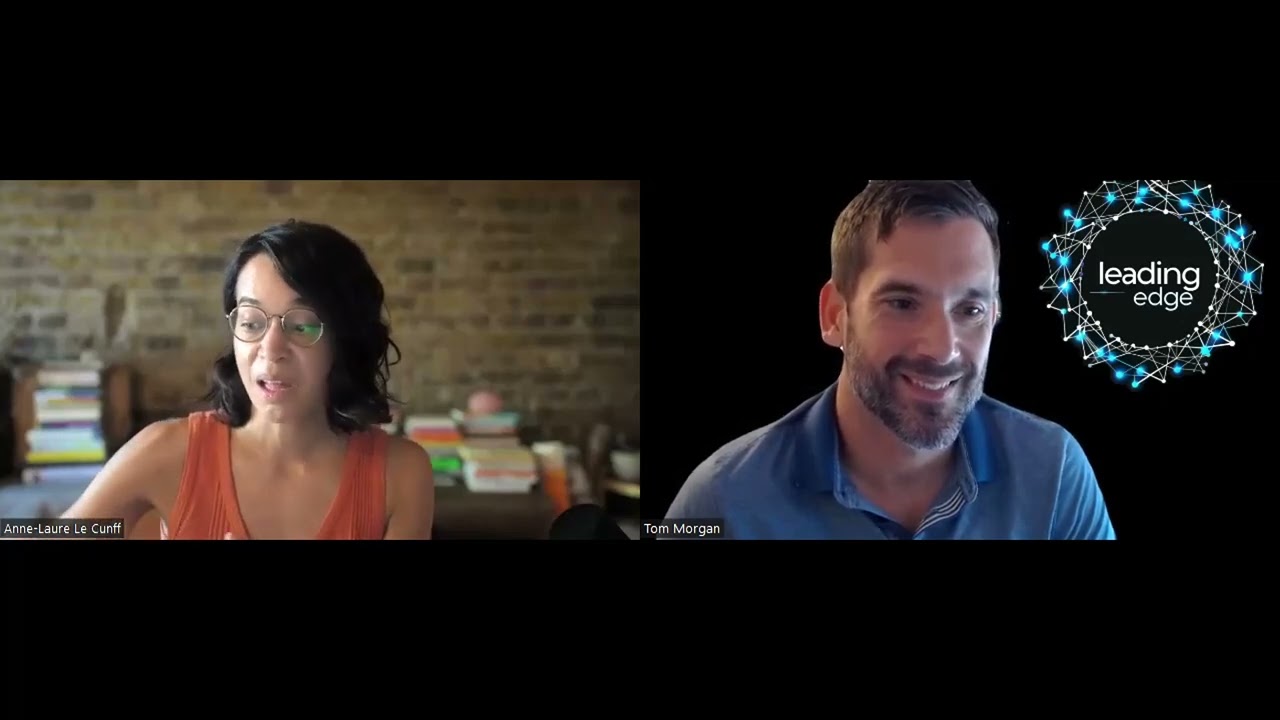
This content was created by Anne-Laure Le Cunff. This content was uploaded by Anne-Laure Le Cunff. This is a YouTube/podcast-style interview titled "Accelerating Wisdom" Episode 2: Revealing Attractors with Anne-Laure Le Cunff (published July 13, 2024). The excerpt is a recorded conversation between a host (Speaker A) and neuroscientist, writer and NessLabs founder Anne-Laure Le Cunff. They discuss curiosity as an "attractor," types of curiosity (epistemic, empathic, diversive), the explore/exploit cycle, designing and running tiny experiments (including examples and accountability strategies), practical tools like the Plus/Minus/Next reflection framework, and broader themes such as career reinvention, social-media attention traps, and wellbeing benefits of curiosity. The piece is conversational, interview-format content aimed at practical, actionable approaches to cultivating curiosity.
Chapters
I am incredibly excited to introduce Anne-Laure Le Cunff. She is a neuroscientist with a specialty in curiosity who's also the founder of NessLabs. NessLabs provides content, coaching courses, and community to help makers put their minds at work. She also has a new book titled Tiny Experiments coming out in March of next year, which I'm very much looking forward to. I am so incredibly excited for this conversation. As most of you will know by now, I believe attractors generally and curiosity specifically is the most interesting topic I've ever explored. Anne-Laure Le Cunff, not only is your work on curiosity fascinating, you've also got some deeply practical recommendations on how to structure experiments to explore it. So I wanted to kick off with kind of a broad question, but You and I both believe curiosity is, quote unquote, an attractor. I'm sure— I'm not sure that a lot of people will kind of understand what we mean by that. So what do you mean by that?
Yeah, I got that idea based on the definition of what an attractor is in physics, where it is the end state that a system tends to point towards, to whatever the starting conditions are. And I feel like curiosity is that state that points that we keep on going back to whatever we want to do. And specifically, we have some curiosities in life that could be projects, that could be ideas, that could be places that we feel a very strong pull towards, to a strong drive to explore. And no matter how maybe irrelevant these things are to our current work, how— no matter how urgent it is for us to work on these things, we just can't get them out of our head. We keep on thinking about, oh, you know, one day I will need to work on this. And to me, those are the strongest kinds of attractors.
There's this idea I've run into that the universe trends towards complexity, and the definition of complexity is differentiation and integration. So it's this kind of weird paradoxical definition where the world is trying to make you the most differentiated version of you that you can be while also keeping you integrated into the system. Like your body is made up of all these wildly differentiated little parts that are also kind of integrated into the system. And there's this idea that curiosity or what you're interested in is, is something that's pulling you in that direction that almost seems kind of paradoxical. Like one, what are you, what are you most differentiated, what skills are you most differentiated in? But also how does it serve the system better? I don't know if you have thoughts on that or whether it plays into your perception of the different kinds of curiosity.
That's so interesting. I almost see it as a process of convergence and divergence and then convergence and divergence, or rather starting with divergence. And so you start by exploring, by going broader. And this is the, the moment, the phase where you feel like you're pulled in those different directions, where it almost can be a little bit hard to decide which which trail of curiosity you're going to follow. And this is where things become more complex. And then after a while, you start learning different things, discovering new ideas and connecting them together. And you start simplifying those, making them your own, and you integrate them. And that's the convergent phase of exploring your curiosity. And after a while, I think a lot of us have experienced that. If you almost stay in the same spot, if you just keep on exploring the exact same ideas, idea for a while, you will after some time feel like you need to go and explore again. You need to go into divergent mode again. So I think that's how I think about it in terms of curiosity. So very much aligned with the idea of divergent and convergent thinking.
Yeah, it kind of sounds like, I guess it's another way of saying like explore, exploit. You wrote this fantastic piece, and I would point all listeners to your newsletter, but you wrote this fantastic piece where saying like, okay, Like a lot of us, particularly in today's really attention-starved world, get pulled in a lot of different directions. But there are ways of working out how to stay— well, how to, how to, which ideas to pursue and when, I guess is what I want to say. And you talked about how the stickier an idea is, the more it just keeps coming back to you as an indication of whether you could pursue it. Are there any other things that kind of stand out as like okay, it's now time for me to really take the plunge?
I think there's the quantity aspect you just mentioned, which is linked to that concept of attractor, which we just discussed, which is how many times you keep on going back to the same idea. That's a strong indicator. But there's also a quality aspect, depth, strength of the pull, the intensity of it. And this is something that is obviously very subjective. But again, I think we've all experienced that when there's something that makes us feel deeply excited. And it's even more interesting when you notice that this is not necessarily something that other people are as interested in as you are. You can't stop talking about it. You tell your friends about it. They look at you and they're like, come on, shut up. Let's talk about something else. This is a strong indicator that this should be something you and no one else explores in a very, very deep way. So I would look at that quantity and quality.
But that's why I find this so fascinating, because that's also resonant with this idea of differentiation and integration that you don't totally have full control over what you're interested in, which is like another kind of brain scrambling idea, which is that like, if you don't control your interests, what does? And you have these things, so, you know, like my wife is interested in completely different things to me. And yet this idea that if you're increasingly occupying an evolutionary niche, they should be super different and they should have this really different energetic signature to them. When you're getting interested in things. But one of the, one of the questions stroke kind of dismissals of this concept of curiosity I get a lot is that you can be curious about dumb things, right? You can be curious about like, or even if things don't seem stupid, they're not productive things or they're actually kind of bad distractions that have no usefulness in the world. Like, how do you know when you're pursuing a niche that's going to be fruitful relative to one that's just going to waste your life?
It's so interesting. It kind of connects back to what you were talking about a little bit earlier about this impulsive drive to explore. It's, it's interesting because there's actually neuroscience research showing that you have shared neural mechanisms between impulsivity and curiosity. So we, we really have this impulse to resolve uncertainty, this impulse to know. And because of that, sometimes we don't have our rational thinking part that kicks in to ask, wait a minute, am I am actually interested in this. And this is actually what social media companies exploit, because if they create this little gap in curiosity and knowledge, you just, you want to know what happens next. And so you keep on scrolling and they don't give you enough time for you to stop and think about whether you're actually curious about this piece of information or not. So I would say that's the first step. Is just slowing down a little bit. Very often we don't even give ourselves the time to consider whether we are deeply curious about something or if it's just a dumb thing that someone is feeding us, or if it's just something that we're using. It's a type of curiosity called diversive curiosity when we're using curiosity as a way to procrastinate, to avoid working on other things, or just because we're a bit bored, for example. Which is completely fine. I do that all the time and I sometimes fall into very interesting Wikipedia rabbit holes because I was trying to avoid working on something I should be doing. But it's really about this intentionality, just posing and asking yourself, is that really what I want to do with my time right now? So first, posing. The second one, a good filter, I feel like is not necessarily asking yourself whether this is a smart a waste of your time, or if it's a dumb idea to explore, but whether it connects to something that is currently useful to you in terms of work or in terms of personal aspects in your life, growing in your relationships, or maybe some type of creative project that you have. If it connects in just even the very simple way to that, you can then again integrate it. And incorporate it into those different projects or those parts of your life that are important. When you do this, sometimes even a very dumb idea can actually transform itself into something that is very generative and useful and can lead to some very creative, like, to some creative breakthroughs. So dumb ideas are okay as long as they connect to something you're actually interested in.
Man, that's so interesting because, um, I think a lot of people know that the guys who set up notifications in most of the social media companies, they came from slots, from designing slot machines. And, you know, this is, this is wild book called The World Beyond Your Head by Matthew Crawford, where he talks about how slot machines, like everyone thinks slot machines are kind of like simple and benign, but he talks about how, you know, once they connected people's bank accounts to the slot machines, You know, a woman is interviewed and she said she, she would have to wear dark trousers because she would soil herself rather than get off the stool. And that they, they talked about this relief that once they'd emptied their bank accounts, they could finally leave and go home because they were so addicted to this. And the way I've thought about it is these are kind of unresolvable dilemmas that slot machines are designed so that they always present this kind of gap in your model, but it's not resolvable. You're never going to find an answer to the slot machine. It's presented so that you might be able to find an answer. But to the stickiness of ideas, one of the ways that sticky ideas were described to me once was basically there's a gap in your model of the world, that this dissonance is caused by you not understanding things very well. And so the reason why it won't go away is it's kind of your environment being like, you don't understand this, you don't understand it, your model is incorrect, your model is incorrect. And the longer you persist in that, like the worse, the worse the dissonance can get. But that dissonance is resolvable, whereas in certain situations it's designed so that it never will.
That's absolutely fascinating. Very sad also. And that's the case with a lot of the, the ways our brain works, where from an evolutionary perspective, those were mechanisms that were designed for survival. But either they have become maladaptive today because of the way our society is designed, Or in the case you just described, you have people who have learned to exploit them to their advantage, very often to grow some type of business.
Yeah, it's, it's nuts. And I guess it points to when you're, when you're, when you're kind of pursuing your curiosity, although this sounds incredibly trivial, it's like, is, is this resolvable? Is this mystery resolvable? Is there an answer that can come out of it? You've also, you mentioned diverse curiosity, but you've also kind of broken curiosity out into a number of different categories. How do you see the breakdown of the different kinds of curiosity?
You've had lots of research and different models of curiosity with different dimensions. The one I find the most practical to use in everyday life and to navigate your own curiosity is dividing it into 3 types. The first one is epistemic curiosity. Second one is empathic curiosity. And the third one, which we just discussed, is diversive curiosity. The epistemic type of curiosity is the one where you're seeking to understand the world. So you're trying to find new knowledge, new ideas. It's an intellectual kind of curiosity. The second type, empathic curiosity, is about understanding other people. You want to connect with them. You want to understand how their minds work, how their emotions work. And this is really part of the social fabric of what makes us human as a society. And the last one, again, diversive curiosity, is the one we use in order to avoid doing other things. It's the one we use when we're a little bit bored. And it's, it's, it's one that can be very impulsive and very hard to control. A lot of people would say you should completely avoid having diversive curiosity in your life, and I'm not part of that school of thought. I think diversive curiosity is very fun sometimes and is, again, part of what makes us human. And so there's no reason to try to be overcontrolling here. But we just need to be a little bit aware of when we're exercising that type of curiosity and whether this is our intention or again, in the case of slot machines or any kind of other apps or social media, if there's someone else here who's gaining some sort of advantage in keeping us in this loop of curiosity instead of directing our attention somewhere else.
Yeah, it's super interesting. And this may sound a little woo-woo, but it's it's been too productive in my life for me to ignore, which is I've increasingly cultivated an energetic signature to go with my curiosity where like there are kinds of doomscrolling that are like fast food. They leave you feeling pretty bad afterwards. Certain topics that don't resonate with you, but you find yourself pursuing. We all know what they are, you know, like politics, bad news, whatever it is. But I've also found that if you inject love into these interactions, like I've met, you know, 10 to 20 really good friends through Twitter, But it's basically been creating a human connection where I, you know, I do a Zoom call like this and I get to know someone and I get to meet them and I acquire that depth of, of relationship. But also I've noticed this energetic signature attached to new pieces of information that if I really pay attention to a book recommendation or an article link, it will often indicate to me where I should pursue things. And I, I guess that plays into what a lot of what you're saying in terms of like is it linked to something that I've been pursuing? Is that something you find, or is that kind of crazy sounding?
Well, I mean, energetic signature, the name you give it, does sound a little bit woo-woo, but anything you're describing does make sense to me. Uh, we're obviously going to feel like some, uh, ideas make us feel good, others don't make us feel so good. And when we consume these ideas in a very high volume, as we do on social media, these effects are compounded. And I think it's really about here almost like designing your playground and curating the experience. So if you go on a platform like Twitter, something that's fairly nice, I mean, the algorithm keeps on changing, but for a long time, by following the right kind of people, you would also have a very interesting feed. And very similarly to you, I could actually scroll for a very long time on Twitter, but somehow I didn't feel so bad about it because because I saw a lot of ideas. I would bookmark a lot of articles. I would have very quick conversations sometimes with someone by replying to their tweet. And it felt a lot more mind-nourishing than scrolling on other platforms where I have zero control over what is being fed to me. An example, obviously, is TikTok or Instagram Reels, where who you follow doesn't really have an impact on what you're going to be fed. They use the type of content that you engage with while you're scrolling. My problem is that I tend to engage with very dumb stuff on these reels. And so I get fed more of that dumb content that has no connection whatsoever with any of the areas that I want to explore in my life. Whereas on Twitter, I can be a little bit more intentional and really curate the people that I follow and design that playground that I have. So in that way, where, when you're in the right kind of playground, you can almost let go a little bit more. You don't have to be on your guard. You can be truly curious and explore and let your attention go where it wants to go because you have created some basic parameters where you feel like most of the content you're going to engage with is going to be somewhat related to your intrinsic type or intrinsic curiosity.
So something that's already dropped out of this conversation and appears to be like absolutely fundamental to the pursuit of curiosity is this idea of space, right? That you You can't explore if you're always exploiting. And, you know, experiments seem to be absolutely critical to this process. And you have literally written the book, or at least you are writing it. So like, how do you think about structuring experiments? What's the relationship between experiments and curiosity?
So I actually think about designing experiments in a very similar way to the way scientists design experiments. You start with a question. And that's what's so beautiful about experiments is that it allows you to turn any kind of doubt that you have not into a source of fear and anxiety, but into an opportunity for learning. So whenever you're facing something that you don't understand, whenever you have this uncertainty, this gap in knowledge, and this could be about the world, this could be about others, or this could be about yourself, you can then formulate a hypothesis. So let me give you an example. You know, a question like maybe why— actually, I'm going to use a real experiment that I did myself. I was like, why is it that I have never managed to meditate in my entire life? I've maybe managed to do it for 2 or 3 times in a row. You know, on those apps where they have the 10-day onboarding program. I've never managed to finish one of these. So I, that was my question. Why, why is it? And then I had a hypothesis, uh, which was maybe I'm lacking accountability to do it because no one's watching at the beginning, especially because it's new and it's quite hard. And I don't see the benefits straight away. I've just stopped doing it. So I designed an experiment where I said, I'm going to meditate for 15 minutes every day for 15 days, and I'm going to do it in public. So I created a Google Doc and I announced on Twitter that I was going to conduct this little experiment on myself and that every day at the end of each meditation, I would take notes in that Google Doc. And it was absolutely amazing because I had lots of people every day who left comments in the Google Doc and who told me, so for example, if I wrote, uh, is it normal that I always feel a little bit itchy everywhere? Am I supposed to move? Am I supposed to, to? You know, scratch it, or are you supposed to be like in the movies where they really don't move at all? And people would say, no, that's fine. You can either scratch it or you can meditate on the itch if you want to and explore it again with kind of meta, but with curiosity. And I tried based on the comments of people, I tried different techniques, eyes open, eyes closed, a bit of breathwork before doing it, sitting or on my knees, etc. So that was one experiment. And in the, the, the way that I think is very useful to see it is as a cycle where you ask a question, you formulate a hypothesis, you then run an experiment that allows you to test that hypothesis. And then based on the results of that experiment, you're probably going to have a lot more questions that are going to arise from this, and you can pick one to run your next experiment.
I mean, it reminds me of what else you said about pursuit of curiosity, that you need like a doing buddy, or at least it helps if you have a doing buddy, someone to kind of keep you accountable and to help you like formulate the experiments, but also kind of make those leaps.
Yes, especially for people who are very curious, there can be a tendency to start a lot of things and not finish them because we kind of suffer from the shiny toy syndrome where then we see a new idea, a new project that we're very curious about and committing to one aspect of our curiosity and then having a friend or a colleague where we say, hey, I'm going to do this. Let either, let's do this together or maybe you do your own thing. I do mine, but we meet every week for coffee or we have a Zoom call and we just talk about it. We talk about our progress, about what we learned. We can even brainstorm new questions for future experiments together can be really, really helpful.
You also made me think of this. I don't know if you've run into this gentleman called Rory Sutherland. But yeah, he's, he's incredible at the idea of like counterintuitive experiments. So, you know, he says that often evolution optimizes for interesting and anecdotes like you listen to him. I listened to, I interviewed him once and I listened to 10 podcasts.. And I realized that he uses really trivial sounding anecdotes to make incredibly deep points. So he's the opposite of most podcasters that are sitting there trying to sound intelligent and actually saying nothing. He sounds like he's really trivial. And if you spend 20 minutes thinking about it, you're like, oh my God, that was so deep. But he says that one, you should pursue anecdotes because if something is interesting, it probably contains evolutionarily important information. But also he said often that requires being like deliberately counterintuitive. So he says to, you know, people whose product is failing, have you tried raising the price that you suddenly create like a Veblen good or a luxury good? Like no one thought of a $15 coffee or a $300 vacuum cleaner before Starbucks and Dyson. I guess like, do you have any thoughts on that? Like how do you know when like a totally irrational experiment is too irrational? Or how do you know when you should be taking the leap?
I, I think you don't really have to worry about this if you keep your experiments very small at first, especially if it's something that's very new. So if it's something that looks a little bit like crazy, you've never tried it, you can do it for a short amount of time. So just for a few weeks to see how that goes. And especially if it's something like in my case, meditating in public, like on the crazy spectrum for me, who's actually pretty shy in some way, doing this was actually quite challenging. So I kept it to 2 weeks. And if it's something that feels a little bit more comfortable, you can then do it for longer. And in the same way, once you've finished a tiny experiment, um, and you feel like that was good, actually, I really liked that. I want to go deeper. You can then rerun it and go through another cycle of experimentation that is a little bit bigger. So if you did it the first time for 2 weeks, you can do it for a little bit longer. In that sense, you don't really have to, to worry about it. That's the idea of an experiment is that you really should not judge whether this is for you or not before you finish collecting your data. Just like a scientist is not going to make a decision about the results when they're halfway through running the experiment. You just collect your data, you show up, you do the things you say that you were going to do. And then at the end, there's a reflective period where you ask yourself, okay, how was that? How did that feel? What did I learn? What would I do differently if I were to run that experiment again? But you only do this after you're done collecting all of the data.
So for the last 4 years, like, for context, I had the world's most horrifyingly badly executed midlife crisis, nervous breakdown, career transition, where I made every conceivable mistake. But a lot of it involved, you know, taking leaps and not really interpreting the results that I was getting from them very accurately. And the question I now get when I speak to a lot of people in transition is like, this is all great, but like, does it work? And you've obviously made this your, you know, your life's work, and experiments are the focus of your career. Like, there's a huge amount of inner resistance that people have to really putting off an anything out there. Like, what gives you the sense that this experimental structure works? What have you seen around you? What have you seen in data or in real life to indicate that this is worth people's time?
I mean, there are all of the members of my community that have done it, hundreds of people who have seen success with this method. Myself, most of the projects that I've worked on that have had a significant impact on my life have been designed as a form of experiment. Even my newsletter, my newsletter started as an experiment. I said, I'm going to publish 100 newsletters in 100 weekdays. So that was the experiment. And it's designed in this way. Every single experiment is like this. You just commit to do it, doing something for a certain number of trials. You decide on the number of trials beforehand, and then you complete all of the trials, and then you analyze the data. At the end of those 100 weekdays, I looked at the data and I was like, Oh, well, I like doing this and people seem to like what I'm writing also. So I'm going to keep going. And I now do this for a lot of different things that I want to do. I just commit to it for a short experiment, analyze the data, and then I do it. There's really nothing that new and groundbreaking. The only thing I'm doing with my work is packaging it into a very simple framework that people can apply. But a lot of the, the way, you know, we work, we do research science, or even if you think about the Socratic method of asking questions, getting answers, formulating new questions based on this, intuitively as human beings, we've been using those types of cycles of experimentation across a lot of different things. That's what a chef does when they cook. They add a few spices, they taste it. That's the reflective part. And then they adjust the recipe. That's how athletes train. That's really how any type of person who has had long-term success is really behaving, but just not necessarily in a codified way, in the way I talk about it and I write about it.
So this is where I really struggle because I'm a writer and occasionally like speaker, like on podcasts, and I love that and I always did. But I never had any sense that that was where I would, would end up. And actually my experiments were kind of blind luck that the reason why I'm now a professional writer is 'cause I wrote something, I sent it out to a small distribution list and my former employers were like, this is great, we're gonna hire you as a writer. And so when people are like, okay, well you are a writer, that's a kind of obvious experiment for you to run, even though I had no idea that would eventually be my landing place. But for people that feel like they don't have it, any connection to something creative, you know, quote unquote, that they can offer to the world. Like, what are, what are the kinds of experiments you've seen people run in reality that have produced like kind of cool results or like at least really low hurdles for people to get over if they want to just test this thesis with kind of zero consequences or low consequences?
Oh yeah, I just want to clarify that it doesn't have to be for creative projects at all. It happen. So as I said, I did it with meditation, for example, has nothing to do with the creative project. One of my favorite ones from the community is someone called Jamie, and he ran an experiment for a month where every day he would send a text to a friend. And that's it. He had noticed that by, you know, becoming a little bit older and not hanging out as often with the people that he loved, he was starting to lose touch with some of the people he really cared about.. And so he just designed that experiment where he said, every day I have to pick someone from my contact list and just send a text, hey, how are you doing? How are things? And that's it. And because of that experiment, he's reconnected with a lot of friends that he hadn't talked to in a while. You can imagine the positive impact it had on his life, on his wellbeing in general. And to me, that's an example of just a very small experiment that's easy to do. That's just the right level of uncomfortable where you know you're growing, you're doing something a little bit different, but that is nothing crazy creative or putting yourself out there or even doing it in public. You don't need any of this. You just need to pick something, decide on the number of trials, do it, and then reflect on it.
It's so funny because, um, when I used the— when you use the word attractive with people, you're like, well, if you've got 100,000 romantic partners to choose from and they've got 100,000 romantic partners to choose from, when you're mutually attracted to each other, Like that seems to be a way that kind of nature solves the problem of combinatorial explosiveness where there's just too many options and too little time. And I've always wondered whether like information works in a similar way, although we wouldn't think about it that way. But then in your work, I was looking at, you know, you said that curiosity keeps you young, curiosity helps you learn, curiosity fosters better relationships that kind of like if you can apply this energetic concept, which I like to everything, the connectivity of you to those things actually comes out. And I think when people read that curiosity keeps you young, then they'd be like, like, what? But is that something you've noticed? Like, what are the, what are the side effect benefits of curiosity that you don't think are immediately obvious to people?
Yeah, for keeping you young, when you think about the mechanism behind it, it actually makes sense because by being more curious, you then keep on learning new things, which is really good for neuroplasticity and which can help stave off cognitive decline. So that's That's the link here. In terms of better connecting with people, when you're curious, you also tend to ask better questions, to really try to understand people, and so you form deeper relationships as compared to if you're not that curious. There are so many different studies showing different benefits. It increases well-being in general because when you're curious, you tend to look at the world with more awe and wonder than if you're not as curious. So if you're feeling a little bit low or if things have been a little bit hard in your life, being curious allows you to still look at the world and feeling like, pretty cool to be alive, actually. So many interesting things. And it's also good for work performance because curious people tend to also ask more questions. And that makes for better work in general when, again, we take the time to really understand what we're doing and sometimes to ask difficult questions. So those are some of the ones that just come to mind right now.
It just sounds like this incredible superpower that, you know, I do have a lot of people come to me and they'll be like, I'm just not a curious person. And like, I'm actually not really interested in anything. And that's something, you know, like, you know, like, I like golf or like, is there like, where do people who like don't think they're curious at all start?
But maybe they start with golf actually, because maybe that's what they're really curious about. I think it's more of a mindset. They're probably very curious about golf. They've maybe read everything that there is to read about it, or if they're not readers, maybe they've watched every single game or match. I don't even know. I watch— don't watch golf, so I have no idea how it works, but they're probably really curious about it. So maybe instead of saying, I'm not curious about anything, I just watch golf, they could say, yeah, I'm very curious about golf. Like, that's really— that's my curiosity attractor. That's the thing that gets me excited. And once they've identified and recognized that this is curiosity, actually, they can then try and direct that same kind of energy towards something else if they want to. They don't even have to, but just recognizing that we are naturally curious. There's really no such thing as a human being that is not curious. We have evolved to be curious. Um, again, Neuroscience studies have shown that we have the same brain networks that are activated when we crave information as when we crave water and food. So when we're curious about wanting to understand something, our brain reacts in the exact same way as when we want to have food or water. So when we talk about having a thirst for knowledge, that we really couldn't use a better expression. And it's really about just telling people, hey, you're actually curious. It's just that maybe that's not the term that you would be using to describe this deep interest you have in gold, for example, but you are already curious. And if you want to, you can be curious about more things.
I appreciate this is a broad question, but given you're writing a book, is there, is there anything that I haven't asked about that you think is like a really killer practical tool or approach that people can be using to bring this deeper into their lives?
There's a tool I really like that is useful for the reflective aspects of any kind of experiment, and it's called Plus/Minus/Next. It's very simple. It's 3 columns: plus, the first column, minus, and next. In the plus column, at the end of your experiment, you can write everything that went well. In the second column, minus, everything that didn't go as planned, that was unexpected, maybe not in the best way. And in the next column with an arrow, you can write anything you want to try for your next experiment. So any tweaks that you want to make, or even for next, you can write, actually, I'm done with this thing. That was horrible. I don't want to do it again. That's completely fine. Or you can decide to, you can say, I'm going to do it again, but I'm going to do it bigger or longer, or I'm going to do it again, but this time I'm going to do it with a friend. So that's what goes in the next column where you think about what What does the next cycle of experimentation look like?
That's so cool. And you made me think of something. My friend, my friend Jim O'Shaughnessy, I was weighing up the decision of whether I was going to start this company I've just started. And he said, of all the different options in front of you about everything you're going to do with your life, you know, at the time for me, it was like there were 6 different flavors, 6 different varieties of what I could be doing. And he said, map them out on a tree. But then imagine that you've already done each one and it has succeeded or it has failed. Now say, what are the good things that have come from that success or the good things that have come from that failure? Which was kind of a weird, weird way for me to frame it. It was almost like the collapse of these quantum possibilities where it's like, okay, that's already happened. Oh, actually, if I become a success at this, do I, do I want that success? Do I want to be managing that kind of business?. And it was a really powerful way for me to work out in advance because it was a way of almost kind of front-loading that energetic outcome where I was like, oh, like actually, even if everything goes right, I don't want to do this with my life.
I love that because it also shows that, you know, I mentioned earlier that you can direct your curiosity towards the world or others or yourself. But what you're saying right now makes me also think that that you can direct your curiosity towards the past, the present, or the future. And there is really value in, in any of these. You can either really look at history, and again, history of the world or other, or even your own past history, and look at that with curiosity, like in a very neutral way to try and learn from it. Or you can be deeply curious about the present moment and your current experience. Or in your case with that exercise, what does deep curiosity look like when it's directed towards the future? And I imagine it looks something like that exercise that you did.
It's funny because, um, one of my favorite quotes comes from Benoit Mandelbrot where he's like, my life seemed like a random series of events, but when I look back, I see a pattern. And, you know, I came from the world of investing and, you know, two of the gods of investing, are Ed Thorp and Jim Simons. And what was really interesting about both of them is that they were like stupidly successful in the world of finance. But I didn't know until Jim Simons passed away recently, he spent 10 years in a strip mall failing over and over again. And then his hedge fund did like 60% a year for 30 years. Like, it's insane. He's the best of all time. And he always said he was guided by beautiful problems. He seemed to be— he was intrinsically guided by this sense of beauty and curiosity. And then Ed Thorp was another example where he was, um, he was an academic, then he got convinced that he was gonna, was able to break roulette. He ended up doing it with like a computer and then the mob tried to kill him in Vegas. So he then moved to being like a hedge fund manager. But it, I was looking back through his life and yes, he did have abundant resources, but he was always able to flip really quickly between these different domains and was like, oh, 'Oh, academia isn't interesting to me anymore. I'm going to go pursue this.' And a lot of people think of finance people, particularly very successful finance people, as kind of these very boring, staid people that fit into boxes. But I found it like pretty amazing that they also found so much beauty in what they were doing.
Yeah, I really like that. I also like the idea of, which is linked to curiosity and lifelong curiosity, of allowing yourself to reinvent who you are. Through your own curiosity. And I think unfortunately a lot of people limit themselves in terms of which types of curiosities they can follow because maybe it's too different. It doesn't align with their current identity. So as you said, sometimes someone working in finance may think, oh, maybe like I can't become that curious about cooking or art or whatever. Like I can do it as a hobby. But maybe I can't take it so seriously that that becomes the main thing in my life right now. But when you allow yourself to almost to, to die, to let that identity die, and then letting yourself being reborn into a new curiosity, you can have many lives over and over again. Um, so yeah, I think letting yourself die and letting yourself being reborn in a new type of curiosity can be really powerful in a way to live a beautiful.
It's so incredible that you said that because I've been doing this series on Accelerating Wisdom and I've spent months on it now. And what you see as this meta theme is this ability to embrace rebirth all the way through, but cognitively over the course of a life. And whenever anyone comes to me at the very start of a journey that they're starting to hear the, you know, the call to adventure and they know that they're not happy with what they're doing, I recommend a book to them, which is a book by Herminia Ibarra called Working Identity. And she basically says exactly what you say, that this is kind of really deeply unpleasant liminal stage where you, you have to shed a persona that no longer works, but you don't have a new one yet. And for most people, particularly for me, when I shed the finance persona for like 3 days, I was like, fantastic. And then I had no idea what my next persona was. And it took me, uh, nearly 3 years. And the thing that Ibarra's work showed is said, yeah, it typically takes about 3 years. And that was a source of comfort to me, but also a source of abject terror because like I knew that I was gonna have to experiment for 3 years and it did take me 3 years, but only after I think I'd failed time and time again.
That's amazing. I didn't know about this work. And when I think about my own experience when I left Google and then I was trying to figure out what I wanted to do next, I would say 3 years is accurate. That's about the time it took me also to find my next cycle of experimentation.
And I guess that speaks to the strength of your work, which is that maybe, just maybe, you can create a safe space where you can start to experiment with these alternate identities and these alternate experiments without blowing up your life. Like, sometimes you have to blow up your life, but, you know, for me, it's like, can you dial back the day job 10%? So that you can find these, these low-risk experiments.
Absolutely. I find it very dangerous and harmful whenever I read online people telling others, just quit your job and go and do that new thing, when it's completely unnecessary and it adds risk and fear and anxiety around something that should be fun and joyful. So that's That's not what I recommend to people. I do tell them start a side project, do something on the side, join a community of practice around those topics that you're curious about. And if you feel after a while that this is one of those very strong curiosity attractors, then maybe make the jump.
Yeah. And I, I guess something I've spoken to a lot of people about is when they make the jump, they kind of assume that that that jump is going to be the right jump. And when that collapses beneath them, that's a horrifying moment for people because they're like, well, I've made the jump, I kind of expected to be held. And I, I think I, I went through, you know, 5 different identities and at least 4 different jobs. And every time it failed, I was like, oh my God, I'm a failure. I've been very successful in my life up to that. And then I was just like, you know, being turned down for $20,000 a year jobs in Midtown. Like, it was, it was absolutely brutal. And it was hard for me to hold fast to the thread of what I knew was eventually going to be the right place because I didn't even know I was a writer at that stage. So if anyone's going through this, I'm very sympathetic to that.
Yeah, absolutely. I think this is also why I like the container of experiments, because if you design those experiments again without having to quit your job or anything like this, there is no possible failure really, because you're designing the experiment to collect data. And to discover something new about the world or about yourself. So you're asking a question, designing the experiment, running it, and then you have more information. So you understand it a little bit more. And in the same way that when a scientist doesn't get the outcome that they expected, they don't go, shame, I'm horrible, I'm so bad at my job. They just go, oh, that's interesting. What's going on here? That's what, that's really the power of running experiments is that it really changes your mindset in the terms, in the way you're exploring potential paths for your life.
Yeah, there's this wonderful, so there's a gentleman called Cedric Chin who's gonna be doing one of the episodes in this series and he introduced me to the work of this woman called Leah DiBello, a cognitive neuroscientist. And she basically found, as you and I expect, it's reps that matter. That if you get 60 reps in a bounded domain, in the right domain, that often means you can approach mastery, which like that sounds like a crazy low number until you're like, well, how many things have I intentionally failed at 60 times, right? Like particularly for very Type A people, it's like, what have I been willing to fail at 60 times? And I think that for me was a helpful reframe. It was like, oh, I've got to find something I love and then kind of intentionally fail at it. And that at least took the stigma of failure away in, I think, a lower stakes environment.
That's amazing. And, and you're absolutely right that particularly for Type A people, it's very hard to accept failure. And in some way, we're really limiting our own growth when we're doing this. A lot of the best entrepreneurs and the best scientists and the best athletes are people who are very comfortable with failing and who fully embrace, not as an idea or something you say, but fully embody the idea that failure is actually part of the process. And they, they almost want to go through that process. They want to fail because they know it's necessary and they look forward to it so they can learn and so they can keep on growing. So it is really part of the those cycles of experimentation. And I think this is one of the best gifts we can give to ourselves, is to really allow ourselves to, to fail, not only falling in love with problems, but also falling in love with our mistakes.
I'm going to ask you an impossible question, which is that because I get asked all the time and I don't have any good answers, which is when you failed at something, how much of it is the universe saying, no, go try something else. Like you've, you failed at this, it's over, you've gotta pivot. And how much of it is saying, just keep iterating on this idea and you'll get a better one. 'Cause when for every Jim Simons working for 10 years in a strip mall, there's probably 1,000 variants of Jim Simons that didn't make it that were working in different strip malls. So I, I think people get very upset met with the survivorship bias in this concept. Is that something you run into or you even have a sense of?
I, I think the, the question is not so much about the universe but about more of your internal universe. How do you actually feel about it? In his case, for example, he probably kept going because he couldn't see himself do anything else. He would have been miserable if he didn't keep on trying. And in that case, keep on trying. If there's something that you feel like is calling you in a way that is so strong that there is nothing else that makes you feel curious or that you want to explore, just keep going because you're still happier doing this and failing over and over again than you would be pretending to like something else. But if— and that's the problem— very often our goals are not even our own goals. It's the entire theory of mimetic desire. We're just copying what others want. And if you try something and you fail, and maybe you try a second time and you fail, and it's not really something you want that deeply, it's just that it seemed appealing based on seeing someone else succeed at this. Maybe you felt like, oh yeah, maybe I kind of want to be an entrepreneur. Maybe I kind of want to do this thing. I would say try and find something else you're curious about to experiment with, because if it's not working and it's not something you're deeply, deeply curious about, there's no point in keeping on torturing yourself.
Yeah. Well, this conversation has exceeded my high expectations. I'm so glad we did this, and I'm so glad our curiosity brought us to each other. Where can we learn more about you? Let's preorder the book. Tell us, tell us how we can find you.
The easiest would be to go to nesslabs.com, N-E-S-S-L-A-B-S.com, or I'm on Twitter/X @neuran, N-E-U-R-A-N-E. Anne-Laure Le Cunff, thank you so much for your time.
It's been a delight.
Thank you so much.
More from Anne-Laure

How to Use Curiosity & Experimentation to Flourish, with Dr. Anne-Laure Le Cunff

Stop chasing goals and start running tiny experiments with Anne-Laure Le Cunff

Why You’re Still Waiting To Figure It All Out | Anne-Laure Le Cunff | EP. 391


Tiny Experiments: How to Learn, Grow, and Navigate Uncertainty — Anne-Laure Le Cunff



Stop Setting Goals. Try This Instead | Tiny Experiments with Anne-Laure Le Cunff


