Stop chasing goals and start running tiny experiments with Anne-Laure Le Cunff

Anne-Laure Le Cunff, a former Google executive and neuroscientist, explains how tiny experiments (action plus duration) replace traditional goal-chasing. She covers practical design tips like trial periods and Plus/Minus/Next reviews, the neuroscience of uncertainty, and how systems beat willpower.
Chapters
If someone comes with an opportunity that doesn't look like it's perfectly aligned with your current definition of success, you might say, "I don't have time for that," right? But if you ask, and that's what I did for my book, I interviewed a lot of successful people and I asked them, "How did you get there?" The ones that are honest and that give you a true answer to this question, they'll tell you, "You know what? I had no idea what I was doing, but I met a lot of interesting people. And then this person said, 'Hey, do you want to collaborate with me on this thing?'" And I was like, "I don't know what that thing is." "Hey, this person seems cool, let's do that, let's see what happens." And looking back, they can make sense of the story and the path, but when they were in the middle of it, when they were growing and getting to that point of success, the reason why they became successful was because they opened all of these doors, they stayed curious instead of being focused on that one true passion that you have to follow.
Welcome to Mindvalley Book Club series, and today I have a wonderful guest. God, I've been practicing your name because— but I think I will manage. Anne-Laure Le Cunff.
That's really good. You've been practicing.
Yes.
Thank you. So Anne-Laure is a former Google executive turned neuroscientist. I'm saying it with massive jealousy. I mean, you've had both of the worlds and you just recently got another degree from King's College London, right? Just recently.
Finished my PhD last year.
PhD, wow.
So, yeah, I think I'm done with degrees now.
So, Dr.
Le Cunff. Yes.
As of recently. And Anne-Laure wrote this wonderful book, Tiny Experiments, which was a book of the week by Mindvalley Book Club just recently, and we are very proud to bring you on stage to talk about that. I was telling Anne-Laure that the theme for today is future-proofing, which I think is We didn't actually coordinate our books with the themes of the event, but I think this theme suits us very well because the book is actually talking about how we are so obsessed in our goals and this linear path that sometimes we are robbing ourselves of our true potential by being a little bit too single-mindedly focused on this one thing. Maybe it's a very simple explanation, but here you go. Did I leave out something which is important to mention before we go into this whole— conversation.
No, I mean, we're going to have an entire conversation, so let's dig in.
So how did you break out of this pattern? Because I kind of understand, and in Mindvalley, you do hear a lot of ideas, you know, follow your heart and then do the things that make your soul sing. But when it comes to real life, the predominant paradigm is that success is very linear. It's very simple. Is your title, how much money you make, and how big a following you have, and everything else is kind of good to do. So how did you break out of that paradigm, which sometimes holds us hostage, in my opinion?
Yes, a lot of the people I work with are actually very ambitious. The problem is that when people are unhappy with their work, most of the resources you're going to find, if you go online and you say, you know, I'm not very happy at my job and all of that, they're going to assume that maybe you have a terrible manager, or you're working on something that's not interesting, or your team is not great to work with. And very often for ambitious people, that's not the case. They actually like their job, they like their team, they like what they're working on, and still there's this sense that something is missing. And once that's the case, very often it's because they've been so focused on a traditional definition of success, the awards, the recognition, the promotions, that although From the outside, they look successful. From the inside, they still look a little bit empty, and that's what I call linear success, this idea that to be successful, you need to climb a ladder. And when I went back to university to retrain as a neuroscientist, we were shown something called the experimental cycle. So if you've studied any kind of science, you've probably seen it before. You start with a hypothesis, you ask a research question, you collect data, and then you see You see what happens. You see if it works and if it doesn't. When I saw this experimental cycle, I thought, wait a second, maybe that could work for everyday life. Maybe we could take this idea from the lab and use it for our careers, for our life, for our relationships. And so for me, this is really how I broke this obsession with traditional success by replacing the idea that in order to be successful, you need to climb a ladder in a very linear way and instead start from curiosity, being more experimental?
So I believe that this trap is not just for the people who are on a career ladder. So of course, there is this idea that if you are in a corporate job, your path is very— it's prescribed for you. And a lot of people prefer the jobs where there is a clear career path. However, I believe that this trap is also people who are entrepreneurs who do their passion, whose business is what they love to do, also become a little bit one-track-minded. I'm not sure if they're unhappy, maybe they're happy waking up and just thinking about the same thing, or do you think they're missing out if they're sticking to just the one passion in their life?
Such a good question in the sense that yes, absolutely, the linear trap is not only something we can fall prey to when we are in a corporate job, In fact, if you're an entrepreneur, if you're freelancing, if you're doing any kind of artistic pursuit, especially today with social media, you have access to a giant leaderboard of where you're supposed to be in order to be successful. And so you constantly compare yourself to where you're supposed to be. You see yourself here, and then you see that this person already got this award, or already got that many followers on social media, already did that milestone. And so you focus on that linear path to get there. And when you think like that, you also think that anything else that looks like it's not going to get you there is a distraction.
Distraction, yes. Yeah.
And so you don't open different doors. If someone comes with an opportunity that doesn't look like it's perfectly aligned with your current definition of success, you might say, I don't have time for that, right? But if you ask, and that's what I did for my book, I interviewed a lot of successful people and I ask them, how did you get there? The ones that are honest and that give you a true answer to this question, they'll tell you, you know what? I had no idea what I was doing, but I met a lot of interesting people. And then this person said, hey, do you want to collaborate with me on this thing? And I was like, I don't know what that thing is, but this person seems cool. Let's do that. Let's see what happens. And looking back, they can make sense of the story and the path. But when they were in the middle of it, when they were growing and getting to that point of success, the reason why they became successful was because they opened all of these doors. They stayed curious instead of being focused on that one true passion that you have to follow.
So I'll approach it from a little bit different angle. It's easy to be curious when you are fairly young and don't have a lot of responsibilities. How, from the practical point of view, how does it look for people who already, let's say, have created so much, they have a business to run, they have salaries to pay, they have partners to, you know, to consider, families at home. How, what are the practical ways to actually break out of this golden cage and open yourself up to something new? So where to find motivation to do that?
Absolutely, and that's why the book is called tiny experiments. You don't actually have to start very big. Some people might have the assumption that when I talk about living a more experimental life, it means experiment with everything, change everything, and that's not what I'm saying. What I'm saying is that at any given point in your life and in your work, you should always have at least a little bit of space for experimentation, just a little bit of space. And that space can be something where you experiment with the way you connect with others, the way you run your meetings, the way you introduce yourself, the way you dress, the way you talk, the way you learn. You can experiment with literally anything in your life. To do that, to design what I call tiny experiments, you can actually design a mini-protocol exactly like a scientist. So how does a scientist design an experiment? They need to know two things. First, what they're going to test. Second, the trial period. So that's why when you see studies published in journals, they always say, "This was the trial period. We did that for 6 months. We did that for 6 weeks." Same for you. What you're going to test and the duration. An action and a duration. That's it. So pick something and say, "I will," do that thing for that duration. You're not building a new habit. A new habit is for life, right? You're not committing to this for the rest of your life. You're committing to it for that duration. You're not trying to be successful. It's not a goal. You're not trying to get to a specific destination. The only thing you're trying to do here is to learn something new. So as long as you do the thing, maybe I will write a weekly newsletter for 6 weeks, or I will post on Instagram every day for 5 days, or I will go to ecstatic dance every month for 6 months, or I will action for duration, whatever you want to try. And at the end, you look at the data. How did that feel? Did I grow? Do I feel like this is something I want to explore further? Or completely fine, I hated that. That didn't help. I'm done. I conducted the experiment and I'm ready to move on with something else.
So one point I forgot to mention is that you're also the creator of NAS Labs. I was recently researching something on neuroscience and you came up and I was like, hmm, I know this lady. So could you share how this happened?
With an experiment. My entire business started as a tiny experiment, which I didn't call like that at the time. But I basically, my startup failed, I found myself completely broke. Completely lost. Up to that point, I had followed a very linear path. Went to university, tried to get good grades, got a job at Google, and then I left and I worked on a startup because that's what you do in Silicon Valley. That's the next step on the ladder.
Leave Google. Did people think you were crazy?
Well, it was in Silicon Valley, so actually no. People were— people thought that that was a very normal thing to do. The only person who thought it was crazy was my mom. She thought I was going to end up homeless. She was really, really worried. Outside of my mom, most people, you know, in tech, that's what you do, right? You work at one of the big tech companies, you save a bit of money, you build a network, and then you build your startup. So very, very linear. When my startup failed, all of a sudden, no next step, no blueprint, no idea what I wanted to do next. And so I had to go back to the drawing board, and I had to ask myself, Okay, what is something I'm curious about that I would love to explore if nobody was watching, if we remove success out of the equation, something I would wake up in the morning and be excited to learn about? And for me, that had always been the brain. I had always been curious about why we think the way we think and we feel the way we feel, so I went back to university to retrain as a neuroscientist in my late 20s. That was the bit where a lot of my friends were like, "Are you crazy? Those are long studies, right? You're going back to school?" And when I went back to school, I discovered something called the generation effect. The generation effect is a psychological phenomenon that shows that when you create your own version of something, you're going to both understand it and remember it better. So that's why your teachers— you probably remember they told you, "Don't just Don't just copy-paste the notes, right? Write it in your own words. But it also works if you start your own podcast, your own newsletter, when you post on social media, when you create your own version of an idea. And I thought, that's pretty neat. Let me experiment with this. And I committed to a tiny experiment where I said, action, duration, I will write 100 newsletters about neuroscience over the next 100 weekdays. Weekdays, not weekends. I'm not crazy. I'm French. I like taking breaks. So I did that, and at the end of the experiment, I asked myself, how did that feel? Turns out I loved it. I absolutely loved every week sitting with my coffee, reading papers, writing about them, and getting feedback.
Where did you get money to buy your coffee?
Yes, I still had a little bit of my Google money, and second, I was a consulting on the side, and this is something I'm always very transparent about. I have more than a pet peeve with people who say, "Quit your job, just do the thing and follow your passion." Most of these people, again, if they were being honest, they would tell you that same— they have some savings or they're working on the side or they have a support network. They're not starting from scratch. Again, tiny experiments. So you don't have to quit your job. You don't have to experiment with everything. What I really encourage you to do is to just pick one thing you're curious about, something maybe that you feel like, "Oh, that could be interesting to explore." Make space for it and try it for a specific duration. That's it. And a lot of the best experiments are free. You don't actually need money for them. You can experiment with your health routine, with meal prep, again, just the way you introduce yourself when you meet someone new. Experiment with all of these things that don't cost any money.
There are people who are very single-minded and on track, and their life is their passion, but then there are people who just keep trying everything all the time and never end up doing anything. Do you touch upon this other side of just experimenting and never— as if you rehearse your whole life and then you— hope that someday you'll start living.
That's what I love about the experimental cycle and actually designing a protocol is that you're not like, la la la, I'm experimenting and let's see what happens. It's actually pretty structured and there is self-accountability, right? Because you're supposed to complete the experiment. So you go through the cycle, you go through that duration, and at the end you actually look at the data. And I always tell people, make sure to look both at the external and internal data when you're making your decision. So most of us, we're pretty good at looking at the external data. Anything that you can put in a dashboard, usually, you know, we're like numbers, likes, comments, followers, all of that. Easy. Internal data. How did it actually feel to do the thing? Because if you experiment with starting a YouTube channel or whatever that is you want to experiment with or running events or, you know, helping people with meditation, whatever your thing is, and the numbers look good, the bank account is starting to look nice, all of the numbers look good, but every time you have to go and do the thing, you hate it. Is that success? Really? Probably not. Something needs to change. And that's why those are cycles. The idea is that Even if you don't have a plan, even if you don't know exactly where you're going, each cycle should be an iteration of what you did before. So you learn from the cycle and you tell yourself, okay, let's say again you're experimenting with coaching people with meditation. And, uh, you started doing that online. You do the duration, you really like it, but something is missing. Next cycle you can say, Let me actually experiment with running those events in person. And I'm going to do that for 3 months. And again, no goal, binary definition of success. It's not a habit. You're just running another cycle. And at the end, you decide. And this is how you grow when you're someone who is highly ambitious and highly curious, even when there's higher uncertainty and you don't know exactly where you're going.
Thank you for this answer. And by the way, I want to highlight once again You might have noticed, especially people who come to the sessions over and over again, that I am a little bit of a— I really love scientific approach to things because I think it's very structured. So that's one of the interesting things about this book is that Anne-Laure actually combines the ideas that we really resonate with here in Mindvalley specifically, but also with a very, very thorough scientific approach which makes it more tangible in a way. It's not just the feeling, but you actually can put some kind of structure to see the actual results of what you're doing. So, as I was reading the book, I was actually so fascinated by you explaining scientific approach in very simple terms. It was very enjoyable. As usual, there was a QR code, so if you want to get the book, get it. But we also know that you can find it in the bookshops here in Amsterdam because it's It's a fairly recent book, so maybe you should go actually to the bookshop and get it there because I think there's something special about going to the bookshop and picking up your book physically. So I have to ask this question before I pass the microphone to our audience. From the neuroscientific point of view, since you are a neuroscientist and I really love understanding how the brain interacts with our life and the world, why— how does it impact the way our brain processes the world when you are actually doing something outside the— your beaten track?
What's interesting is that from a neuroscience perspective, our brains really don't like uncertainty. And from an evolutionary perspective, that makes sense. If you think about our ancestors being in the wild, the more information you had about your surroundings, where the resources were, who were your friends and your enemy, the more likely you were to survive. And our brains haven't evolved that much. So today, us modern humans are always seeking that sense of certainty, which first, very often is an illusion. We actually don't have certainty. We just want to feel like we have it. And second, can lead to going for the first solution in front of you. Just because it gives you this sense of stability. I have a plan, I have a vision, I know where I'm going. So experimenting is really a way, by adding this little structure, by building a protocol to help your prefrontal cortex kick in again and really reactivating your thinking mind and saying, okay brain, I know you're trying to protect me, I know this is a survival mechanism and I'm deeply appreciative of of the work you're trying to do here, but I'm not in actual danger here. I do wanna try something new. I do wanna experiment. And don't worry, we're not going to do that and be crazy and put ourselves in danger. We're just going to experiment and we have a protocol. We don't have a clear plan, we don't know where we're going, but we have a protocol. And, uh, this is really using a unique ability that humans have that's called metacognition. So metacognition means thinking about thinking. It's the ability to observe your own thoughts. And scientists think that a lot of animals can think. Anyone who has a dog or a cat will know they can think, right? They can plot, they know what's going on, but they can't really observe their own thoughts. They can't ask themselves, why did I think that? Why did I feel this way? Us humans can do this. And sometimes it can put you in overthinking, but Sometimes if you leverage it in a bit more of a structured way, it can actually help you move forward, even if your brain doesn't like uncertainty.
So talking about certainty and knowing what you're doing, at least in speaking, I know there is this— it's actually about business as well. The more you do something, you make an event, the first event is a little bit, ah, then you do the next one, the third one, and so on. With speaking, same story. You have a speech, the first one you're not sure. You polish it, you get it better. And in a way, it is also a trap because at some point, it's so optimized and it makes so much sense that actually breaking out of that familiarity seems dangerous and scary, not because you are in danger, but maybe your business is in danger. Maybe you are going to mess up something that works. How do you know when you need to break this? Pattern versus go ahead and keep doing that because it's what brings you money?
You should always, always optimize for learning and growth. So if you've been doing something for a while and you always get the same result, then it means it's time to start experimenting again. I love that you mentioned the public speaking because I actually used to be terrified of public speaking. And by terrified, I mean that I was having nightmares for weeks on end before I had a talk to give. I had stomach cramps, couldn't eat, really, really bad. And so what I did is that I started experimenting. And I didn't go from zero to being on a big stage. I asked myself, what is the tiniest version of public speaking that I can start experimenting with? My first tiny experiment was I will record myself unscripted for 1 minute every day for 10 days and post it on Instagram. I'm just me rambling and just post it. I did that for 10 days. And as you said, first day, terrifying, awful. Second day, a bit better. By the 10th day, it was actually fine. I could hit record and talk about whatever. That's when it was time to go a little bit bigger, and so I said, let me for the next 3 months do online workshops. So I'm going to show up and do something a bit more structured, a little bit bigger. And each cycle of experimentation, anytime I started feeling like, okay, I'm starting to be quite comfortable with this, let's go on to the next one. And a couple of months ago, I was in front of 2,000 people giving a keynote, which is something that a year ago I would have never ever been able to imagine. So pay attention. To when there is no learning, when it feels so comfortable that you could do it with your eyes closed, that means that there's probably an opportunity to start stretching yourself again and ask yourself, what does the next iteration look like? And it doesn't have to go from this to this, just a little bit bigger, a little bit riskier, a little bit more exciting for the next iteration.
Thank you for that. I am conscious of time, so I would like to give time to people also to ask questions. If you have questions, you can— yeah, we do have questions. Oh my God. I'm always so surprised. I know Mindvalley has questions. We have microphones.
Hi, Anne-Laure Le Cunff. From your experience, maybe something crazy or very challenging that happened to you while brainstorming these tiny experiences?
And how do you prioritise them if you have a lot of them?
So, it will happen. If you start experimenting, you will discover things about the world, about your work, but also about yourself. And it's not always comfortable. Sometimes you uncover parts of yourself you didn't know about, things that you thought you were very confident about and actually you're not so confident about. And this is where, again, metacognition is so powerful. As a capability that we have as humans. You can actually observe your own responses and ask yourself, why am I having this resistance? Why am I judging myself? Why is this so difficult? And next step, is there actually an experiment I can design around this to explore this fear, to explore this resistance? I would still recommend if it's your first time experimenting to maybe pick something that's a little bit more comfortable probably just something you've been curious about and you haven't really had time to do, just pick that to start. But as you grow, as you experiment more, you can go towards those more thorny, uncomfortable ones and really go a little bit deeper. But it's part of the process. I don't try to repress those feelings when they come up, and I sometimes try to even incorporate them into the experiment.
So you mentioned metacognition quite a few times. Do you have any suggestion for like, or algorithm to experiment with practicing metacognition for those who maybe might be interested in that?
I actually think about metacognition in a more organic way because it is more like a breathing to me. Yes, I was going to say dancing, but breathing is good too. It's a bit like, yeah, a two-step dance where you listen, you talk, you listen, you talk. It's a dialogue with yourself. And so it's, yeah, it's not unlike breathing. And so I don't have a specific algorithm in the sense that I don't think this is something you can automate away. And I don't think it's something you would want to automate away. It is a bit messy actually. And it is part of what makes it so powerful. It's your willingness to actually observe your own thoughts and having this honest conversation with yourself. And whatever you uncover to actually use and leverage in your experiments.
Were you born with that, or was your family environment such that made you do metacognition like breathing?
I was very fortunate that I grew up in a multicultural family, and my dad was an engineer, so very rational, a little bit too rational, I think. He really likes it when there's a framework to explain everything in the world. And my mom finished school when she was, I think, 12 or something like that. She was a cleaner when she met my dad. She's Algerian. And so for her, there's always a proverb that will give you a solution to whatever you're facing in life. And I think it was very lucky growing in that environment where I had two very smart people who had a completely different view as to how the world works, and being able to kind of pull from these two and merging them together.
Thank you. It's a little private, you know, private question, but if you guys have questions about tiny experiments, about, you know, going off the beaten path. Thank you.
Hi, I'm Miriam. I just wanted to say I have read your book already, I was recommended it, and I'm— what I really loved about it was the concept of a 30-day pact, or whatever number you put on it. Somehow that word, making a pact with yourself, to, you know, that commitment, turned it from an idea into, you know, a real commitment. And I put it into action, and my challenge was like, I didn't want to post on social media. I couldn't cope with all the different tools that you had to learn how to use to create reels and all this sort of stuff. But because I'd made the pact with myself, it started to turn into something that was really fun, and I started to enjoy it. And so I just want to say thank you for, you know, that really great kind of, you know, the book, but also that was a great idea within it.
Thank you so much.
Hi, my name is Florian. I haven't read your book. I also got in late, but what you've said, I really like it, and I'm definitely gonna explore your book and also recommend it to other people. I actually already sent it to my wife. Thank you.
Thank you.
It's nice to get the gratitude feedback as well, but if you have questions, you're also welcome.
No, I have also gratitude. I made a tiny experiment to run first thing in the morning during July, so 30, 31 days, yes. First week was okay, second week I run but not first thing in the morning and then I quit. And without that book, I had failed, yeah.
But now I'm not failure, I made just some experiments.
Thank you, I can never fail again.
It is so liberating. So yes, awesome book, awesome book.
Thank you.
Thank you so much.
I know it wasn't a question, but you touched upon something so important that I just want to expand a little bit on it, but this is really core to why experiments are so powerful. Again, you're not trying to get to a specific destination, you're not trying to get to a specific outcome, you're just trying to learn something new. And so if you learn that trying to run every morning doesn't work for you, ooh, good, we have data now. We know that that's not working. Does that mean I need to run during my lunchtime? Does that mean I need to maybe not run every day that's intense, maybe just a couple of times a week? Does that mean I need to run with a friend instead of doing it on my own? And you can do another experiment and you keep on learning and growing in this way without trying to get to that goal. That's what you told, that cycles.
Yeah, I made that first cycle.
I'm winner, not failure.
Thank you. Thank you. I really love this scientific approach. Isn't it amazing? It's like there's no failure, there's data. It's wonderful, I think. But since we touched on that topic, can you explain why is it that when we do the resolutions, and I'm not talking about like New Year's or whatever, but we make a resolution, I am I'm going to take this problem in my hands, you know, it's a big problem and I'm going to make a change. Why do we fail? What doesn't work about it very often?
It's the design of resolutions itself. Again, it's tied to an outcome. So if you say my resolution is to quit smoking, either you manage to quit smoking, great, success, or you don't manage to quit smoking and that's failure. If instead you design an experiment around quitting smoking, If you're smoking, you try to figure out, you know, do I need the patches or maybe not? What does that look like for me? Is it meditation? Is it— you keep on experimenting until you find what works for you, whereas resolutions are, again, very outcome-focused, and they're actually not really good for your sense of self-worth. There's almost this conditional self-worth around it where either you manage to do it and you're a good person, you have willpower, or you don't, and then you're not such a good strong person. So I have written about this. I think resolutions are actually really bad, really dangerous, and we would do better as a society if we never ever had resolutions.
Let's not have resolutions. But I do have to ask that question because you did mention willpower, and I was going to ask you about that. You know, I was brought up in Soviet Union. We glorified willpower was the thing that made the people. What do you think of willpower?
Same. It just doesn't work really well. The problem with willpower is first, it doesn't work really well. Anyone who's tried to use it for an extended period of time knows that. I don't even need to give you studies, research papers. You all know that. So that's number one. It just doesn't work. Somehow we still glorify it because the very few people who have this mystical sense of high willpower will tell you that this is how they became successful. Again, I would love for everyone to have more honest conversations about how they actually became successful. I doubt that most people here are very successful, it was just willpower. There probably was a support network. This probably were friends, a partner, access to resources. Those resources can be money, yes, but that can be knowledge. Just access to knowledge. There's a lot of knowledge these days that is not on the internet, that is behind closed doors in masterminds where people collaborate together. All of that, all of that I would say was actually more instrumental in those people's success than just sheer willpower. So that's the number one problem is that it doesn't work. The second problem is that when it doesn't work, we blame ourselves. We don't say, oh, willpower doesn't work, why am I doing this to myself? We say, oh, all of these people, they have such high willpower. What's wrong with me? So yeah, let's just not rely on willpower. When you see a friend who say, I'm going to do this very hard thing and I'm going to push myself, tell them, no, please don't do that to yourself.
Thank you for that answer. I think it's, it's Really great, thank you. We have more questions, I believe, right?
Hi, I'm Ranjani. Thank you for the insights you've shared with us. How would you arrive at a timeline or a duration that you're talking about which is relevant to every experiment that you try? So there's no specific duration that you can use for any experiment, and it is part of your job if you want to become the scientist of your own life to figure out what is the correct duration. So it's based on what is the thing you want to experiment with. If you want to experiment with weekly meal prep or weekly newsletter, well, obviously don't do it for one week. You want to do it for several weeks so you can see if there's any impact, any change. But experiments can be very short. They can be just 5 days, something daily. One of my favorite ones is I will not bring my phone in my bedroom for the next 5 days. It doesn't cost any money, no effort, yes, a little bit of willpower, but you can see if it works or not. And after 5 days, you can start seeing effects. You can start seeing an impact. So decide on the duration based on what it is you want to experiment with. Second, decide on the duration based on the amount of space, resources that you have right now. And that can be mental space, that can be your resources, that can be time. That can be whatever other commitments that you have. If you have a lot going on, go with a very, very, very tiny experiment. If right now you're maybe in between jobs, you're exploring, maybe go for something a little bit bigger. And lastly, feel free to experiment with the duration. So let's say you do something for 5 days and you love it. This feels really good. Maybe for the next cycle you say, I'm going to tweak the protocol here. And I'm going to go for 2 weeks, or I'm going to go for 3 weeks. Let's see what happens when I do that, when I go a little bit more ambitious. I think the question more was if it doesn't feel good, 'cause that's when you tend to give up. Have you not tried it long enough before you give up? Yeah, so that's why start small, because really I encourage you if you can to try and finish the experiment. You wanna collect your data. So that's also why, so, My experiment of writing 100 articles over 100 weekdays, that's not a very tiny experiment, right? 100 weekdays. And that's because I already knew that I liked writing in general. I had been writing since a kid. That's something I really liked, and so I just needed that structure, that protocol for me to learn a little bit more about how that could work for me. If I had never written anything, that would have been crazy to go for 100 weekdays. I probably I should have started with a couple of weeks first. So another question you can ask yourself when you pick the duration is how hard does it look? If even before you start the experiment, the idea of doing this thing for that duration feels overwhelming, too big. Go smaller.
So piggybacking on that question, how to make the distinction between, you know, I feel a little bit unpleasant about this task because it requires some effort versus it's just chipping away my soul.
That's why it's so important when you design an experiment that there is at least one ingredient, that's the only ingredient that you really, really need to have, which is curiosity. You need to be at least a little bit curious to see what will happen if you do the thing. If when you do the thing, you just want to go and hide in a corner and never hear about it ever again, you have your answer. You don't even need to conduct the experiment, right? So that's how you tell the difference. Again, metacognition. Be honest with yourself. Don't fall into the trap of forcing yourself to do something because everybody around you is doing it. That's not a good reason to do an experiment. Conduct an experiment when you feel curious, when you want to see if you like it or not, and if the answer is this feels like this is crushing my soul, I don't want to do this thing, again, now you know. It's not a bad thing, it's not failure, it's data.
It's data. From now on, I'm going to call my failures data. Thank you for that concept. We do have more time for a few more questions, so if you have a question, you are welcome to raise your hand.
So if you want to experience a really, really big experiment, so how do you go about with small experiences to that? Let's say, can you engineer like 10 tiny experiences that would lead to that? Is it a work upfront is necessary or you go with kind of your own flow?
What would be the best way?
It's preferable to have cycles of experimentation that lead to something a little bit bigger because before you start experimenting with something, you will actually have a lot of assumptions, not just about the idea you want to experiment with, but assumptions about yourself. As well. This is— experimenting is a discovery process, but also a self-discovery process, and you want to give yourself the space to do that. When we're trying to rush from zero to big experiment, we're actually having a linear mindset again, where we feel like I need to do this as quickly as possible, I need to be effective, I need to be productive, I need to climb the ladder. So if you find yourself having this kind of urge, this desire to skip all of those cycles and go straight to the big one, actually, this could be a really good self-reflection exercise. Why? Why the rush? Why do you want to get there straight away? Why do you want to skip all of the steps, all of the cycles of iteration that are going to allow you to learn more about yourself in the process? So first, yes, you can design something smaller experiments first that lead to a bigger one, but second, it's preferable, highly encouraged to do that, and if there's an urge to skip that, ask yourself why.
I don't want to use the word metacognition again, but work with yourself, because you said that quite a lot of times, reflection, be honest with yourself, and hence the question, how are you honest with yourself? I mean, how do you know when you're honest versus because in my opinion, your self-talk pretty much feels like the truth and the honesty to you. So how do you know when you're actually lying to yourself?
It really takes a lot of practice, and you will always end up doing it again at some point. I notice I do that sometimes where I'm like, wait, oh, oh, I'm fooling myself again. What I'm trying to do now is just to notice it a little bit earlier quicker. What's really important is to make space for that self-reflection, especially if you're ambitious and you like your work. There is a temptation to just go, go, go and work, work, work, and you don't really have that space where you observe how you feel and how things actually are. So create that space. And second, don't necessarily try to force yourself to notice straight away when you're fooling yourself. It will happen, right? What's important is to have a regular self-reflection reflection practice, so you can notice patterns if they keep on repeating. I have a little tool in the book that I use, and that's one of the most popular tools that are used by the Next Steps community, which I call Plus Minus Next. The way it works is that every week you sit down and you draw 3 columns. Column 1, plus, you write everything that went well, both the internal and external signals, so how you felt. Second column, minus, what didn't go so well, and the last column, next, what you want to tweak next week, what you want to change, what you want to experiment with. What's really nice about this is that you're not only, yes, celebrating the milestones, the things that went well, which we often don't do in the plus, you also are honest with yourself when it comes to the things that maybe didn't go as planned as what you wanted them to. It's not a static snapshot. You're using the next column to know what you're going to do next. The way it's helped me be more honest with myself is that sometimes, when I look at a few weeks in a row of plus-minus-next, I see myself complaining about the exact same thing week after week. And writing that this is caused by someone else. Like, oh my God, this person on my team did that again. This is not working. This is not working. Huh, interesting. Am I part of the problem here? Is there something I could do? So self-reflection, but also having a tool that allows you to see patterns week after week because it's very hard to see if you're lying to yourself when you just take one snapshot at one given moment.
Thank you for this one, Sanne. I have to be honest, I find your way of thinking and taking even your life as experiment so fascinating. I think we should study you as a very cool phenomenon. I'm sorry if maybe it sounds a little bit strange, but guys, if you want to go deeper, if you want to get access to the exercises to actually start experimenting with your life and maybe get deeper into the way of thinking of Anne-Laure Le Cunff. I know that one way why I love reading books is because while Well, you get the information from stage, from interviews, from asking questions. It's when you hold the book, you actually spend about 8 hours to read a book. That's, well, average, depending on how fast you read. You get this time to spend with this wonderful woman to understand the way she thinks. And I think this is the beauty of reading books because you get to know the person almost like intimately without actually maybe having access to the real person. So get the book. Oh my God, I ran out of time. Get the book. You can follow this QR code. And I have to say also, if you're not part of Mindvalley Book Club, do join us because Mindvalley Book Club is exactly that space where we bring you such wonderful authors as Anne-Laure. And the significant remarkable part about the books that we bring to your attention is that they are recent. They have been recently published. That means that they are very current. They talk about the things that we are worried about right now. While I love classics and classics are amazing, I think sometimes we don't give enough attention to the books which are so new that we haven't had a chance yet to say, okay, everybody knows this book. Everybody is going to know it eventually. So join Mindvalley Book Club. We share new book inspiration every week, and once a month— once a week, I invite one author to an interview, and I've interviewed Anne-Laure Le Cunff. Earlier this year, and then of those, we also invite those that we love the most to Mindvalley Stage. So here you go.
More from Anne-Laure

How to Use Curiosity & Experimentation to Flourish, with Dr. Anne-Laure Le Cunff

Why You’re Still Waiting To Figure It All Out | Anne-Laure Le Cunff | EP. 391


Tiny Experiments: How to Learn, Grow, and Navigate Uncertainty — Anne-Laure Le Cunff



Stop Setting Goals. Try This Instead | Tiny Experiments with Anne-Laure Le Cunff



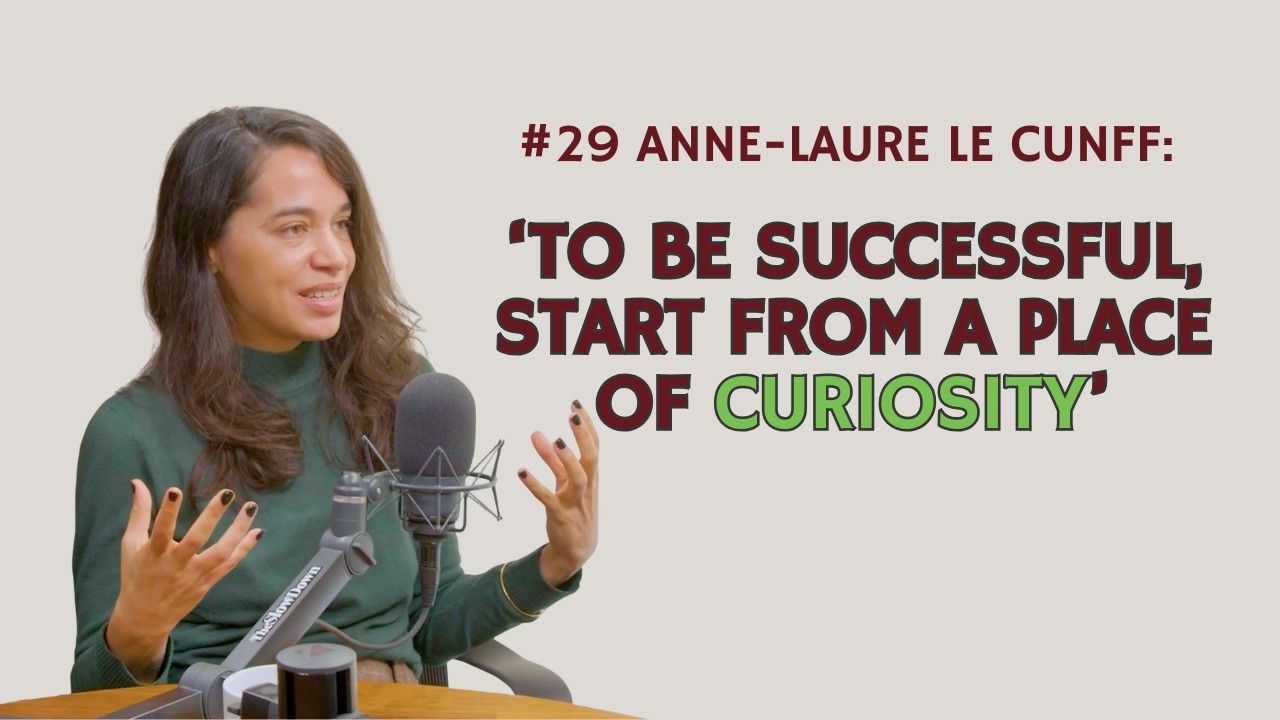
Enough Big Goals - Try Tiny Experiments with Neuroscientist Anne-Laure Le Cunff