Enough Big Goals - Try Tiny Experiments with Neuroscientist Anne-Laure Le Cunff
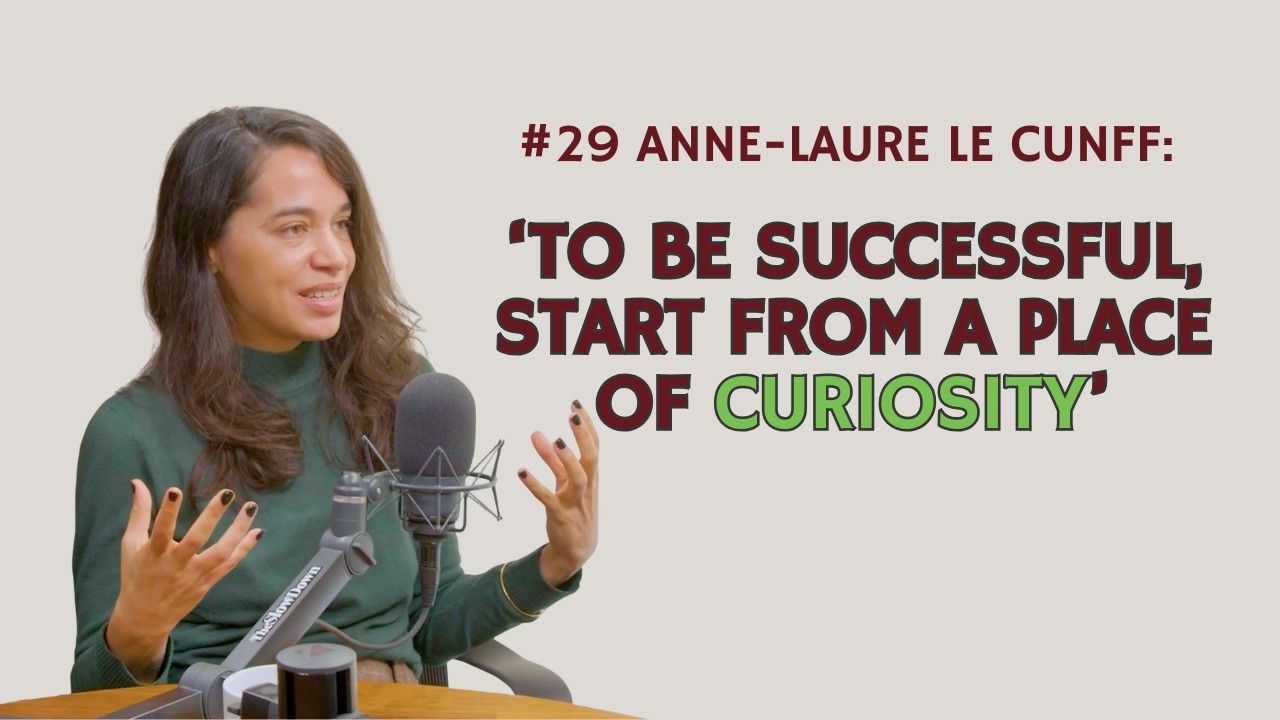
Anne-Laure Le Cunff left Google after a health scare to study neuroscience and founded Ness Labs. She argues for tiny experiments over big goals, using a framework from her book to show how small, curiosity-driven tests beat ambitious plans that rarely stick.
Chapters
Hello and welcome to The Slowdown, your time to redefine success and growth on your own terms, with a little inspiration from others. Since starting this show, I get sent daily messages of anything related to slowing down. I love that this is showing up more in public discourse and that people think to share it with me. Most of it, however, feels like nothing new— memes with the same old platitudes. Until I came across this book called "Tiny Experiments: How to Live Freely in a Goal-Obsessed World." And like a moth to a flame, I bought it right away. It's a beautiful, liberating guide to living with curiosity rather than pressure, showing that you don't always need massive, ambitious goals to carve a path of meaningful growth. The moment I read it, I reached out to the author, Anne-Laure Le Cunff., and I'm so delighted that she agreed to join me as a guest. Anne-Laure is an award-winning PhD neuroscientist and the creator of Ness Labs, her weekly newsletter that reaches over 100,000 curious minds exploring learning, adaptability, and personal growth. Her academic work at King's College London dives into the neuroscience of lifelong learning and curiosity, while her time as digital health executive at Google gives her a rare blend of science, business, and real-world insight. Her work has been featured widely from Rolling Stone to Forbes, Wired, and the Financial Times. I'm thrilled to share this episode with Anne-Laure, where we dig into what it means to escape the tyranny of purpose and let curiosity, side quests, and experimentation guide the way. Well, hi, Anne-Laure. Thank you so much for being here.
Thanks so much for having me.
You write so beautifully about curiosity. I'd love to begin with yours. Where did you grow up and what kind of environment shaped the way that you started learning?
I grew up in Paris. My mom is Algerian and my dad is French, and I grew up in a very multicultural environment. In terms of how it shaped my curiosity, on one hand, my dad, engineer, very Cartesian, who would encouraged me to read books. We would spend a lot of time going to bookstores and exploring different topics together. He is the kind of person where if you ask a casual question like, "How far is the sun?" or "Why is the sky blue?" will take a good 20 minutes to answer the question and might even grab a piece of paper and a pen and ask you to map it with him. And then on the other hand, my mom, a lot more intuitive when it comes to her curiosity and maybe a bit more of what I would call interpersonal curiosity, very curious about people, their stories, their past, and also sharing a lot of, yeah, different stories about people, her culture. So yeah, I grew up in an environment where learning and exploring was highly valued.
And how was success modeled for you growing up? Growing up, what did you think being successful meant?
That's the part where curiosity was a little bit less exploratory. Both of my parents had a very clear definition of what success was supposed to look like, a very traditional definition of success. I think it's very common in families with a bit of an immigrant background where your parents want you to be safe, to be able to put money on the table, to have a roof over your head. And because of that, for both my parents, being successful meant doing good and doing well in school and then getting a good job with a good salary and then climbing the ladder, really.
And what were your early desires in terms of what you wanted to be?
I haven't thought about that in a long time. I wanted to be a paleontologist. I loved dinosaurs. So that was one option. And I thought that if that failed, I could be a fantasy writer.
Wow. Okay. Very, very different things. And do you see a thread line between the way that your parents raised you, that mix of curiosity and kind of understanding in the thing that you do now?
I do, yes. I think I did reconnect with my childhood curiosity, but a bit later in life. So, that's why I think it's interesting how you asked me both about how I was curious as a child, but also what success looked like, because I think both of these impacted some of, of my early choices and later choices in my career. In terms of my early choices, I was very curious and that was encouraged, but also I was encouraged to put my curiosity to work, to have productive curiosity, which means that I slowly started narrowing down the topics and areas I was exploring to make sure that I was not getting distracted and that those areas would be useful in terms of, again, getting the good job, getting the good salary and all of that. And it's only much later in life, in my late 20s, that I reconnected with my kind of, I don't know if you can call that pure curiosity, curiosity for the sake of curiosity, not curiosity, not applied curiosity in order to be successful.
It makes me think of sport and kids. Like growing up, you're encouraged to have hobbies, but then once you find something that you're kind of good at and drawn to, it's very much how quickly can you get very good at this? You know, how can you become competitive at this and become the best in the school or in the country or whatever it might be? Like become a sort of athlete, as opposed to encouraging children to just have multiple interests in different kinds of sport. There is this real, even very young, you're told to kind of choose a thing and start to get very good at that thing.
Yeah, I think it comes from a good place from our parents. They want to feel like we're going to be safe even when they're gone. And because of that, if we show any kind of talent, if we, we indicate that we might be good at something and that that something might be something that we can then use in order to be successful, they're going to want to encourage us to develop that, especially if it looks like it's something we like. They probably feel like, great, we found something our kid is good at and they'll be able to use it. We might as well support them. What I think they don't necessarily consider is how by doing this maybe too early, we might be closing doors to exploring other areas of curiosity, other areas of growth.
And then what was your first degree in, in Normandy?
Business. Business management, entrepreneurship. Again, very focused on how are you going to be able to have a good stable job and make enough money to survive.
And then what was that? What were those first few stable jobs?
The first one was at Google. So, I mean, before that I did a few shorter term like internships kind of jobs. So, I worked at a wine exporter, which was actually, yeah, fun job when I think about it. It was in New York for a few months and I was in charge of helping sell French wine that a lot of French people didn't actually want to drink. So, we were exporting it and I didn't speak English very well at the time., and I was really confused as to why I got the job. And it turns out I got the job because I had a very thick French accent and they had realized that that helped with selling the wine. So the worse the, the English, the better the sales. Um, that's where I started properly learning English. So I'm super grateful I got that job at the time. So yeah, I did a couple of odd jobs, but my first real proper job after university was at Google, which my parents were really happy about.
And then how did that job play out? Like, what was your role? What did you like about it? And then eventually, what did you not like about it?
I was so happy I got the job too. The— I got to work with really smart people on really interesting projects. That was about 10 years, almost 15 years ago now. So Google was already a pretty big company, but it was smaller than it is today and it was growing really fast. And there were lots of opportunities to work on lots of different things. So if you were someone who was quite curious and wanted to work on different things, and if you were ambitious and wanted to push yourself, that was actually a really good environment, which I loved. 2 issues that I started facing after a while. The first one is that I, I wasn't fully convinced I actually deserved to be there in the sense that everybody was so smart. Everybody had gone to really good schools. I had gone to a decent school, but I just felt like someone at some point would realize that I didn't, didn't belong there.
You were bluffing.
Exactly. So classic, I didn't know the term at the time, but classic imposter syndrome. I think we've all heard about it now, but 15 years ago, it wasn't really something people were talking about. So, because of that, I was saying yes to absolutely everything. I was the yes girl. You could ask me, hey, we have this presentation tomorrow, can you stay late and help with this? I'd be like, absolutely, let me cancel my dinner plans. I'm here, I'll help. I remember once when there was a, I was based in London at first, and there was a training in San Francisco. I said yes to go to the training, and then I ended up for one week working both time zones. Which sounds completely insane to me today, but at the time felt like a normal thing for me, for me to do. So, I was working really, really hard just to feel like I was keeping up with everyone. So, that was a first issue that started showing up. And the second one, which is kind of tied to the first one, was that success was highly codified at Google. So, they literally had a rubric that you could go through, you could download it, you could have it on your computer that would tell you exactly what to do, in what order, the kind of projects to work on, how to show up in your job in order to get a promotion. And because I wanted to be successful and I wanted to prove to others and myself that I actually belong there, I did everything I could to fit within that rubric, to tick all of the boxes. And, uh, that to me, I realized after a while, was actually problematic. I was in my early 20s. It was way too early for me to have this perfect blueprint, this perfect map of how to be successful.
It's so interesting. And then how did that— what happened next?
Unfortunately, it's very common for people in a situation like the one I was in to need a bit of a kind of a shock, a trigger for you to realize that something's wrong. So I wish I could tell you that it was through introspection and that I realized that something was wrong and I made a change, but that's That's not what happened. What happened is that I had a really big health scare. So, I was in San Francisco. I had moved from London to San Francisco. I was working at Google there. I was getting ready in the morning, brushing my teeth in front of the mirror when I noticed that my entire arm had turned purple. So, I went to the Google infirmary, which we had on campus, showed my arm to the nurse who said, "You need to go to the hospital straight away." So I went to the hospital and then the doctor said, you need to have surgery as quickly as possible. There is a blood clot in your arm that's threatening to travel to your lungs. And in that moment, instead of saying, yes, absolutely, let's do the surgery.
Oh no.
Yeah. I said, let me check my calendar. And I was so worried about falling behind with my tasks and my projects that that's where my mind went first. Not, oh, I'm going to die, but oh, my projects. And it almost felt like, you know, when you do something so absurd that you have this almost like an out-of-body experience where you see yourself acting in a way that makes no sense. It's a little bit like watching a movie where the main character is doing something stupid and you want to grab them and say, what are you doing? Look behind you. That's what it felt like. And that was really the trigger for me noticing my response in that moment when I started questioning my priorities. And I didn't quit my job straight away, but a few months later, I went back to France for Christmas. I had a few people asking me, "How's life?" And I think because of what happened in the hospital, for the very first time ever in my adult life, I actually considered that question seriously. How was life? And it was fine, really. It's not like I had a lot to complain about. Good job and, you know, good situation. But at the same time, I couldn't really say I was really happy. And I couldn't really say that if that was going to be my life for, for the rest of it, that's really what I wanted. And so that's when I decided to quit my job. Wow.
So many things there. I mean, firstly, were you okay?
For anyone watching the video, my arm's still here.
I'm okay.
So I ended up doing the surgery but I did end up scheduling it during a team offsite, right? So obviously nobody would notice. And my manager didn't know at the time. I only told her afterwards. I did not have a horrible manager who was forcing me to work.
No, you were doing this to yourself.
Exactly.
Some weird self-inflicted— but exactly, societal. It's capitalism, it's expectations, it's all of these things in concert.
Yeah, exactly. And so yeah, I didn't tell her and I waited until there was an opportunity to, to do it without anyone noticing. I got the surgery, it was fine in the end, and I had to take anti-blood clot medication for a little while, but all good. And then I quit my job.
And the quitting, I feel like that's another piece which is a lot of people have the thought to do it and then it takes like months and months to actually do it. What was your process? Was it like, this health scare has happened, I've made the decision, quitting tomorrow? Or was there a Again, you're feeling the sense of, I've got to let people down. I have to spend a month, you know, onboarding somebody else to do this.
I'm both an overthinker sometimes, but it can be very impulsive in other situations. And in that case, it's my impulsive side that took over. After that Christmas holiday when I was back home in France, I came back in January to San Francisco and I told my manager I was leaving. So in a way it did feel impulsive, but I think it's because I probably had been processing that this entire journey and experience for a while, maybe below the threshold of consciousness. Mm-hmm. But it probably had been stewing for, for a while for me to make that decision so quickly. In retrospect, I don't think I had to quit like that. In the sense that, you know, I obviously, I, I took, I made sure to quit in a, and we parted away in the, with a very good relationship. I just mean financially speaking, I didn't have to be so rash and I could have maybe started working on side projects or freelancing or, you know, before quitting my job and it ended up being fine. But I do have a bit of a pet peeve with, with people telling other people, just quit your job, follow your passion because I think it can be quite dangerous.
Yeah, I agree. And I understand the way that you— this was the situation for you and it's not what you're necessarily recommending other people to do. I also liked the question, which is, how's life? Right? And I think a lot of people are used to the question, how's work? And answering that and having a real sense of, I know exactly what I'm doing at work. But the question, how's life? Is interesting because in your answer, you start to realise how much of my life is work. And I guess in your life, were you finding that most of your life was work?
Absolutely. It was very common for me to cancel plans with friends to prioritize working on a project, especially when there was a launch coming up. And even when I was with my friends, part of my mind was still thinking about something that was related to work. So there was always this sense that I was never, ever fully present in those personal moments either.
I also wanted to know what was your role and how long were you in that role?
At Google San Francisco, I was on the digital health team and I was head of global marketing for Google Fit, which is— and which shows maybe I didn't do a really good job of marketing.
Ironic.
Ironic. Yes, absolutely. Which was the— or is still the equivalent of Apple Health, but for Google. So that included the app. But also all of the smartwatches that Google was working on in partnership with other brands.
And then what was your process after you quit? Where did you go? Where did the place of rebuilding yourself feel like it should be?
So I ended up going back to London for fairly simple reasons. My reasoning was that first, I did not have a visa to stay in the US anymore since my visa was tied to my job at Google. So I had to go somewhere else. And being from Europe, I briefly hesitated in between going back to Paris, where I'm from, or going back to London, where I had started my career. And I felt like there were more opportunities in London, especially being in tech, like I was. So I came back to London and I did not go back to university straight away. And that was interesting too, I think. Very often we like having a very nice narrative where it's like, oh, she had that wake-up call at Google and then she left and then she decided to finally follow her curiosity. But that's not what happened. I left my job at Google and then I fell back straight into the patterns that I had been trying to avoid. For anyone who's worked in tech, you will know that the kind of sanctioned path is to start at a big tech company. Build your network, maybe save some money, and then quit your job and start a startup. And so when I left my job at Google, I felt so uncomfortable with not knowing what I wanted to do next, not having a sense of identity tied to my job anymore, not being able to answer the question, what do you do? That I went straight back into following that nice narrative. And I started a startup for all of the wrong reasons, not because I wanted to or was really curious about the topic, but because that's what you were supposed to do when you were in the tech industry. Very fortunately for me, my startup failed. And that's only then, only when my startup failed, that I found myself in a place where I had no idea what to do next. I was completely lost and I finally admitted to myself that I didn't know what I wanted, which should have been scary, but somehow was one of the most liberating thoughts I ever had in my entire life.
And then why did you pick neuroscience?
So I, I basically went back to the drawing board. I asked myself, okay, so if success, money, recognition, your parents' approval and all of that was out of the equation, if you could wake up every morning and just explore something that you're curious about and you would want to keep on doing it even if nobody if nobody was watching, what would that be? And in my case, I had always been curious about the brain, why we think the way we think and feel the way we feel. And so I decided to go back to university and study it. It's one of those topics where I could have maybe bought a bunch of books, but it actually felt quite daunting. And so going back to school actually felt quite nice. So that's why I did that. And that's why I chose neuroscience.
What were some of the things that you learned early on in that degree that really sparked where you're at now with the book, with tiny experiments, with this idea of maybe there's a different way to do things?
One of the first things I discovered when I went back to university to study neuroscience was the experimental mindset that is taught to scientists. And this is really a way to relate to uncertainty. So normally when you're in everyday life or work, if there's something you don't understand or something that's not going to plan or something that's quite challenging, you try to get rid of the problem as quickly as possible. Whereas when you're a scientist, if you're a bit confused, if there's uncertainty, you're drawn to it. You're curious about it because you know that uncertainty is an opportunity for discovery. And so instead of having this very linear approach to success where you say, OK, I'm here, I want to get there, and anything that stands in between is something I need to get rid of, when you're a scientist, you don't start from this place of wanting to be in control. You start from a place of curiosity. You say, I'm here, and I have so many questions I want to explore. Let's explore those questions. I might have a hypothesis. And if the result I get is not what I expected, ooh, great, juicy, something I can learn, something I can discover. And so you keep on going through those cycles of experimentation, those iterations where you keep on asking a question, observe the result you get when you experiment, and then based on what you observe, ask a new question. It's a completely nonlinear way to navigate the world, and it's a way to really embrace uncertainty in a way that almost feels playful.
And when did this feel like an aha moment for you of like, this is a psychology, this is an idea that I can both try myself outside of the realm of neuroscience, like I can do a tiny experiment. But also this is, this is as opposed to the kind of productivity books and the goal-oriented books, this could be, you know, an idea, a concept and a book.
At first, I only started playing with this for myself, not as something I would share as a framework with other people. My very first tiny experiment was around writing. So I had always loved writing, always been journaling, and, uh, I decided at the very beginning of my master's degree in neuroscience to start writing a, a little newsletter, writing articles online. So I said, I will write a short article about neuroscience every day for 100 weekdays. And, uh, the idea here was just for me to have a little bit of a sandbox, bit of a laboratory where I could take something I learned about and share it with other people. And also having this fixed duration, just like in an experiment where I was not committing to it for the rest of my life. I just wanted to see if I liked it or not. So I did that first experiment. 100 Weekdays. Absolutely loved it. Decided to keep on going. And this is the newsletter that I have today with more than—
Where were you publishing it at the time?
I had an online website using WordPress and I was using something called Mailchimp to every week send the 5 articles that I had written that week to people. And I have since then moved platforms to something called Kit. But it was a very simple, very simple setup, which is part of what I recommend also people if they want to experiment, basically to not spend so much time trying to build something complicated. Just get started and you can then iterate. So it was very simple publishing the article every day and then sending a roundup as a newsletter every week. And, uh, I noticed how effective this framework was in terms of helping me let go of any kind of binary definition of success because all of a sudden I wasn't tracking number of subscribers or any kind of traditional metrics of success. The only thing I was tracking was, am I showing up? Am I doing the thing? And do I wanna keep going or not? And so I started playing with this framework, this idea of designing experiments, just like a scientist where you start from a place of curiosity. I started inviting people in my community, people reading the newsletter to also start running their own experiments. That confirmed that it was not just me. Other people also liked using that framework. And, uh, this is when I started codifying it in a way that looks a little bit more like, um, and it's not very prescriptive, like none of the work I do is very prescriptive, but a little bit more like a toolbox that other people can use as well.
Yeah. So talk to me about PACT.
Yes. So a PACT is a mini protocol for experimentation. What I, I try to do here is take what an experiment is, the essence of an experiment, and strip it away from any added complexity that you have when you run actual experiments in the lab. You don't need all of that when you're running experiments in your daily life. You only need to know two things. The first one is what you're going to test, and the second thing is the trial period. So just like a scientist that has something they're going to test in a trial period. When you design a tiny experiment, you make a pact to, to do an action for a specific duration. And, uh, the reason why I call these tiny experiments is because I highly recommend when you make that pact with yourself, this commitment to curiosity, to only commit to a very short duration at first, especially if you've never done it before. So, Don't do a pact where you say, I will write a daily newsletter for 1 year. It's very likely you're never going to finish collecting your data. So if you've never done it before, maybe say 4 weeks and see how that feels. If you like it, you can always keep going. You can always go through another cycle of experimentation. So that's what a pact is. It's a mini protocol for experimentation. And the reason why I called it a pact is because you're really committing to being curious about this action for a specific duration.
Give me some examples of tiny experiments that worked for you or for your community, or that you've heard of since, maybe even unusual ones that have come in to you from readers.
Okay, I'll share a couple that I really, really liked. One I really liked was someone in the community who had become really busy with work and noticed that he had lost touch with his friends. So he designed a tiny experiment where he said, I will send one message to a friend every week for 6 weeks. And so I will action for duration. And as you can see here, you're not really measuring whether your friends are going to reply to you or not. Not your job. You're just here to do the thing and collect the data. So he did that. And, uh, if you're curious about the results, unsurprisingly to anyone but him, his friends were just really happy to hear from him and it was fine. And before doing the tiny experiment, he was actually a little bit paralyzed because he felt like, oh, it's been so long, I haven't talked to them, how they're going to respond.
So that's one I really liked because you get out of your own way as well, right?
Exactly.
The blocks that we have are self-imposed. So by seeing it as experimentation, you can remove some of that judgment of exactly what you're saying, which is, oh, I haven't spoken to this person in years, are they going to be offended, are they going to be are they gonna be like, well, I haven't heard from you in a while.
Exactly. And, uh, by framing it, as you say, that's just a, it's just a tiny experiment. It's just a tiny experiment. And if they reply, great. If they don't, great also. That's completely fine. Um, in the same vein, another one that I really liked and also illustrates what you just said, how we sometimes get, um, in our own way, is another member of the community, uh, an artist who had had surgery. We actually connected over that because she had surgery also in her left arm, same as me. And, um, because of that, she hadn't been able to paint for a while, and she had kind of put it in her head that she had lost something, that she was not going to be able to paint in the same way she used to. And so because of that, she had been avoiding picking up the brushes and, and doing any kind of art. So she designed a tiny experiment where she said— I don't remember the duration for this one— but she said I will go and sit in my studio and do nothing for X number of weeks, for an hour, sorry, for an hour every day for X numbers of days or weeks. At first she would sit there and just wait. And after a while she just got bored sitting in her studio doing nothing. And so she picked up her brushes and started painting again and realized that it was fine. None of her talent had disappeared in the process of getting that surgery. So this is also another example that I like.
But then just to sort of play devil's advocate, in the example of you, you wrote these articles for 100 days that then turned into a very successful newsletter like Nest Labs. This is your big project, 100,000 subscribers. How do you, like, I could imagine somebody going, oh, I've done my tiny experiment, but it hasn't led to a career path and success, how do they stay in the framework of I don't need it to work out? Like, I see it all the time on Instagram now, people going, I'm going to show you my— this is day 1 of 30 days of doing XYZ, right? Yeah. But it's also usually linked to a metric, which is I'm hoping to get more followers.
I'll give you another example, personal one, that illustrates what happens when you don't really get the results you expected. Or that you wanted. So a few years ago, I don't know why, but everybody around me was telling me, you need to start a YouTube channel. YouTube is the future. You're doomed if you keep on writing a newsletter and you don't have a YouTube channel. And, uh, those comments were coming from people I highly respect. And so it got me a bit curious and I thought, okay, let's give it a try. So I designed a tiny experiment and I said, I will publish one weekly YouTube video until the end of the year. And, uh, it was already towards the end of the year. I think it was October or November when I decided to do it. So I did that. And, um, I always tell people it's very important when you assess the results of your experiments to consider both the external and internal signals. So external signals is what you just mentioned, right? Number of followers, whatever you could put in a dashboard, metrics, those kind of things. We're usually pretty good at paying attention to these, but what we rarely look at is the internal signals. How did it actually feel to do the experiment? Because if you're growing an Instagram account or you're doing a YouTube channel and you have all of those, like, new subscribers, new followers, but you hate doing it, is that actually success? And I would argue that it isn't. So in the case of this YouTube channel, external signals pretty good. Not like I had a million subscribers, but it was pretty decent, good engagement. And if I had kept on going, probably would have grown pretty quick. Internal signals: I absolutely hated recording those videos. Every time I had to sit down in front of the camera—
by yourself—
by myself, just looking at the dead black eye of the camera with no response whatsoever, and having to basically talk to myself and sound like I was having a conversation with my best friend. I, yeah, I was dreading it. And what was really interesting is that not only I hated actually recording the video, but because I was dreading it, it was having downstream effects on everything else during that day. So if I was supposed to record in the afternoon, I would procrastinate on everything else in the morning. Because I was already thinking about this video I was supposed to record later on. That's an example when the results you get are not really the results you expected. So what do you do in those cases? Where, well, experimental mindset, instead of clinging to saying like, oh no, this is failure, I'm not good at this, I don't like this, you respond like a scientist. Huh, interesting. I didn't see that one coming. Apparently I don't like that. And you have different options here. So you can either pivot, so you can tweak it. Um, maybe it's the format that you don't like, maybe it's the topics that you don't like, maybe there's something different that you wanna do, or, and that's completely valid, and I know this is not the story that we tell people online, right? But you can stop, you can just stop and you don't have to keep going with something that you don't like.
This is something that we— You don't have to see it through.
Exactly. Yeah.
And it's— I ask because I'm feeling this interesting thing with the podcast, right? It initially started as a curiosity. I felt incredibly alive after that first session. And then suddenly you get to this like weird tipping point after like season 2 where it was like, well, it's expensive for me to do this. I pay for a studio, I pay for a team, I pay for editing. So then it starts to be, okay, well, other podcasts make money. Like, do you want to make this make money? Do you want sponsorship, partnership? Do you want to work with brands? Do you want to, you know, figure out ways to make this monetize? Which then leads you down a more capitalist system of, well, then you have to play into the game and the rules of podcasting as a career, which is, well, you have to bring on certain guests who have a huge following so that you can get more listeners, because more listeners mean partnerships, etc. So I felt myself at this almost mini crossroads of, do I do that, play into the game effectively of this industry, or do I stick to the curiosity? And at the moment I've chosen to stick to the curiosity and I'm still self-funding. But it is a difficult one to navigate because you might not have the financial ability to just keep going and going with your curiosities. So I'm wondering, you know, would you have kept going with that newsletter if it didn't make you any money? Or what is your recommendation to people when they feel the external pressure of, well, this is either a job now or, you know, you have to play into the roles of this industry or not?
Yeah. So there is a lot of pressure nowadays to turn any hobby into something more serious and into an actual job. So I would say first, but I think that part is the obvious one. You don't have to turn every hobby into something that makes money. What's really interesting here is that there are some creative projects that actually cost money. And so you start asking yourself this question, not because you're automatically trying to turn a hobby into something that makes money, but because you want it to be sustainable.
Mm-hmm.
And, uh, in those cases, I think the assumption that it has to be one or the other is maybe where people get stuck. So when it comes to my newsletter, for example, what I did at the beginning was that I started accepting sponsorships on one hand, but I also started doing consulting on the other hand. Working on consulting projects meant that I was making enough money on that side of the business that I could only accept sponsorships that made sense for the newsletter, even if on their own. It was not enough money to make it something that I could do full-time. That meant growth that was a little bit slower on the sponsorship side of things, but that also allowed me to stop doing consulting only when I was really happy with the kind of offers I was getting for the sponsorship side. And now I'm in a place where I don't really do consulting anymore. If I do it, it's really because the project is something I'm really excited about. And I can turn down sponsorship offers when I don't feel like they're aligned with what I want to, to share with my newsletter audience. So you can go back 5 years in my newsletter and you will never see, for example, any ad for any kind of supplement or anything like that, which they pay so much. If I had from the beginning started saying yes to having supplements as sponsors, I would have started making money and a lot more money earlier, but I didn't want to because I couldn't test these. I couldn't confidently tell people to take those. And so I think being a bit creative and, and again, applying that same curiosity, maybe contacting people who have podcasts and asking them how they navigated this. And especially if you see podcasts where you feel like their values are aligned with the ones that you're trying to also uphold when it comes to yours. Um, almost like, again, like a scientist doing a, a mini research study where you're asking people, how did you do it? What worked for you? What were maybe different income streams that allow you to keep that kind of freedom when it comes to your podcast while making it sustainable? So I would really try to let go of the one or the other kind of limitation, which might not necessarily be the case.
Another thing that's coming up for me there is this, we're also being now shown and told this very linear progression of personal brand where it's like, okay, this is the funnel. You have the free newsletter that then leads to this, that there's a tech product at the end that's really scalable. There's a book in the middle that think, and so people are now starting to think in advance, okay, if I write 100 newsletters or if I do 100 podcast episodes, that's all with the intended goal of using that as research to write the book. The book will then take me to the next thing. And then I think we're back to the original thing of goals and linear things. But you did write a book, so I'm curious, was a book something you were thinking about at all? Is it something that materialized as you went? And how and what point did it materialize? And did you also look at that and go, is this something that internally is something I want to do.
So the book was not part of the plan. I didn't have a plan. For me, the big change when I started working on what has become Nest Labs, when I started writing my newsletter, is that for the very first time in my life, I really said, let go of the plan, let go of the blueprint, don't try and copy-paste any kind of recipe for success and just follow your curiosity. And so first, that was the newsletter. For the book, what happened is that after a while, when I was around maybe 40,000 subscribers, publishers started reaching out. So I started getting emails from publishers asking, hey, have you thought of writing a book? And I thought, huh, interesting, because I thought I was going to write fantasy books as a kid, but definitely not nonfiction. I did have to have a very honest conversation with myself, really asking, okay, I'm actually excited about this idea of writing a book, but why am I excited?
Is it because of the external validation of what other people will think of me, or because I actually have something to say.
Exactly. So it was actually like a— yeah, it was a tough— not tough, but layered conversation to have with myself and to try and really be honest with myself. And it turns out in that specific case, I was actually really excited about writing a book because I've always loved writing and it really felt like an interesting challenge going from writing a short newsletter every week to bringing it all together into a book. I would say as a— I don't like giving advice to people because everyone's situation is so different. But if anyone is doing what you just described earlier where they think that they can write 100 newsletters or do 100 podcasts and then it will make it easier to write the book, in my experience, that's not the case. I thought so too. I thought, oh great, I wrote already. I don't know how many I had written at that point, like probably 150 newsletters or I'm just going to collate all of that into a book. Absolutely not. I had to rewrite everything from scratch. There is so much that works well in a short-form format in the newsletter that doesn't work at all when you're trying to turn it into a book chapter. And so yes, the advantage is that I had spent quite a bit of time thinking about those ideas. So this is good. This is great. But the writing itself wasn't particularly made easier. By the fact that I had written a newsletter before. Um, so I would say that, um, everything I've done when it comes to the newsletter, the book, and all of my projects, and all of my most exciting projects the past few years are not the result of me planning it in advance, but the result of me keeping on showing up, keeping on asking questions, keeping on trying new things and experimenting, and then keeping the door open to new opportunities, even if they were not really things that I had been thinking about. And also not opening that door when I don't feel like I'm doing it for the right reasons. I see a lot of authors around me, uh, friends of mine that are, have been approached by Netflix, for example, to turn their book into a mini documentary or a series. And so I also ask myself if that happens to me, Do I do it? Do I not do it? And I don't know yet, but I know that if that happens, I will have to have that honest conversation again because again, do you do it because of status or do you do it because of curiosity?
And so is there just no space in your life for big goals? I'm trying to play the parent here who would be very worried about their child not having any longer-term ambition. And I think we can, You know, it might be luck and multiple factors that actually made Nest Labs financially viable for you, but it also might not have been. I can think of people who would be like concerned about the, you know, the lack of structure and the lack of that being something that you can actually anchor onto and say like, this is how much money I'm going to make from this.
Yeah, I don't think that having a big goal is going to make you more successful. I think what's going to make you successful is to really keep on showing up paying attention to what works and what doesn't, and iterating. Nobody was successful because they said, we're going to make X million by the end of the year. They were successful because they said, here's something I truly believe is going to be interesting to explore. Let's take it very seriously and let's work hard to do this and let's see what works and what doesn't and let's keep on adapting. So, if I, I was a parent, what I would want to see in my child is not them telling me, I will be the CEO of whatever company. I would love to see everyday curiosity. I would love to see them try new things. I would love to see them not being afraid to fail. And I would love for them to be both ambitious and curious because I truly believe that if you have those two things, if you're ambitious and curious at the same time, you're going to be successful. You just don't know what that success is going to look like. But pretending that having a clear vision is going to make you more successful, I, I personally think is just falling prey to the illusion of certainty.
I love that, actually. Now that I, I think about it, maybe I've been thinking about it all wrong. I made a commitment to being transparent about the making of this podcast right from the start, so here's a quick update of the financial side. Season 4 of The Slowdown does not currently have a sponsor. I really want this podcast to bring to light people, stories, and approaches to life that I admire and don't often see in mainstream media. So I'm taking on the studio, editing, and making costs of this season myself. If you're a brand, or if you know a brand that cares about bringing honest and applicable career advice to people at all stages of their journey, please reach out. I'm eager to find the right partner, hopefully long-term, to help fund and continue the show so that it can keep growing. In the meantime, your comments, reviews, and shares of this episode are so important. If you're not already, hit subscribe, share this episode with a friend, drop a comment on Spotify, and a review on Apple. It really does make a difference and continues to inspire the change that we're hoping to make in slowing down. Thank you so much for your support. What have been your like 3 biggest learnings of running this newsletter and this approach so far?
3 biggest learnings. The first one is that I don't think there's anything that you cannot learn to do if you apply yourself to it. And I don't mean becoming one of the top 1% people at this, right? But if you want to get yourself from zero to 70% there in terms of skills. Nowadays with the internet, you can do that, especially with ChatGPT now that you can use as a tutor. I think it's absolutely amazing how, yeah, so I went from having really bad imposter syndrome when I was younger to really having this self-belief now that I can kind of figure it out. I will figure it out. It might not always be easy, but I can figure it out. And this is something that So this sense of agency is also something I'm trying to really teach to people through my writing, really helping them. I know it's going to sound a little bit cheesy, but really believe in themselves, believe in their ability to figure it out. So that's number one, you can figure it out. Number two, you can just do things. The number of projects that maybe 15 years ago I would've probably waited to get permission or ask a gatekeeper to do it. Now I just do. I just do. I build something quick. I write something, I test it, I see if it resonates or not. And yeah, you can just do things, especially on the internet. And number 3, it's always going to take much longer than what you think. If there's anything you're working on that you actually truly care about, and that you want to see grow, not with that linear goal of getting to a specific milestone, but, you know, in my case, nurturing the NestLabs community and improving my writing and figuring out ways to bring people together and connecting them and keeping on learning, acquiring new skills, all of that is going to take time. And so I think you're going to have a lot more fun in the process and feel a lot less pressure if, again, if you just let go of the end goal and you really focus on the everyday process of showing up and experimenting.
What pattern do you notice in people who struggle to have that exploratory, curious mindset?
Quite often I see two, two kind of, kind of buckets, group of people who struggled with that mindset. The first one is the perfectionists. So people who are highly ambitious, who really want to succeed, but because of that almost see curiosity as a distraction and also don't want to try things where they're not 100% sure this is going to succeed. So they are the kind of people, and I was in that category for a very long time, so that's why I feel like I can speak to it and I have deep empathy for people who are still kind of stuck there. They might only decide to work on projects where they know this is going to be successful. They might not explore projects where there's possibility that they might fail. And because of that, they limit their own growth and they limit also self-discovery. The other category is what I— is the cynics. So the cynical mindset where you say, I don't care about anything, I don't care, I don't care about succeeding, I don't care about having an impact. And that mindset is very much a self-protection mechanism because if you say you don't care about anything, you're not going to get hurt. Nobody's going to judge you, right? But again, you really limit your potential for growth, for exploration, for self-discovery when you don't allow yourself to be a little bit earnest. You actually care.
It makes me think of opportunity cost and people saying, oh, but if I do all of these tiny experiments, the opportunity cost is me doing this, this goal, this thing that I need to do. What do you say to people that say, you know, I don't have time to do that, or, well, I should be doing this other thing instead of that thing?
I tell them that you'll probably waste even more time long term by being so focused and obsessed on that one big goal that you think is your one big goal, and ignoring the fact that the world is going to change, you're going to change, And it's very unlikely that getting to whatever that milestone you have decided was going to be your happiness and, and goal in life, it's very unlikely that you're actually going to be much happier once you get there. So leave room for experimentation. And if you're someone, I know some people, they love goals. They love goals. Okay? I'm not even telling you to completely let go of goals. Have some goals if you want to, but just make sure there's one tiny experiment running in the background, a little bit of space for experimentation.
It seems like to, to even give yourself the space to think about what is my tiny experiment, we need to slow down and think about that and have these internal honest conversations with ourselves. Why do you think our society finds slowing down so difficult and or what is the current pattern that you feel like we're stuck in that, that makes actually like giving us ourselves that space difficult?
Yeah, I mean, there's an entire self-help category that is called productivity and time management and how to be efficient and all of these topics. And the reason why is because our entire society is based around and the idea that your, your, your worth as a contributor to society is tied to how productive you are, how much you produce, how much you contribute. Because of that, any time or energy you spend on things that are not contributing, directly contributing to increasing your productivity could be seen as a waste of time. And I think this is where the problem is. This is, to me, this is a toxic form of productivity where you're really measuring your worth, your value as a human being based on what you produce. This is also why I write about, I have an entire chapter about that in the book, what I call mindful productivity, because I don't believe that you can let go of productivity completely. We do need as a society to function for most people who can to contribute at least something so we can all live together, but it doesn't have to mean that your level of productivity is tied to your worth. And it doesn't have to be this toxic definition of productivity where more is better. It can actually be mindful. It can be something where you're having those conversations with yourself, where you're really taking the time to figure out what is the contribution that I wanna have and how can I have this contribution without sacrificing everything else in the process. So yes, society doesn't really currently encourage us to do that. But I do think that society would function better if we all had a little bit more space to consider what kind of contributions we want to make and how to make them in a more mindful, sustainable way.
What are your daily habits to help you slow down in your day-to-day when things accelerate and get busy?
Usually once my proper workday has started at don't have a lot of time to reflect. So I personally prefer starting my day with it. So I always start with journaling. When I wake up in the morning, it's the first thing that I do. I make myself a cup of coffee, I open my journal, and it's an old-school notebook because I don't wanna be distracted by my phone or notifications or my emails. And I have this moment with myself and sometimes it can be 10 minutes. Sometimes when there's a lot to unpack, It can be a little bit longer, but it's a little check-in with myself before I start the day. And then I also have a weekly review, which is less introspective as my daily journaling habit. My weekly review is really just kind of looking at everything I'm working on right now, seeing what's working, what's not working. Maybe if there's too much I'm trying to do, is there a way for me to either not do something because it's not needed anymore? Or maybe I should delegate it to someone else, or is there maybe a smarter way to do it? And I tend to do this one either on Sunday evening or Monday morning. And this is again kind of a way to check in with myself and see what's working or not.
You mentioned there sharing that with the public. You have a whole chapter on learning in public. Why is that something you wanted to include in the book and you feel is important?
I think you cannot really talk about having an experimental mindset without Talking about learning in public. So the best scientists don't work in isolation. They actually work and collaborate with other scientists. They also publish their results and they allow other people to review those results and to share comments and feedback. You can apply the exact same mindset in your everyday life and work. And although I explain in the book that all of the tools that I share, the PACT, for example, You can just do it on your own and it's still, it will work. It's already great and you can discover a lot about yourself in that process. But if you want to accelerate your learning, learning in public is going to make it so you can get feedback and, and really tighten that feedback loop. There are so many ways you can do this. And, uh, one of them is, and that's my preferred one, is writing. So just sharing whatever you learned in the newsletter, or on social media, but not everyone wants to have a social media presence or write online.
You can make a group chat with a couple of accounts.
Exactly. So you can have exactly a little group chat, or you could even have one friend where you say, hey, every week let's grab a quick coffee on Sundays and ask ourselves each other, how's your experiment going? What did you learn? What worked? What didn't? And it's just a, you know, nice opportunity to catch up with someone. So learning in public doesn't mean learning with a huge audience. It can be if you'd like to, but it can also be just one other person. As long as there's one other human being that knows— that knows exactly, you're learning in public.
I guess, like, as someone that's probably a workaholic, I'm always drawn to this question of, like, when does curiosity then turn into pressure for you? And do you catch yourself and go, no, this was just supposed to be a curious experiment? Kind of back to my question about at the podcast of, you know, at what point does it maybe turn into a bit of a job and it starts becoming not what you initially thought it was. And then there's a level of pressure of, oh, this sponsor now expects X, Y, Z. How do you bring it back to that thing? Or do you just go, this is no longer a tiny experiment, this is now a project and I need a new tiny experiment?
Yeah. So yeah, it's a good question because tiny experiments can lead projects that are not experiments anymore. And so, I wouldn't say my newsletter is a tiny experiment anymore. And I have a team now. And so, this is a conversation you can have and this is not a bad thing at all. If at some point, so let's say you did a first pact where you said, I'm going to do it for 100 weekdays. And then you liked it and you said, let's do it for another 100 weekdays because I wanna see if really I like it or not. And then after that, you start having sponsors, you start having all of this added work. And well, then intentionally turn it into a project. What does that look like? For me, hiring people to help me with all of the sponsors, for example, I don't manage any of the sponsorships anymore, allows me to focus on the part that I love and I still love writing the newsletter. Some people have asked me, oh, why don't you delegate the writing? Because you can afford it now. Like technically the newsletter—
We can use ChatGPT. Exactly.
I could save a lot of time with ChatGPT. I could hire a ghostwriter. I know a lot of people who do that. It's almost like firing me from the job I actually like, which makes no sense to me. I actually love writing the newsletter. I don't love managing the sponsorships. And so someone does it for me. And so yeah, you can absolutely turn it into a project. What's nice also is that if you break it down into its components, you can turn parts of it into more of a project-like way of managing it while keeping another part fairly experimental. So with the writing, for example, I still allow myself to experiment. I've experimented with different formats over the past year, shorter, longer. I've experimented with video essays. I've experimented with different things. And the nice thing is that, uh, the project part is that that newsletter needs to be sent every week. And we need to make sure the sponsors are happy and all of that. But the writing itself, I can still be quite experimental.
What is your working definition of success now?
Waking up in the morning and feeling excited about the day ahead. I have no illusion that in 100 years nobody will remember that I ever existed, which is kind of nice actually. And this is also something I talk about in the book, but I really focus on generativity instead of legacy in the sense that legacy is really about, um, thinking about the impact you can have long-term after you're dead, wanting to be remembered. And, uh, generativity is about the impact you have right now in the present on the people who are here with you, sharing this planet with you while you're alive. And, uh, both of them kind of like stem from the same thing. I think ultimately what we want to feel like is that it mattered that we were here. That's it. And I don't think, you know, trying to work really hard so people remember you when you're dead is actually going to make it matter more. And to me, being ambitious is also wanting to have an impact right now, wanting to be a good friend, a good parent, you know, good, whatever it is that you want to do today. So that's what I try to focus on rather than focusing on my legacy.
And tell me quickly on names, Nest Labs, why that name? And then Tiny Experiments, how did you come up with that name?
Oh, very different in the sense that Nest Labs was, just came to me very easily. It was such an obvious name. It, Nest means, it's a suffix that you use to describe the quality of being something. So the quality of being conscious is consciousness, mindfulness, awareness. And so I wanted NessLabs to be a mini laboratory for me to explore what it's like to be human. So that's NessLabs. Really didn't spend more than 5 minutes thinking about it. Tiny Experiments, on the other hand, was not easy to come up with. So the something not people, not many people know is that the The original title of the book was not Tiny Experiments. It was Liminal Minds. The idea was that, so liminal means the in-between, the being on the doorstep of change, this threshold of something, being in transition. And I wanted to write a book about being more comfortable in those liminal spaces, in those spaces of change and transition, those spaces of uncertainty, hence Liminal Minds. When I started testing it just by asking people or telling people, I'm working on a book, it's called Liminal Minds. Everyone's reaction was the same. Liminal what?
Don't really get it.
No, nobody was getting it. The couple of people who did were like, oh yes, smart. Which is not, not what I was going for. So I ended up going back to the drawing board. And trying to figure out what would be a better title. And, uh, I actually, I kind of applied the principles in the book to come up with the title. And so there was a lot of experimentation. I came up with a few ideas. I polled my newsletter readers to ask them which ones they liked better. I also designed fake, um, not fake, the ads were real, but fake product listings on Facebook ads. With fake book covers with all of the different titles and actually looked at the click-through rates to see what people would click on, which is actually a really interesting parallel to the conversation we were having earlier about A/B testing for your newsletter. In that case, I actually really wanted to see what people would be more drawn towards in terms of the title. And Tiny Experiments was the clear winner, both with my existing audience and with people who had never heard about me through Facebook ads. People really like this one better, and I really felt like it was a good representation of the content of the book as well. So I ended up going with that.
It's a great title. And I was wondering, since publishing the book, have there been any things that have happened that you've been really surprised by or have found really interesting in terms of the reception of the book, in terms of people contacting you, asking you to write articles for them?
So first, I didn't expect it to resonate so quickly with so many different kinds of readers. I, that was a bit of a worry that I had is that I have a very specific background having worked in tech and having gone back to university to study neuroscience. But the emails I get from people are really from people all around the world with all sorts of backgrounds. It's doing really well in India. I didn't expect that as well. So that was—
How many copies has it sold so far, do you know?
So we're at 60,000 without India. I couldn't get those numbers and I know it's doing really, really well in India. So I don't know how many in total. And it came out in March. We're recording this in December, so it's doing well. I'm very, very happy. So the positive, positive surprising thing is how it resonates with, seems to resonate with a wide range of people. The less positive is that I was very protected of how ugly the internet can get because most of my readers have been following my journey. They know who I am. They know where I come from. When I started going on a podcast tour and I don't know if you can call that a YouTube tour, but really being invited to different shows on different channels that have way bigger audiences than I have. My work started reaching an entirely new audience that had none of this background, doesn't know who I am, and maybe forget that I'm just a human being. And so I got a few comments when the book came out about on some videos on YouTube about, my accent, my appearance, how I obviously come from a place of privilege, how my parents probably had a lot of money and that's why I teach, you know, tiny experiments as a way to navigate life. All of these things which are absolutely not true except for the accent. I do have an accent. But that was really interesting in terms of my response where I really thought before that happened that I had a thicker skin than I actually did. And actually really hurt me. And I remember spending a few months ago, I was scrolling through the comments and having this kind of like, you know, very negative kind of relationship to, to the experience, scrolling until I would read the next negative comment. And yeah, it took me maybe a month or two to to build kind of a digital immune system that I didn't need before. And now I don't really check the comments anymore. If I see something about, again, my accent or my appearance or whatever, I just ignore it. But that was interesting. That was something I learned about myself. And it was one of those things where I was really confident, where I felt like, oh, whatever, people can talk about me, I don't care. Turns out I did care.
I do care. I think we all care. I find it It would be very unusual for somebody to not care at all. And I guess it poses the question of what feels more important to you, like the notoriety of getting this book out, or if it is, as you say, a Netflix deal, like the exponential amount of awareness that that would put not just on your work but on you. Is it worth doing?
Yeah. It's something I do think about. I, in the past year or so, because of the book and its success, which I'm very grateful for, I've become friends with people who are, who have a way bigger audience than I have. And I'm talking tens of millions of people. And quite a few of them talk about the challenges that this brings. Some of them had to even move houses because some fans would discover their address and would start probably not meaning anything bad, but almost stalking them. And I know I'm quite far from getting to that point where it would become so problematic, but I think the model that I'm most drawn to is James Clear, who wrote Atomic Habits, which is— has been the biggest bestseller in that space for the past, I think, 5 years. If you go on his social media, you can't see his face anywhere. And I had another friend who was hanging out with him in New York a few months ago and who told me how amazing it was that he could walk on the street with James Clear and nobody would recognize him. Yes, because nobody knows what he looks like. And so I haven't really taken steps to do this. And it's true that at this stage, so early in my journey, being on podcasts and being invited to big YouTube channels is actually one of the most efficient ways to promote the book. So at this stage, I'm still saying yes to all of these opportunities. But if I'm thinking long term, this model to me is the most attractive one where lots of people know about your work, lots of people are reading your book, but nobody knows what you look like.
I think there's this really interesting conversation around the cost of visibility, especially for women. That I don't think we talk about enough. I think right now there's this real sense of there's a gap where anybody can have a personal brand and can make it on the internet and you can have your 5 minutes of fame and you can, you know, build this huge following. But at what cost? I don't think we talk about that enough and the cost of that visibility. I was also wondering as a kind of final question, what kind of learner do you want to become in this next chapter of your life? What are you looking forward to?
So in that first phase of my experimental journey, I, the newsletter was my main laboratory. But since then, I actually started conducting my own research at King's College London. And in the next phase of my journey, something I'm really curious to explore is how to start writing about my own research. I feel like I've become quite good at distilling other people's research. And, uh, it's going to be an interesting challenge to take my own studies and potentially turn them into another book. That's something I'm thinking about right now. I'm also really making a conscious effort to not rush into the next thing because I know that's my kind of natural way when I get really excited about something. And I know a lot of us do that, right? Where we finish one project and then it's straight on to the next one. I want to give myself a little bit of space to breathe, but also to consider whether that next book project is something I'm sufficiently curious about that I actually want to dedicate the next 2 to 3 years of my life to it, because those are the timescales we're talking about when it's a book. And also if this is the topic that I want to, to write about. So yeah, at the moment I'm trying to figure out how I can keep on learning both as someone who writes, but also as someone who conducts research.
I love that. I think it's unbelievably important to provide ourselves with that space between projects. My last question, which I ask everybody, is if I had to watch one film or read one book or have some kind of cultural experience that will help me understand you better, what would it be?
Oh, okay. I think actually I'll be able to answer this question with a book, and I think that has been turned into a Netflix show, which I haven't watched. But if people like shows better, the book How to Change Your Mind by Michael Pollan, which is the book that— the reason why this— I love this book so much, two things. First is the topic, psychedelics, which I think is an incredibly important topic at a personal level and, uh, which, you know, really changed my life. But also as a writer, I absolutely love the way Pollan writes, where he starts the book saying, I don't know anything about this topic, come with me. And you go on this journey with him where he's not this authority or expert teaching you something. He's a fellow learner and you're going to learn with him. And I love this style of writing. And so I read the book, loved the book. And so that's, I think that would be a really great way to know me better. And if you're someone who's not really into books, I think there's a Netflix show that was based off the book.
And just to scratch an itch there, for me, psychedelics, also something that has been instrumental in my life. What, if you're willing to share, was the change or the, what was the, way that it changed your life?
Yeah, it's, uh, it's actually a funny question to have at the end when we don't have the time to unpack it.
It's another 2-hour conversation.
Yeah. Um, it cured my depression, and I was, I was depressed my entire life before I started working with psychedelics. A very functional depressed person. And I was drinking a lot as well. And, uh, working with psychedelics allowed me for the very first time in my life to actually wake up in the morning and feel 'Oh, cool to be here.' And I also quit drinking.
What age and time in your life was that?
In my 20s.
How did you find out about it as a potential modality?
Um, through friends. Um, but before that, I had only taken mushrooms in a party setting. And then a friend of mine went to a retreat to work with ayahuasca, not with mushrooms. I ended up going there And yeah, since then I've been working a lot with different kinds of psychedelics. I grow my own mushrooms, I make my own chocolates, and I really consider psychedelics an integral part of my mental health toolkit as well. Much more than that, even considering treating them as part of a toolkit doesn't do justice to how much they're helping me.
Well, thank you so much, Anne-Laure Le Cunff. It was wonderful to have this conversation with you.
Thanks so much for having me.
Thank you so much for tuning in. This episode has been hosted and created by me, Tiana Tambridge, produced by Whitney Rosenthal, sound and video production and recorded at Brazen Studios, cover art designed by Natalia Ruje. Please subscribe to The Slowdown to be notified of upcoming episodes, tell a friend, and leave a review. It really does help a new podcast like this get out in the world. And remember, Remember, we're all heading to the same destination and there is no prize for getting there early, so we might as well slow down.
More from Anne-Laure

How to Use Curiosity & Experimentation to Flourish, with Dr. Anne-Laure Le Cunff

Stop chasing goals and start running tiny experiments with Anne-Laure Le Cunff

Why You’re Still Waiting To Figure It All Out | Anne-Laure Le Cunff | EP. 391


Tiny Experiments: How to Learn, Grow, and Navigate Uncertainty — Anne-Laure Le Cunff



Stop Setting Goals. Try This Instead | Tiny Experiments with Anne-Laure Le Cunff


