How to Use Curiosity & Experimentation to Flourish, with Dr. Anne-Laure Le Cunff

Dr. Anne-Laure Le Cunff discusses how curiosity and small experiments drive flourishing. She breaks down types of curiosity, from shallow to deep, and explains how to run tiny experiments to learn about yourself. The conversation covers metacognition, habit design, and using curiosity to boost creativity and productivity.
Chapters
Hi everyone, welcome to another episode of Flourish FM, a podcast for the good life. Our guest today is Dr. Anne-Laure Le Cunff. Anne-Laure is a neuroscientist, entrepreneur, and educator whose work explores the neuroscience of curiosity and what it shows us about how to live, learn, and flourish in an uncertain world. She's the founder of Ness Labs, whose weekly newsletter on mindful productivity and lifelong Learning is read by more than 100,000 people. Anne-Laure is the author of Tiny Experiments: How to Live Freely in a Goal-Obsessed World, which draws on ancestral philosophy and contemporary neuroscience to argue for replacing rigid linear goals with small curiosity-driven experiments. Her writing and ideas have been featured in media outlets including Big Think, Forbes, Wired, and on leading podcasts on creativity, productivity, and wellbeing. Anne-Laure is a UKRI-funded researcher at the Institute psychiatry, psychology, and neuroscience at King's College London, where she also completed her PhD. Nick, what did you enjoy most about our conversation with Anne-Laure?
I think, you know, having had an episode on curiosity already, she brought a much more practical, in some ways, right, philosophy for how to really implement it. And I think that's gonna be very, very high utility for our listeners. And especially those that if you, you know, you're thinking about, self-improvement, you're thinking about potential either for yourself or for systems or organizations, whatever it might be. It's very easy for us, I think, to get locked into what I would describe as a top-down approach to building those things, which is goal-oriented, right? Very focused on the result. Sure, you might break things down in between and chunk them out, but it's starting with the end in mind. What Anne-Laure really offers in her book and her research more broadly is what I would describe as a bottom-up approach, right? Kind of collecting these dots along the way, sometimes accidentally, through retrospect and sometimes intentionally through these tiny experiments. And I thought she did a nice job of weaving in some of the science and nuance, but also really giving people a framework for how you can just use this day to day to change your life for the better.
Absolutely. So we hope you loved this episode as much as we did. This is How to Use Curiosity and Experimentation to Flourish with Dr. Anne-Laure Le Cunff. Anne-Laure, welcome. How are you?
I'm doing great. How are you doing?
Doing very well.
Great.
Thank you very much. Great to see you. Thank you so much for joining us today. We're delighted to be interviewing you for our podcast. We absolutely love your book, Tiny Experiments. Enjoyed reading this recently, and we're going to dig into that, but we're going to dig in more broadly to what your wider work that this book reflects. You're a neuroscientist whose work focuses on neuroscience of curiosity. And what it shows about how to flourish in today's world. So we'd love to start by digging into your own curiosity. And we recently read a fascinating article you've written that proposes what you call systematic curiosity as an integrative tool for flourishing. And that's a core idea as well in, in Tiny Experiments. So let's start with this. What exactly is curiosity and what is systematic curiosity?
My favorite definition of curiosity is by William James, who said that curiosity is the impulse to know. And, uh, it has so two parts of it, right? There's the knowledge aspect. You want to learn something, but there's an impulsive aspect. You almost feel like you cannot resist it. You want to know, you want to acquire this knowledge, you want to seek, you want to explore. So that's the definition of curiosity that I tend to use in my work. Anne-Laure Le Cunff when someone came up with such a good definition. Um, and systematic curiosity is really the idea of being systematically curious about absolutely everything. That's being curious about yourself, curious about others around you, and curious about the world at large. And in my work, I argue that you can develop that as a skill. This is not something that's fixed. That's not a trait. That's something that can be taught, that can be trained, and that ultimately, I think, can help in supporting flourishing.
Okay, perfect. So let's, well, let's go into that right away. There's a load of questions I'd love to ask Flore to that, but let's start with that one. How exactly does it support flourishing?
Okay. So First, being curious about yourself means that you're going to develop self-understanding. You're going to know what works, what doesn't for you. You're going to be more connected to your emotions. Um, and there's a lot of research literature showing that developing this kind of self-knowledge, being connected to yourself, knowing your emotions, being able to develop language to actually understand what's going on. At a mental, emotional level within you is helpful in terms of psychological well-being and flourishing in general. When it comes to others, being curious about other people allows you also to connect with them at a deeper level to create more meaningful relationships. And also there is a lot of research literature showing that having better, deeper relationships with others is going to support flourishing. And being curious about the world is going to help you in terms of finding your place in that world, whether that comes to your career, whether that comes to learning in general and your education. And again, lots of literature. What I've done here really isn't come up with any new research. And the paper that you mentioned earlier about systematic curiosity, I really, I wrote actually fairly quickly in, uh, in just a week or so when something clicked in my mind while reading the literature. I was just looking at curiosity papers for something else and, uh, And I realized that actually curiosity could be a really, really helpful skill to teach people in order to help them navigate all of those different aspects. Again, yourself, others, and the world in general.
Does systematic curiosity also involve, as a part of that systemization, when not to be curious? When it, when it turns into the potential maybe shadow side of, of a real dominant strength like curiosity, right? That double-edged sword.
I love that you use the shadow side because I literally wrote that in my notes yesterday. I was—
Oh, great.
I was working on another project and I, I used the word shadow side exactly as you just did. And I think it's because we, we actually know, even if you're not familiar with the research, I think most people will know at an instinctive level that sometimes being impulsively curious and just following your curiosity on rate without any kind of control is not necessarily the right thing to do, whether it's not the right situation or not the right moment, or it's not the right task, whatever that is, right? So I, I, I love that you mentioned that there's a shadow side to curiosity and yes, absolutely. Having a systematic approach also allows you to know when and when not to follow your curiosity and to really apply it in a more systematic way. So again, curiosity, the impulse to know, but that impulsivity can be steered and can be used and leveraged in ways that can be more or less useful to you in terms of flourishing.
Yeah. Mm-hmm.
Yeah, because immediately my head goes to, you know, the early cave person and, you know, they might be curious about what's in the bush. Um, but they might find out they don't like what's in the bush sort of deal, right?
Yes, absolutely. And so, yeah, you can still experience the impulse and that's probably really hard to regulate, uh, because this is tied to our survival instinct. So you'll still have the impulse to know whether to follow that impulse or not is actually something where there's a little bit of gap, right, between the decision and the, the, the action. And you can actually pause here and ask yourself, okay, is that worth following or not.
Yeah, I'm going to want to get into that more, but maybe, John, we save that for some of the how-to questions and we can keep digging into some of these different types of curiosity.
Yeah, yeah, sure. Yeah, I want to dig into that more as well. But, well, I don't know, it does seem actually maybe this is the perfect cue for the how-to because there's kind of two questions in one here, which is you mentioned that it's a— we can build curiosity. Rather than it being an innate trait. So there's that question, how do we build it? But to add a bit more nuance to that in connection with what you've just been discussing about the shadow side, how, Anne-Laure, do we build it so we know when to pursue the curiosity and when not to pursue the curiosity, when, as it were, it's a virtue and when it's a vice?
I think you can't really answer that question without talking about metacognition, because I think this is really what you need here, right? You need to develop the necessary metacognitive skills to be able to evaluate, monitor, and evaluate when, uh, it is actually worth following through or not. And there's a lot of learning by doing and trial and error going on here. And obviously, as someone who tells people that they need to experiment more, you would expect me to say this, but I genuinely think that a part of it is having the space, having enough, enough of a safe space, a bit of a sandbox where you can actually go follow your curiosity, see what happens, and whatever happens, learn from the outcome. Sometimes you will follow your curiosity and you will look back and feel like maybe that was a bit of a waste of time. Maybe I shouldn't have followed that impulse, or maybe I should have spent only 5 minutes exploring that rabbit hole. I didn't need to lose 2 hours. Reading this random article on Wikipedia, right? And if you actually pay attention again in a more metacognitive way, in an active way, asking yourself, okay, did that work? Did that not work? What might I want to change in the future? Little by little, you will almost build a muscle where you will become better and better at recognizing when a thread is worth pulling and when you want to keep on exploring that, or when it might be better to park it for later, or maybe again to time block pocket and say, I'm only going to give myself 10 minutes to read about this random thing, and then I'll get back to the main task.
Mm-hmm.
Mm-hmm. Sounds like it requires a great deal of retrospection to, to systematize one's curiosity.
Yes, that, that's actually such a great point, I think. But any kind of, any systematic process really does require this kind of retrospective evaluation. It's, it's such a good point though. And, uh, Yeah, if you just follow your curiosity and then never take time to reflect on whether that was worth it or not, then you're not going to learn from the experience.
So let's just, for any listeners that might not be fully aware, so metacognition is your awareness of your own cognitive processes and how to build them, how to improve them. And so I take it one strategy you suggest, you're suggesting here, Anne-Laure Le Cunff, for Building curiosity is to engage in a reflective process on where the curiosity took you somewhere good, where it took you somewhere bad, maybe where it took you somewhere good and then went too far.
Is that meta-curiosity? Are we being curious about our curiosity?
I love that meta-curiosity.
There you go. But yeah, maybe in response to something Nick mentioned earlier, the different types of curiosity, maybe we should distinguish some of these because you distinguish between multiple types here, and some of those you've intimated with the Wikipedia rabbit hole and social media. So do you want to just guide us through some of these types?
The way I like to think about it is by mapping the different types of curiosity on a 2x2 matrix based on how deep the experience is and how deliberate it is. So for example, you can go quite deep but spontaneous when all of a sudden you're kind of interested in something, you want to figure out what this is about, and you go on the internet and you start reading about it. You might fall into a bit of a Wikipedia rabbit, rabbit hole, and as long as you mentioned, as you keep it to a reasonable amount of time exploring, then that's great. You're exploring your interests, you're learning something new, and that's fantastic. Then you can be quite shallow and deliberate, and that's when you have a conversation with a friend and there's something you want to find out. Usually it's a quick fact, something that you could Google quite quickly.
IMDb.
So it's quite specific. Yes, exactly. IMDb.
So guilty. As soon as you said it, I said IMDb. Yep.
You're like, who's that person?
Who's that actor? Yeah. What were they in?
Yep.
Yeah. So that's pretty quick. That's deliberate. You want that fact to go, you look it up and you get it and you move on with your life. That specific curiosity. And then there's, uh, what I call diversive curiosity, which is both shallow and spontaneous in the sense that you don't have a lot of control over it. And that is usually when you would see a clickbait, uh, headline, or you would be on social media, there would be a post, and that, that's diversive curiosity in the sense that you're not being deliberate here. You're not really curious about the thing, but it's been designed in a way that is going to make you feel curious, but you're not also going to fall into a rabbit hole of trying to really understand the topic deeply. It, it remains quite shallow. This is the kind of curiosity where most often people realize afterwards that maybe they didn't need to click on that thing. Maybe they didn't need to read that post or watch that video reel on social media. It felt like a little bit of waste of time and energy. So those are the way I'm mapping those different types of curiosities.
Conceptually. Where on that 2x2 do distractions land, or are they off the 2x2? Are they something conceptually different?
All of these can actually be a distraction.
That's what I was thinking. So it's under the umbrella. Yeah. Okay.
Yeah. It really depends on what the current task is, the current context is, the current environment is. I would imagine that, you know, your IMDb example, if you're supposed to be focused on something else and, but you really can't stop yourself, you're like, I need to know, I need to know who this actor is. That can be a distraction. Clicking on, on this headline could be a distraction. Falling into a Wikipedia rabbit hole can be a distraction also.
Depends on what you need to be on track for, in other words, right? If your curiosity is pointed towards what you need traction for. We're, we're sort of calling that good, aligned, right? Congruent in some way.
Yes.
Congruent, aligned. Exactly. So, so there's no, that's also why there's no, technically there's no topic or kind of curiosity that is intrinsically good or bad, right? It's really contextual.
Yeah. Hi friends, Nick here with just a brief interlude to share with you an update on one of our newest partnerships with the Antifragile Academy. Throughout Jon and I's conversations with many, if not most, of our guests, one thing has been made really clear: in order for people to flourish, thrive, experience the good life, they need to develop the capacity to not only navigate and endure, but ideally grow from the bad, grow from unpleasant experiences. That's why we're thrilled to be partnering with our newest sponsor, the Antifragile Academy, an organization that I co-founded with Dr. Adam Wright, Director of Mental Performance for the Washington Nationals. At the Antifragile Academy, we work with adolescent athletes, executives, and educators to help them understand some of the science, not just of optimal performance, but of well-being and antifragility, the ability not only to endure and bounce back from unpleasantness, but to actually come back stronger, to grow from it. Between Adam and I, we've worked with Fortune 100 companies, Inc. 300 executives, Division I programs, and elite professional athletes and Olympians from all over the world. To find out more about how you can leverage antifragility training, check out our website at theantifragileacademy.com.
Okay. So to sum up so far then, so good curiosity sounds like self-regulated curiosity. And to build that skill of self-regulated curiosity, I know you don't call it that, but you know what I mean by that, you're able to recognize where it's going too far, is by engaging in a kind of metacognitive process of reflecting on where your curiosity led you, how long you spent pursuing it, and so on. And one way to do that is to run your own tiny experiments with trying out different avenues of curiosity, let's say, like, oh, I'm going to learn more about cinema, so I'll spend some time on IMDb. And then 3 hours have passed on a Wednesday afternoon, you're like, yeah, maybe that wasn't the best time to do it, Anne-Laure, right?
Not suggesting that. Yeah, absolutely. So the way I think about having this experimental approach and having a reflective approach, they're not exactly the same thing, but they can both be very, very helpful. So there's one scenario where you find yourself falling into the rabbit hole or clicking on one IMDb page, and then 2 hours later you're reading about this random movie from the '50s when that's really not what you were supposed to do. Yeah. And that would not be an experiment in the sense that there was no hypothesis, there was no protocol. You just fell into that rabbit hole. That being said, you can still learn from that experience if after the fact you decide to reflect on it, right? So that's one scenario. And then another scenario is when, again, using the term Nick used earlier of meta-curiosity, if you want to be curious about your own curiosity, you feel like, okay, I'm kind of curious about this area, this topic, or this idea, and I'm curious to see whether if once I start actually looking into it and exploring it and learning about it, whether I'm still curious about it, I want to explore it. Is it actually interesting? Is it something that I want to keep on learning about? Or was that the kind of sparkly, short-lived curiosity, quite shallow? Once I got my answer at a superficial level, I was ready to move on. And so that's when you can design an experiment and you can say, The way I describe tiny experiments is always to pick an action and a specific duration. So your trial period, really. And so you can say, I will explore this topic for 2 hours or for 1 week, 1 hour every day for 1 week or for a couple of weeks. And so you have this time period, this trial period where you say, I'm going to allow myself to be curious about this thing. I'm going to explore this. And then after the fact, it's the same. It's the kind of almost like data analysis period of time, right? The phase where you look back and you ask yourself, was that good? Was that bad? Was that useful? Do I want to keep going? Do I want to run that experiment again? Do I want to tweak anything?
You ever seen the 2005 Stanford commencement speech by the late Steve Jobs?
Yes. Yeah.
Yeah, I keep thinking about it, right? This idea of like collecting dots that later on connect, right? And I'll spare the listeners sort of the version of the story, but basically he follows his curiosity and intuition to these different experiences. They end up kind of coalescing to become these key features in Apple products later on, right? That feels like intuition and curiosity that maybe is somewhat random or guided, not necessarily systematized, right? There's not necessarily a hypothesis there. The intent on the front end maybe not, wasn't there, right? But nonetheless, highly valuable. And so your point is, is it's critical about context, right? What I think I hear you saying is he sort of like waded in different pools, right? Knee deep, waist deep. Hey, the water feels good. I'll go deeper. And you're kind of suggesting to people Hey, just test these different pools before you go cannonballing into something, right?
Absolutely. It's an example that I think it's probably going to be relevant to most people is habit building. I hear so many people say, from now on, I will run 3 times a week for the rest of my life when they maybe haven't run more than 3 miles in their entire life. And, but that's completely normal. That's how you, you know, you choose a habit that you've been told is a good habit, and then you do everything you can to stick to it and actually build that habit, right? And I, I would argue that maybe you would benefit from first running an experiment. Give it a try and see if it works for you. Running is so vague, it doesn't mean anything. How long do you want to run? What kind of running? Where do you want to run? Do you want to run on your own? Do you want to run with friends? Maybe you hate running and you know you still want to have some form of physical movement in your life, and maybe it's not running, maybe it's yoga, maybe it's dancing, maybe it's something else, right? And so instead of copy-pasting what are supposed to be good habits from other people, you can first experiment. Once you figured out the actual modality, the actual, the actual format that works for you based on your current needs and circumstances, then, then then build the habit.
This is a perfect segue into discussing more in depth your book, your awesome book, Anne-Laure Le Cunffff, Tiny Experiments: How to Live Freely in a Goal-Obsessed World. This, this book describes a powerful reframing of how to pursue success and replacing a linear goal-based approach with what you call an experimental mindset, where we conduct our own small curiosity-driven experiments, live more, in your words, experimental lives. So what exactly is an experimental mindset and what's an experimental life?
An experimental mindset is inspired by how scientists respond to uncertainty. So I wanna contrast that to first, how do we normally, most people in our everyday lives respond to uncertainty? Well, we hate it, right? We hate uncertainty. We try to get rid of it as quickly as possible to escape it, to reduce it. And that makes sense from an evolutionary perspective, right? Our brains are designed to ensure our survival. And so more uncertainty means less likelihood of surviving. So we wanna reduce uncertainty. What I realized when I started doing research, and that I thought was fascinating, is that scientists have a completely different relationship to uncertainty. When they're faced with something they don't understand, they get excited. There's almost this sense of juiciness. They feel like, ooh, wait a minute, what can I learn? They really see uncertainty as an opportunity for learning, for growth, and for discovery. Developing an experimental mindset is basically trying to emulate a little bit of that mindset from scientists, that relationship to uncertainty. And when you're faced with a challenge, to try and respond to that challenge with curiosity. What can I learn? What can I discover here? So that's an experimental mindset. And ultimately, living an experimental life is about developing that experimental mindset. It's never going to be perfect. Again, our natural response is to want to get rid of uncertainty at all costs, right? But it's really about little by little catching yourself every time you want to escape uncertainty and maybe little by little, learning to sit a little bit longer each time in that space of uncertainty to see what you might discover again about yourself and others and the world.
Do, do you find types of curiosity or, or maybe like, are there curiosity profiles? And, and what I'm kind of most interested here is you're bringing up a lot of examples where curiosity requires some level of stress tolerance or distress tolerance. Whatever term you want to use. You've got to be able to deal with unpleasantness, right? And there's these other types of curiosity, maybe the, the Jobs example, that are very joy-driven, very autotelic, right? Very pleasurable, those sorts of things. Do, do people tend to lean or rely on one type of curiosity or the other? Uh, and I'm also curious, right, when I, when I think about like a strengths lens in coaching, Do you encourage people to, to live that experimental lifestyle through that maybe natural organic form of curiosity or to try to build up maybe the, the weaker side, if you will?
Yes.
I, I think really the main, if you, you want to think about almost like two completely different approaches to curiosity that people have is that for some people, curiosity is a means to an end. And it— the people who see curiosity as just a means to an end tend to be a little bit less comfortable with the, the challenges, the, the messy middle, because obviously they just wanna— they're curious because they wanna get somewhere, right? The destination is what matters, right? Whereas some people genuinely are appreciate curiosity for the sake of curiosity. They love being in that space of unknowing, figuring it out, solving a problem, feeling a little bit stuck and having this feeling that maybe, maybe if they look at it from a different perspective, they might actually find an answer to their question. They actually enjoy that process of figuring it out. And those kinds of people tend to be a little bit more resilient to the more, the messier, more chaotic aspect of exploration that comes with curiosity. So I personally, I think a lot of people would benefit from not only seeing curiosity as something that you cultivate and develop because it might help you learn better. Yes, we know it might help you learn better. Yes, we know it might help you be more productive and more creative when you work with others. Sure, absolutely. But developing that love of curiosity in and of for itself, like really loving curiosity, loving being curious, I think could be really beneficial to a lot of people.
That maps on nicely with what Nick said about curiosity as a potentially autotelic experience, something we do just for the sake of doing it, just enjoying the process of being curious and how that can enrich your life and perhaps promote flourishing. Okay. So let's bring this in then again to the concept of tiny experiments and how we can do some of those. But before we go into that, can we just clarify what exactly Anne-Laure Le Cunff is a tiny experiment as opposed to a reasonably large-sized experiment or a medium-sized experiment or something else?
Well, first, I think it would have made for a way less catchy title for my book if it would have been called the medium-sized experiment.
Yeah, average-sized experiment.
Yeah.
Gotcha.
But more seriously, I also very intentionally decided to call it Tiny Experiments in contrast with big goals and big changes. I think unfortunately a lot of people have this misconception that in order to change, to actually see good things happening in their lives, it needs to be big. It needs to be a complete overhaul. And so I really wanted to stress the part that is about tiny, small changes, iterative, figuring it out as you go, not having to change absolutely everything in your life in order to implement any kind of, of change. So that was So that was the first part. And then the experimental part is the part that is not about focusing on the outcome, but focusing on learning from the process. So a, a goal, when we have a big goal, we have a very binary definition of success and failure. We define the destination and then whether you get there, if you get there, that is success. And if you don't get there. That is failure. If you replace a goal with an experiment, and so you have this experimental approach, then failure is just the failure to learn. As long as you learn from the outcome, whatever the outcome is, and even if the outcome is not what you expected, there's no failure in that binary sense of the term. So a tiny experiment is choosing something to try an action for a duration and letting go of any kind of fixed outcome that you have in your mind and letting go of any kind of judgment until you're done collecting your data. So just like a scientist who doesn't start poking at the data in the middle of, of running an experiment, you say, let me try this thing and let me stay open-minded. Let me stay curious until I'm done trying the thing.
Thank you. So part of this process is mapped out in response to standard approaches to goal setting, right? And so let's think about this then, what it's like to have an experimental mindset and experimental life in the context of a flourishing life. The fascinating idea runs through your book, but also your work more generally, that a flourishing life may look less like a gradual step-by-step climb up a ladder, this goal and this goal and this goal, ticking it off like a checklist. More like a series of curious moves through changing terrain as you run these tiny experiments. So what does— if we're open to all outcomes, these tiny experiments, what does success look like when you embrace the experimental mindset as contrasted with a more standard approach to goals and success, which is like, these are my goals. If I don't achieve them, then that's a perceived failure rather than if I achieve them, that's success.
Success is developing a progressive sense of alignment with oneself. So what, with the people that I've worked with, thousands of people using this approach, and what they report is that they don't really know where they want to go. They don't really know where they're going. So again, that runs kind of contrary to what you're, you're told normally that you're supposed to have this vision for your life, right? So they don't have that, but they feel like every time they try something new, they get a little bit closer to feeling feeling aligned in terms of how they live their life. At a very, very— the simplest way to measure this, I think, if you wanted to use a yardstick, is how excited you are to wake up in the morning. And it doesn't have to be perfect every day. There are mornings where you might not feel like today is going to be a great day, but in general, optimizing for wanting to, wanting to wake up in the morning. That's it. Wanting to wake up in the morning and looking forward to the day. Getting a little bit closer to that every time you keep on experimenting and iterating. And what's great about having this approach that is a little bit more experimental is that it leaves a lot of room for uncertainty. It leaves room for change, and the world might change. The world is changing all the time, but you might change as well. And so whatever works for you today might not work tomorrow, but that is not a problem to solve. That's completely fine. You'll keep on experimenting and you'll keep on using this as a North Star, optimizing for, you know, in a just for, for basically, yeah, being happy to be here. If that's, uh, if I can put it this way.
So if the, if kind of the, the wake-up feeling is the North Star, the radar, the scoreboard, so to speak, that's one way of, of how folks can sort of dial in their intuition, their curiosity, right? And the accuracy of it. It, right?
Um, absolutely.
Are there, are there other things you would add that would help people, I guess, become more accurate on the front end? Or even like, what if, what if one of the listeners sitting here saying, I don't even know where to get started. Like, I'm just not really curious about anything. Right? Like, how would I, how would I even figure out what I'm curious about? You know, I've had a lot of people who are clients, especially who are just just kind of just disenchanted with whatever they got going and they don't really know where to start, right? What advice would you have for those individuals?
Yes. And that kind of connects to another misconception that people might have when I talk about developing an experimental mindset, which is, oh, just experiment with anything. Just try random things and see what happens. But that's not how scientists experiment. They, they create a protocol, they have a hypothesis and they try it, right? And it always, always, always starts from observation. So what I would recommend to someone who says, I'm, I'm not curious about anything, I don't know where to start, is to have an observational phase. In my book, I call this self-anthropology because the idea is to pretend for just 24 hours that you are an anthropologist with your own life as your topic of study, and you just observe the way you're feeling, the way you're responding, the things that you're doing, your routines, and all of that. I can guarantee you that if you spend 24 hours honestly observing the way you live your life, you will notice things that you're, you've been doing without thinking, things you've been doing in an automatic way, things you've been doing just because everybody does it this way around you, but not because you ever really thought about it. And any of those automatic patterns that you have in your life can be the seed of inspiration for an experiment. The only thing you need to do is ask yourself, get curious about What would it look like to do this a little bit differently for a short period of time? That's it. Let me try doing something differently in my life for a short period of time, and let me then observe what happens and learn from that experience. That's it.
Great.
Love that. Love that. And earlier on, Nick asked about the retrospective element of curiosity, like reflecting on it, and we got into metacognition then and processes where we reflect on curiosity and then figure out how to build it as a skill. Similarly with tiny experiments, because we, you talked about the hypothesis side of experiments, it was kind of forward-looking. Here's an experiment I'm going to run. But my biggest takeaway from the book was actually the power of retrospectively understanding certain experiences as experiments and the power that can have for avoiding regret and building a growth mindset. So, you know, Here's an example from the last week of my life. I played in a pickleball tournament on Saturday with a friend and we'd never played in a tournament together and we got stuffed. We lost every match. It was shambolic, right? Now, I could have walked away from that being like, damn, that was awful. Like, goal missed there. We didn't even come like 9th place, we came last place. Or I can look at that as useful data. Okay, well, Well, he and I had never played in a tournament together. We just play in social play. We need to actually play in some tournaments and figure out some teamwork and stuff and then figure out how to play better together and so on. And that's kind of the way I looked at it actually. It's like, that's useful data to guide future decisions. And that's a really powerful idea. Was that an idea you had behind this book? And does that retrospective way of looking at experiments also work?
Yeah, absolutely. I mean, this is what living an experimental life is is also about. It's, uh, about treating your entire life as an experiment and knowing that that's what you keep on doing. That's what you— that's how you learn, that's how you grow as a human being, and that's how you evolve. Especially when the future is so uncertain, where every experience— as you say, you mentioned pickleball— you might have had the best games, 5 great games in a row, and then one day one of them is not good, right? There's no way for you to predict that. All you can do is then retrospectively look at it and say, okay, well, that was interesting. That was interesting. Didn't see that one coming. And again, that's how a scientist would respond to whatever result they get is, oh, okay, well, that, that's not what I expected, but what can I learn from this?
Good. Yeah, that's, that's certainly helped me recover from the pickleball experience.
Such a key feature for benefit finding, I'm thinking about, for reframe, cognitive reframing. Like, this is just, you know, this is an unlock for so many other skills and tools that help with whatever it might be, well-being, resilience, right, performance, all sorts of stuff.
Yeah, and to your point, you know, going back to, which has been a theme in this conversation, the idea of designing an experiment in advance or simply reflecting on an experience and treating it like an experiment, what I found is what's really helpful is just, again, just the language, right? So when people are stuck, just telling them, how about you treat that as a tiny experiment? Just treat that as a tiny experiment. Give it a try and see what happens, right? Or after the fact, say, oh, maybe that was just an experiment for you. What did you learn? So language in that way can also be really, really powerful to almost reconnect people with their sense of agency, telling them you're the the scientists. You're just trying things and then you're learning from each of those experiments.
Yeah. It's definitely a powerful reframe to ask that to people as kind of a powerful question. If they're deeply in regret about some experience, well, what if you see it as an experiment? Love that. Okay, amazing. Well, we have a signature question, Anne-Laure Le Cunff, that we ask all our guests. We're going to give it a slightly different twist for you. We call it the flourishing question. But based on your work, let's slightly change this up. So, What is one tiny experiment you recommend listeners try out to potentially live a more experimental and flourishing life?
Ooh. So I do not want to give them a specific experiment because that would almost go against the experimental mindset of figuring it out on their own. But what I would say is, after listening to this conversation, Try and find 24 hours in the next week and just observe your own life. Take little notes that can be on your phone or in a notebook. It doesn't matter. Anything that feels easy. Pretend that you are an anthropologist and based on that, based on that, see if there's something maybe that you might wanna try and do differently. And that's it. This way you can come up with your own experiment.
Love it.
Great.
Thank you so much. So Anne-Laure, where can people learn more about your awesome work?
I have a newsletter called Nest Labs, which you can find at nestlabs.com. And then the book, which we've discussed today, is called Tiny Experiments and is available anywhere books are sold.
Amazing. It's been a wonderful conversation. Learned a ton. Thank you for the great work you're doing for the world. And, uh, thank you for watching or listening to us today. This has been How to Use Curiosity and Experimentation to Flourish with Dr. Anne-Laure Le Cunff.
Thanks so much for listening to Flourish FM. We hope you enjoyed the content. Please be sure to leave us a 5-star review and hit that subscribe button wherever you listen to your podcast and on all major social media platforms.
And if you visit our website flourishfm.com, you can sign up to our newsletter. We send out a weekly newsletter First newsletter of every month, we share a long-form blog, and every newsletter, every week, we share highlights from our previous episodes. Please hit subscribe on our website.
More from Anne-Laure

Stop chasing goals and start running tiny experiments with Anne-Laure Le Cunff

Why You’re Still Waiting To Figure It All Out | Anne-Laure Le Cunff | EP. 391


Tiny Experiments: How to Learn, Grow, and Navigate Uncertainty — Anne-Laure Le Cunff



Stop Setting Goals. Try This Instead | Tiny Experiments with Anne-Laure Le Cunff



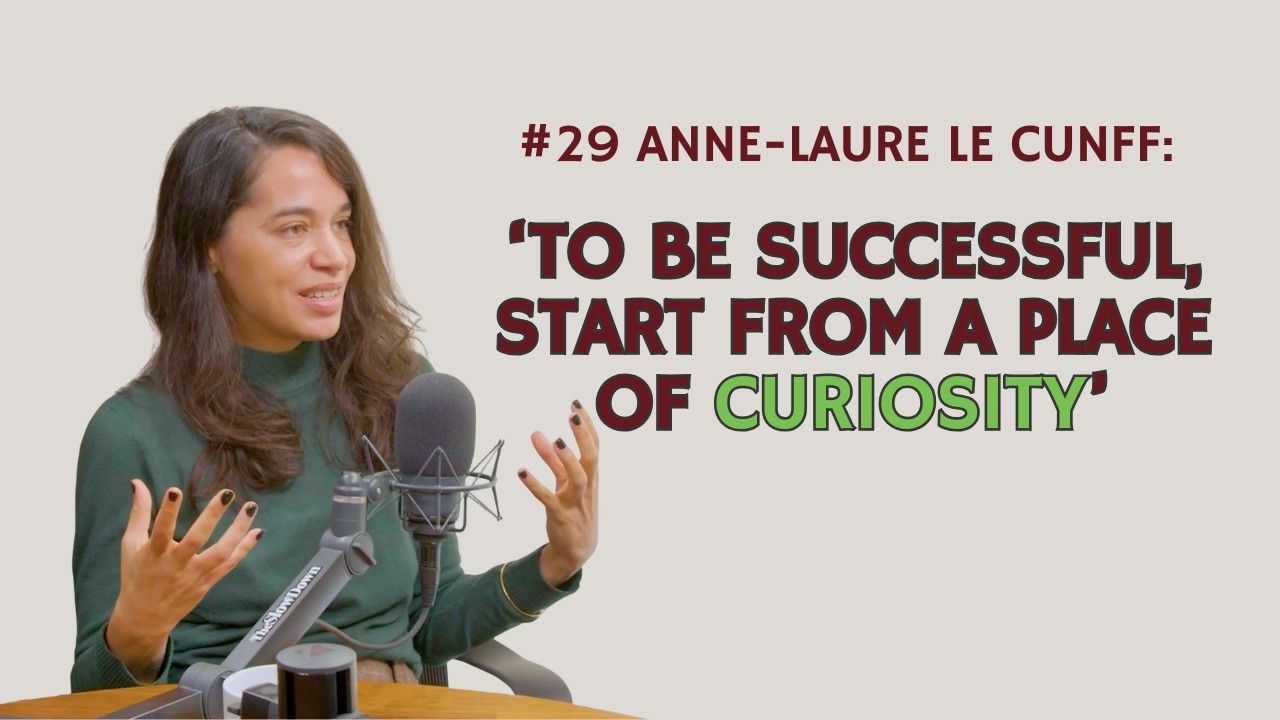
Enough Big Goals - Try Tiny Experiments with Neuroscientist Anne-Laure Le Cunff