Anne-Laure Le Cunff: How To Be Prolific
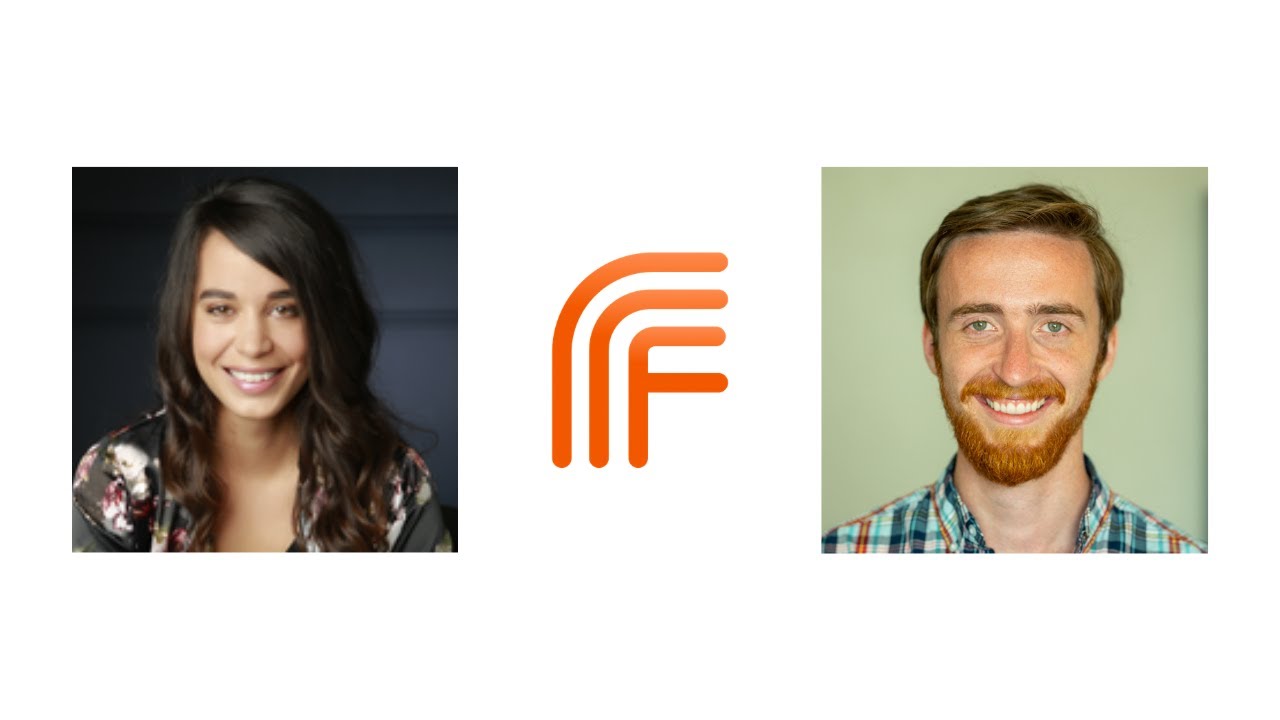
Anne-Laure Le Cunff writes hundreds of essays a year using a system that starts with capturing ideas in Google Keep, expanding them in Roam Research with linked notes, then writing full articles in single sittings. She blocks 1.5 hours each morning, maintains a strict information diet, and credits the generation effect—rewriting concepts in your own words—with deepening understanding.
Chapters
Anne-Laure, thank you so much for making the time.
Thanks so much for having me. Very excited about this conversation.
Yeah, I am as well. And I think—
I don't think there's a better group on the call. We have members of Compound Writing, which is a paid private group for writers who edit and contribute to each other's work, and we have some Anne-Laure's readers and members who are all about productivity and creativity. And I think those will be the two big themes of today's conversation. So Really excited to have the folks we have on the call. This will be recorded, so we'll share it with everybody afterwards, but, um, this is the dream team. We truly have a very specific group here, so excited about that. Um, so I think just about everybody knows Anne-Laure's work, but if you don't, in 2017 she left her job at Google and started to build out what is now Nest Labs, which is essentially kind of a learning platform with folks, um, with that A, many of you are members of the private community that Nest Labs has launched, and B, many of you are readers of the Nest Labs kind of Maker Mind newsletter, which as of this week has 20,000 readers. We're getting some background noise here, so I'm just gonna force mute people.
And so I think I couldn't be more excited to Anne-Laure.
She has written over 200 essays in the last year alone. And that number may be far more than that now. And I have just been stunned at her ability to reliably produce fantastic writing. It used to be on a nearly daily basis, now it's about 3 essays a week. And I think for many of us, you know, we have a busy day job, we have like things going on in our personal life, and it can be very hard to like find the time to write or make the time to write. And I think Anne-Laure just has a bunch of fantastic ideas of how to reliably produce great work. But first of all, Anne-Laure, feel free to add anything into that introduction so I properly capture all that you're working on.
That was a great introduction. Thank you so much. I, um, yeah, I would add that I manage Nest Labs and I also study neuroscience on the side. I'm going to graduate with a Master of Science in Neuroscience in one month if everything goes well. And, um, I've been kind of writing about these topics. A lot of what I write about on Nest Labs is based on neuroscience, how the mind works, how the brain works, how— where do ideas come from, how do we make decisions, etc. These are the topics that I write about on Nest Labs.
Well, fantastic.
It's a perfect segue into the question that we ask everybody on these calls, which is, how did you land on those topics? How did you kind of decide what you were going to write about and what you were going to focus Nest Labs around?
Yeah, it's actually based on my very personal experience. There are two parts to it. The first one is that both when I was working at Google and when I was working at startups later, I experienced burnout. And I first didn't see it coming every time. I didn't recognize the signs. And once I started recognizing the signs, I was really struggling to find resources. To help myself navigate this and get better. So that— there was this gap that I thought was interesting to explore. The second thing is that, as I mentioned, because I'm studying neuroscience, I stumbled upon this concept called the generation effect that, because all of you are writers, you may have heard about, but it's the idea that if you write something, rewrite something in your own words, you're going to both understand it better and remember it better. So while I was studying neuroscience at uni here in London, I decided to make the most of the generation effect by writing articles in my own words based on what I was studying at uni. And it started like that. At first, I was literally just taking whatever I was studying that week and turning it into articles that were more like applied neuroscience where the idea was to simplify the concepts. And by the way, this is also something that I deeply believe in. If you're not able to explain something in a simple way, it probably means that you don't actually understand it. So it was a great test for me to see if I could turn the complicated research papers into plain language that anyone, even if they were not neuroscientists, could actually understand. And in order to be consistent and as a forcing mechanism to write consistently, I decided to launch a newsletter that was going to be every week, everything I wrote about the neuroscience of productivity, the neuroscience of creativity, the neuroscience of ideation, etc. So yeah, it was a gradual process of self-discovery of discovering that something, a resource I needed didn't exist. And then finding that actually because of what I was studying, I was probably part of the people who were well positioned to write about this topic. And I think this is a great way to go about it. When you notice a gap and you're like, actually, you know what, I actually know about this stuff and I can contribute and I can help fill the gap.
Yeah, I love the framing because I think a lot of folks, at least in Compound, are thinking about writing on topics that appear to have been covered a million times before. You know, you're not the first person to write about productivity or neuroscience, and you touched on a few themes there, but I'm curious how you would encourage somebody to think about defining their kind of positioning and encouraging that, like, you know, there is room in the world for them. How would you kind of encourage folks to just develop the confidence to actually write about these topics?
Absolutely. I think that actually, if you look up whatever you wanna work, write about and there is content, this is a good thing. It means there's demand. It's the same with any kind of product that you want to launch. It's very hard to both create the product and create the market, the demand for the product. And as a writer, it's easier to find a niche that already exists, a content area that already exists, and to just find a slightly different angle that is not covered as well, maybe not covered at all or not covered as well. A good, I find, technique for this is to take two areas and to think about what's the intersection of those two things and is there any interesting content there? In my case, the two main areas that I took together and merged together, and this is why I both write under the umbrella of productivity, but I'm also one of the only ones writing about mindful productivity. I took mindfulness and productivity and I was like, okay, what happens if you try to be both productive and mindful of the way you work, you feel, and you think? So drawing a little Venn diagram where you take two things that you care about and two things that you would be actually curious to learn more about and excited to write about is a really good way to do this. And sorry if it's like a bit of a long answer, but it's just that this whole process of finding topics to write about is something I'm absolutely fascinated with. It's the whole idea behind this is something called combinational creativity. And the problem lots of people have is that, and this is deeply rooted in our history and our culture, but like in ancient Greece, they used to believe in the idea of the muse that comes to you and just like whispers these ideas in your ear and tells you, hey, like, this is what you're going to write about. And you see actually lots of paintings and poems, they're about this experience of the artist that suddenly has this aha, eureka moment where the muse finally comes to them and tells them what to write about. And side note that a lot of poets and artists were also taking drugs and drinking a lot of alcohol because they did believe that that helped the muse come and visit them for some reason. And this is actually a very kind of like risky and inconsistent way to get ideas if you're just waiting there staring at a blank page and hoping that something will come. And combinational creativity is a completely different approach. And it's just the belief that ideas are not born out of nothing. Most new ideas are actually a combination of existing ideas. So when you're looking for stuff to write about or trying to find your niche, kind of making a list of everything you care about, everything that makes you curious and excited, and saying, hey, is there any interesting overlap here that I could write about? Could I be the only person in the world that looks at this topic that lots of people have written about? I would be the only person taking that very specific angle. That would be my angle. So that's the advice I would give to someone who's still trying to figure out their general niche.
Yeah, this kind of— maybe this question answers itself in a way, but I'm curious if, um, a lot of folks are thinking like, how do I position myself or my writing for it to really be compelling for other folks to read? What I'm hearing you say is maybe that kind of just emerges if you take this kind of combinational creativity approach. But I'm curious how you think about, you know, in your own writing and with Ness Labs, how you've almost like control the messaging and narrative around what you're doing, or if that just kind of emerges from this creative intersection that you found.
It's, uh, no pun intended, but it is a combination of both, basically. I, um, I— they— at first, so I— the only kind of pact I made with myself when I started NessLabs was to write consistently, and at first it was 5 articles every day. So I would block an hour and a half every morning and I would write every day. And my first articles, when I read them back, I cringed so badly. Like, they were not that good. But by writing a lot, I started to kind of just getting better, basically. So that was my only goal, was to make sure I wrote the number of articles I said I would write. And I told myself I would do that until I get to 100 articles. That was the only thing. Because this is a very ambitious thing to do and not easy. And by the way, I was also working on the side, consulting, doing my studies, etc. So it's not that I have— I had full 3 days to dedicate to this. I was really doing this only in the morning. So because that was really hard already, I gave myself zero pressure whatsoever in terms of topics or ideas. I could just pick literally whatever I thought was interesting and I could write about. But after a while, I started seeing two things. First, the first patterns I noticed was just internally, there were articles where I was enjoying the process of writing them much more than others. Some of them felt like this strain. I was really pushing myself. I was spending more time reading what other people had written about the topic to find inspiration than actually thinking about the topic in a novel way. So that's one thing I noticed. And externally, I started getting feedback from people because if you publish regularly, people are just going to tell you what they think about it. Or some people tell you directly by emailing you, but even you can look at your analytics and be like, oh, this article, people spend way more time on this one than on this one. So you can start learning about what kind of content performs better than other. So there's both an emergence of topics where you're like, oh, actually, like, I really enjoy writing about this and I'm not the only one. People seem to also enjoy that kind of content. And then there is the process of consciously steering your editorial line towards that kind of content where you're both going to enjoy writing it and people are going to actually get value from it. So the two things. Combined basically made me decide on the general direction and the topics I'm writing about.
I love it. With, with consistency as kind of the springboard that just helped you produce enough to get both of those data points, what you had a lot of energy around and what feedback you were getting that could help guide, like, this is where the demand is. I think that's absolutely brilliant. Yeah, Taylor Pearson has a great line, like, quantity has its own quality, and just by being consistent this great stuff can kind of emerge. So that's a perfect segue into the thing that I'm just super curious about, which at a very high level is like, how the hell do you write so much? It's just stunning. Tell us all your secrets. But, but more specifically, I'd love to hear about how you think of that creative process. And you touched on this with your conversation with David Perel, and I really enjoyed it. Yeah, how do you kind of break down the creative process behind for you and SA at a high level?
Yeah, um, I built for myself what I like to call a creativity inbox, uh, where— and I'm going to explain to you step by step how I go about it— but the end result is that I literally have an inbox where I can go and pick stuff from and write about it, um, that are all good original ideas. Not original in the sense that I was the first one to think about it, but where I'm trying to be the first one to kind of write about it with this specific angle. So it has, I'm always hesitant to say this thing has 3 steps or 4 steps because I don't know in advance how many there are, but I think it has 3 steps and I may add more, but let's start with the first one. The first one is that I don't wait until I sit down in front of the page to generate ideas. I generate ideas all the time. And that means I do that sometimes I'm walking on the streets and I stop and I'm like, oh, I just thought about this and I get my phone out and I have a note. I use Google Keep myself, but that would work with Apple Notes or whatever. It's just so simple that the app doesn't really matter here. And I write 2-3 words that are capturing what this idea is. And that happens all the time during the day. That will happen if I'm listening to a podcast, if I'm having a conversation with a friend. My friends all know that it is a completely normal thing for me to do if we're having drinks together. To be like, wait, wait, wait a second. What you just said is so interesting. I just need to write it down. And I do that all the time. So I do that like, yeah, podcast, reading, whatever. And I have this bunch of very messy notes where it's just a couple of ideas. When I get home or whenever I have a little bit of time, I sit down and I open my actual note-taking system. So I personally use Roam Research, but you could use Notion, Evernote, whatever your thing is. And we can talk actually about this a bit later because that's also something that's quite interesting, how people use their note-taking apps to kind of like store their content to write about it later. So I use Roam, and for each idea that I had during the day, those raw ideas, I create a note where I add a little bit more meat to it, a few more details, because The problem with the notes in my Google Keep is that if I look at them 3 or 4 weeks later, I'm like, what was that? I mean, I don't remember what I was thinking at the time. I don't have the context anymore. So I make sure every day to just— it really doesn't take a long time. It takes 15 minutes. I just sit down and I type out like this idea. This is what I was thinking about. This was the context. This is what made me think about it. This person said this and that made me think about this, or I heard this in this podcast or whatever. And so I have this database of ideas. And an extra step I do in Roam that I think— and this is why I use Roam, and I think it's harder to do in other note-taking apps— is that I then interlink these. So every time I create a new note, I try to think about other notes that are already in my system that are related to it. And I'm like, okay, this, like, oh, actually, that makes me think of this other idea that I put in my note-taking system. So I link them together. And again, I will, after a bit of time, I will see patterns emerge. I will see that some topics keep on coming back. And when I want to write about something, I can pick any of these and they're linked with other stuff. So I almost sometimes, for the best ones, I often have an outline already, kind of, because I can be part 1, this note, part 2, this note that is connected, part 3, this other notes that was connected. And that's the outline, and I can start then writing about it, doing extra research, because it has happened to me. The problem of having also such an organic process is that sometimes I have this intuitive ideas, but then once it's time to start writing about it, there's no science, nothing behind it, or maybe I was plain wrong, or it's just an intuition. And Nest Labs is all science-based content, so if the research I find doesn't match with the idea I had, I'm not going to make it an article. But very often, actually, there's science behind it. It's quite interesting. I get to read research papers and to kind of like create a stronger structure and back it with actual research. And so, yeah, that's actually the 3 steps. I was right. The taking notes all the time, putting them in my note-taking system, and the idea of connecting them together so I can create an outline that has become the basis for an article, and that's my creativity inbox.
I think that's brilliant. And one thing I'm really curious about is when you're kind of walking down the street and an idea strikes you, do you find yourself pretty clear on the next handful of posts that you really want to write, and the ideas that you're capturing are ideas that maybe can support a piece of writing that you already have in the back of your mind, um, or is it a bit more serendipitous and often these ideas are the seedling of a fresh post? They do become their own thing. I'm curious if you draw a distinction there.
It's more often seedlings that become their own thing later. It's very— sometimes I will, because I write my posts so quickly, I usually write my posts in one sitting. Sorry, there's a truck behind me. I hope you can still hear me. So I I write most of my articles, I would say literally 95% of my articles are written in one sitting. So I don't really have the— like, not necessarily, it's not a problem actually, because if you were writing a book, for example, like you would probably have a different process than I have, but I write articles. So I usually like get the idea from my creative inbox, start writing about it, finish writing about it, and it's done. So I don't really keep on brainstorming on an article over the course of a week, for example. I do sometimes, like for very few articles that I wrote during 2-3 days because they were very long, like 3,000 words or something like this. But for most of them, they're quite short in between, like maybe 800 and 1,000 words. I don't need to spend too much time. So yeah, most of the ideas I put in my Google Keep on my phone are seedlings in and of itself that can turn into articles later.
Wonderful.
That fact alone, I think, is evidence of how powerful a system like this can be. I don't think I could say that 95% of my posts are written in— I don't think 95% of my tweets are written in one sitting. So one thing you've talked about in the past is the importance of kind of high-quality inputs and making sure that, you know, what goes in comes out, and making sure that you're really being thoughtful with the types of ideas and content you're exposing yourself to. So I'd just be really curious to hear you kind of elaborate on what you mean by that.
Yeah, I have this concept I didn't invent it, but I generally can't remember who did, but of going on an information diet. And the idea is that the same with your food and nutrition, that you need nutritious food to be healthy and what you eat is going to have an impact on how you feel. And it's the same with writing. Your information diet, the content you consume, is going to have an impact on the content you produce. So you do have to be mindful of what content you consume. And it's a little bit similar to eating food where it should be, you know, mostly healthy content, useful content with a little bit of junk food in there is completely fine. Like I do, you know, watch shitty shows on Netflix as well. Like, and I do enjoy them and that's completely fine, but it's really more about being mindful and trying to You know, if you think of your plate where they tell you you should have mostly veggies there and a little bit of protein or whatever, it's the same with reading. And in my case, for example, I, you know, in terms of social media, that's why I mostly use Twitter. I very rarely use Instagram. I probably haven't opened Facebook in 3 years or something like this. I find LinkedIn absolutely horrible. I have like, I think I have like 700 requests there and I don't even want to look at them. It gives me anxiety because lots of them are, hey, I noticed we work in the same industry. Can I add you as a contact? I'm like, I don't know you, dude. Why are you? Yeah. So social media is one part where I think everyone should kind of pick their battles here and figure out, is there, what are the platforms that actually give me value? And for me, Twitter is the only social media platform where I get both intellectual value, where if you curate the people you follow, you actually get really interesting content to read there. And it has also business value to me because I think it's like 30 or 40% of my members that on Nest Labs found me through Twitter at some point. So social media would be the first part of curating your information diet. The second part is also just in terms of formats, trying to mix your diet and make sure that you have a healthy mix of short informational articles, but also long-form essays and some books, some podcasts, some whatever works for you, but to not default to only one way of consuming content. Because I do find that a lot of the combinational creativity I find in my own creative process comes from Consuming content from lots of different sources and being like, oh, interesting, these two people, like this author who writes books and this blogger, they're talking about similar things but in slightly different way. And I wonder if I couldn't add a third angle to this conversation. So exposing yourself to different types of content. And the last thing, I do put that in content, but for me, and I think this is something you're already convinced of if you're in this conversation today, but curating also the communities you're part of, because sometimes I find that just consuming content is great, but also having conversations about this content, brainstorming with people, confirming your ideas with someone who may have probably a different opinion of something is also an amazing way to foster your curiosity and to increase your creativity.
Yeah, we have this, um, something we've talked a lot about, and Paki McCormick wrote this great essay called About Seniors, where, um, as much as writing is a solitary pursuit— you can only— only one person can type at a time— our ideas are a function of the other minds that we expose ourselves to. We're all inevitably linked. And so I love this notion of community as that last part, and, and even cultivating your Twitter following. Because it's just impossible not to be influenced by the stuff we expose ourselves to. So, um, cool. So I guess we have about 2 minutes and we'll switch over to the Q&A. So if anything has come up, please start typing in some questions and we'll, we'll switch over shortly. But Anne, I guess I'm, I'm just really curious how you would encourage people to find— I made what I would describe as like the sustained motivation to keep writing. You've been doing this very consistently over now basically years, and I think a lot of folks can find that first burst of energy around writing. Maybe they get through the first couple months of shipping consistently. I'm really curious how you've kind of just kept this as an ongoing, uh, part of your life and have just never really slipped.
So I'm—
I'd be curious to hear a bit more about that.
Um, okay, from a very from a practical standpoint, for me, the newsletter has been such an amazing forcing mechanism in terms of being consistent. I'm someone, and it depends on the personalities, but I'm someone who hates disappointing people, which can be a good or a bad thing sometimes, but I really feel uncomfortable disappointing people. So for me, announcing to people saying every week on Thursday, you're going to get something from me has been absolutely amazing in the sense that I would sometimes be a bit late, but I would be like, okay, actually I really need to send this. So yeah, the newsletter, creating a forcing mechanism for yourself. In my case, it's the newsletter, but I know people who have a writing buddy where they're like, every Friday we have a Zoom call together for 1 hour and we have to show to each other what we wrote about. And so you don't want to disappoint your buddy and show up. To the cold having written nothing, so that helps. And so yeah, there's lots of different ways to do that, and I think lots of ways that you can use to motivate yourself in general can be applied to writing. Sometimes creating some sort of external pressure for yourself can help in the moments where, for whatever reason, you don't feel intrinsically motivated. So creating that thing can be helpful. A second thing, is to really create the space for it. I have in my calendar, I block, I love time blocking, and I block an hour and a half from Monday to Friday for writing. That's the first thing I do in the morning. So I do this from 8:00 AM to 9:30 in the morning. I make myself a cup of tea and I sit down and I write whatever happens. And I never book meetings there. And if sometimes I really need to book a meeting at that time, I will just move it a little bit later, but I do write every day. So instead of waiting and deciding last minute to write, and life happens, like, you know, people have jobs, they have kids, it's 2020 and it's so messy and so uncertain, and we never know what's going to hit us next. Just blocking this time and saying, whatever happens, whatever 2020 throws at me, I do have this time where I'm going to write. So that would be the two main things. Find a forcing mechanism, and make sure that you create the space and the time for yourself to sit down and write.
I love it. Yeah, 2020 truly is the test of can you get the work done. Wonderful. These are all amazing jumping-off points. I'm really excited to get into the kind of that group conversation part of this. And Josh, if you're able to unmute, I think you can kick us off. Ben also said, Anne-Laure, you should join Compound. Obviously I agree. I'll, I'll take that more as a statement than a question though. So Josh Mitchell, feel free to take the floor.
Awesome, thanks so much. So, um, I was wondering, you earlier, you talked about burnout, and one of the things I've been thinking about a lot is like intrinsic versus extrinsic motivation. And for me personally, I noticed that my burnout occurs whenever I'm fueled only by extrinsic motivation and I'm using that without, like, I'm basically, I'm using extrinsic as a crutch without having any intrinsic and I'm doing that too much. And I was just curious, what are your thoughts on intrinsic versus extrinsic motivation and how would you say that you're mostly intrinsically motivated for your work?
Yeah, that's, yeah, that's great. That's a great distinction you're making, and I would say that in my experience of burnout, I had a very similar experience as well, and especially because I had my own projects I actually really cared about, but I also was really bad at saying no at the time, so I was saying yes to a bunch of stuff that I didn't really care about, and then I was trying to use intrinsically reasons to motivate myself, and that didn't work at all. So just to clarify, when I was talking about creating a forcing mechanism, to me this should never be a replacement for intrinsic motivation. It's just that however, you know, even though you care a lot about your work, even if you love writing, even if this is something you intrinsically care about, there are going to be moments where, for lots of different reasons, there are very— that can be external to yourself, um, like something stressful happening, or, uh, you know, a family member that needs help, or more work, or something like that. Or could be internal, maybe you're just tired, you haven't had enough sleep. It will happen that you don't feel motivated. So for me, extrinsic motivation should be use yes as a crutch, but a temporary one when you need that because the intrinsic motivation is gone for whatever reason. If you find that you find yourself relying on intrinsic motivation for too long, I think it's worth taking the time for self-reflection and asking yourself, do I still want to do this? Does it still make sense? And the answer to this can be either, I don't want to do this at all anymore, or maybe I should kind of adapt and change a little bit the way I'm going about this. For some people I know, it's been very simply, they have committed to do their newsletter once a week. And they were like, actually, that's like too much. Like I'm burning out trying to force myself to do this on top of everything else. So they switched to twice a month and that was good enough. For others, it was just realizing that they maybe picked a topic that was too niche for them, and they were just bored of it now, and so it felt like a hassle to have to keep on writing about this. So they just expanded a little bit their editorial line to include more topics. So there's lots of reasons where, you know, you may be burning out, or there's also the term bore-out, like going through a bore-out or burnout. And it's really about if it lasts for too long, you should 100% ask yourself what's going wrong here, because something is going wrong, and it's just, just a short-term lack of motivation, which is fine and which everyone experiences.
Thank you.
Yeah, fantastic question.
So I think, um, Venian— forgive me if I'm mispronouncing your name— had a question around, uh, what is your process when you actually sit down to write in front of— I guess in your case, not necessarily a blank page, but what is that process from the moment you're actually in front of the laptop ready to write your next essay?
I basically open Roam on the left in one window, and I have Google Docs on the right for another window. And sometimes in Roam, I kind of like start writing a better outline where I bring stuff together. For people who've used Roam, there's a system where you can insert blocks of content just by calling them, so it's very easy to play with different pieces of content, different notes and ideas, like if you were playing with Legos, basically. So I kind of play with things. I'm like playing with the order. Like, should I talk about this first or that first, etc.? And then I move on to Google Docs. And then this is where the actual writing happens. I know some people write everything in Roam. I find it absolutely terrible for writing, personally. I love it for thinking and for brainstorming. It's fantastic for this. For actual writing, I just like, I just need a blank page and that's it. And Google Docs does that job for me. So yeah, that's basically the process. Then I write it. I then upload it to WordPress, which is the content management system that I use. And I reread it in WordPress. I don't know why. Actually, that would be interesting to look into the research of this, because I don't know why, but reading it in a different font, in a different window, and in a different platform, I feel like I'm seeing typos and stuff that's wrong way better than if I'm just rereading it in Google Docs. So all of the archive I have in Google Docs, I think, have lots of typos and like things like this, and the ones that are published on WordPress, they're the good version of it. So I reread it. And then, yeah, I publish it, basically.
That's it.
Fantastic.
I know there is such this thing, even if you switch devices and read your stuff, it's like all of a sudden these typos become glaringly obvious. Great question. So Asad, you are up next, and feel free to unmute and take the floor.
Yeah, Anne, thanks for sharing your learnings with us. My question is around your process for taking notes. So it sounds like you, you might be going about your day and then whenever an idea hits you, you record it. Um, what's the timeline from something being like a note on your phone to actually coming out in an essay? And then an associated question is, it sounds like you also have a habit of at the end of the day consolidating your notes as well. So you have that early morning time block, but something happens at the end of the day. So we'd love if you could elaborate on that as well.
Yeah, so it's exactly that. I really try, in terms of timeline, I really try to not leave my quick raw notes for too long on my phone because I generally forget what it was about. It's like this little burst of inspiration that I have during the day, and if I don't consolidate it at the end of the day, I will not remember exactly what it was. At most, I think I can wait one more day, and it has happened many, many, many times that I do it the day after. But even when I do that the day after, I feel like it's not as fresh in my head as if I do it the same day. So as much as possible, I try to do it on the same day, but sometimes it's not possible. I spend the day outside and I have drinks in the evening with friends, and I go home and I'm too tired, and the last thing on earth I want is to open my laptop and consolidate my notes. So I'm a human being too, I'm not a machine, and so it's not always perfect. But when I can, I do try to sit down 15 minutes and do it so it's quite fresh. And then in terms of timeline between the idea and writing an essay, there's none because there's been times where the idea was so exciting to me and I was like seeing a connection with something, and I would go home and like put it in my note-taking system, and then the morning after, that was the article that I was writing. That was this one. And there are some ideas in my note-taking system. They've been there for 6 months. Haven't written about them. And that's completely fine. They're there. But because in Roam, everything is connected, I trust that if at some point this idea is useful or has an interesting connection with something else that I'm going to bring into the system, it will resurface it and it will come back. And I wrote enough. In the notes to remember what I was thinking about. So yeah, some, some ideas have been in there for months and I haven't turned them into essays yet.
Cool, thanks.
Fantastic question.
I think Alex, you are up next if you're able to unmute.
Yeah, I'm unmuted.
Awesome.
So I was wondering about your editing process.
You talked about Putting it in WordPress, but do you do any other editing?
Nope, that's it. And I actually sometimes have people writing to me, reading it and being like, "Hey, there's a typo here," and I just fix it. So that happens. It doesn't happen quite often. I don't make a lot of typos usually, and I don't know why. Really, for me, reading it on WordPress, I feel like I'm catching all of them, which is strange, and again, no idea why. There's no more like necessarily like editing process. I do rephrase stuff that sounds weird sometimes, or I'll move like paragraphs. But it's pretty light in general. I'm part of them. I know that some people— both are completely valid, by the way— but some people, they will do a very raw draft and then they will rework it a lot and move things around, etc. I'm taking my time to write every single sentence, so I do get to a first draft that's like 90% there most of the time. So it's very little editing work once I'm in WordPress.
Okay, thank you.
Of course.
It's awesome.
I'm very envious. Wish I could say the same about some of my drafts. Um, wonderful. I think, uh, Josh, feel free to unmute and ask your question around the newsletter. If you're able to.
Cool. So I guess me and Nate kind of have a similarly spirited question. I asked how well-tuned is your ability to kind of approximate what will go well with your audience, and he asked, do you ever get feedback on writing before you publishing? For me, it's, it's kind of crazy that, um, like, I, I haven't written a newsletter yet but I plan on it. And the idea of writing something and sending it out to my email list without like getting any eyes on it first, like, I don't know, maybe I just don't have the confidence to really know that whatever I write will be quality. Like maybe it'll just be a complete dud and then I'll lose faith in, you know, my subscribers and stuff. And I guess I was just curious, do you feel like you have a really laser-sharp idea of what will do well or at least not bomb? Or do you have some kind of controls for that?
That's a good one. Okay. A few things. First, I think what's really important if you launch a newsletter is to be very clear with your readers about the contract that you have with them. And so on your newsletter subscription page to say, hey, this is what you can expect from me. So you can expect it to get once a week, and I'm going to talk about these topics. And I do tell people in my welcome message that they're going to have in my newsletter, there's the first section is very often about my life updates. Like I literally just talk about what's been going on, what I've been thinking about, and then I share my articles, and then I share stuff that I found from around the web. So I'm very clear when people subscribe that this is what they're going to get. And, you know, I think that helps in being like— some people, for example, may not like it if someone who writes a newsletter is talking about their life at the same time. They may be like, I don't care about your life. Well, if you don't care about my life, I just told you what the structure would be and you can go subscribe to something else. So I think being very clear about what you're going to send is important and not breaking that contract. But then within that contract, you have space for experimentation. And so to answer your question, no, I never really know what is going to perform, but because I'm respecting the contract, it's pretty stable. And so it's within, like, you know, if I look at open rates, for example, my open rates are always between 45% and 55%. So that's 10%. That's pretty big, right? But it doesn't go like to 20%, 80%, whatever. It's always between 45 and 55. So I know because I respect the contract that it's going to be within this bracket of numbers. I also have generally no idea if it's going to be 54 for this one or it's going to be 46. And one of the ones that I sent a few weeks ago, the title was Productivity Porn. And that's my highest open rate in such a long time. I think I got like a 58% open rate, which I hadn't had in such a long time. I have like 19,000 subscribers, so it's like a really high open rate. And I got high open rate and I got so many angry emails from people who replied and saying, why did you use the word porn? Like, I don't want this in my inbox. And there was even a guy who wrote a really long list of alternatives that I could have used instead of productivity porn and saying like, "this is really rude," etc. "Don't use this language." And I also had very few unsubscribes. So I think there were few people who were angry, but they were very angry. And most people, the numbers don't lie. The fact that I had my highest open rate in such a long time shows that the majority of people liked it. And I didn't see that one coming. I was like, "Oh, I don't know, maybe people are just going to delete it seeing porn in it, or maybe the spam filters are going to—" catch it, and I'm not even going to be going through it. So yeah, to summarize, I can't really tell which ones are going to be more successful than others, but I know it's going to be within a certain bracket. And because I publish every week, in a sense, after a while it doesn't really matter if I have one that, that's like at 45%, the next one is at like at 54%. I'm probably at an average of 50%, and I don't tend to worry as much about how well or not they're doing.
And a fantastic answer. I'm curious just to— I'll quickly elaborate on Nate's question, and then Tom, I'll call on you next. But Nate asked, like, do you get feedback on your writing before publishing? So are there ever essays or posts that you circulate to a few people before it goes live? Are you typically pretty honed in and just kind of ship?
I never do that. The first time in my life I did this was a month ago because I'm writing something that's going to be in a proper printed book. So I was super stressed about it. I'm not a native English speaker and I had to write this thing that's going to be in the proper book in English. So I sent it to 3 or 4 native English speakers and was like, can you read this and just tell me if anything doesn't make sense, if the grammar is correct, etc. For my articles, I absolutely never do this because it's online. I can fix it. It's fine. And I don't think anyone is going to hate me or think less of me because I made a typo for my blog. That being said, I do realize that if you're— and I don't know if there are any in the call, but if you're a journalist, if you're being paid for writing, that's your job. You would probably have like a more careful— I did my also my first article that I wrote as more like as a journalist for The Increment, which is the magazine that's owned by Stripe. I did that like a few months ago. That was such a stressful process for me because I was like, it needs to be absolutely perfect. I'm being paid for this. And it's going again to be in print in a print magazine and on their website. And I can't change anything once it's there. So yeah, in my case, but I just want to insist on the fact that it's in my case and it's because it's on my personal blog. I don't ever ask anyone to reread it because people tell me when there's something wrong and I can fix it. And I feel completely fine also sometimes going back to old articles and like, oh, actually, like I would do that in a different way. It has happened to me that I wrote something and there was a new research paper that came out later. That say that everything I wrote was wrong, basically, and not because I was wrong, but because the research that I used at the time was wrong and the new discovery changed what the scientific consensus is. And it's digital, it's amazing. I can just go back and I like keeping the original article and added an edit thing where I'm like, hey, by the way, the article you're going to read below, you can still read it, but new research came out. And actually it's not true anymore, but you can see the evolution of the research. That's the beauty of having a digital blog where it's fine, there's nothing that's set in stone.
That's wonderful. Tom White, you are up next, so feel free to take the floor.
Awesome, can you hear me? Mm-hmm. Anne-Laure, big, big, big fan, as someone that thinks a lot about neurology and psychology and neuropsychiatric illness and such. Like, awesome, awesome fan of your work. Thank you for doing what you do. Um, to be perfectly honest, I'm a Luddite. Uh, if it ain't broke, don't fix it. And I don't like to kind of change my processes around. I'm contemplating going from Evernote to Roam, and I know you're a huge, uh, Roaman. Um, so what do you think? It's worth the jump? What, what's your kind of take on it? Um, Because obviously the purpose of note-taking being like the tinder and the flint to create sparks that illuminate ideas.
Yeah. So I wrote an article a few weeks ago that actually was extremely popular and that was called How to Choose Your Note-Taking App, I think. And in it, I explained how there are 3 types of people in terms of taking notes. The gardener, the architect, and the librarian. And so for me, Evernote is an app for librarians because it's really about easily storing and retrieving information, which is great, which is useful in itself. But Roam is much more for gardeners in the sense that it's about planting seeds and growing them little by little in an organic way that can be a bit more messy, but that is really helpful in terms of brainstorming and creating new links. It's kind of like for network thinking. And then the last one is for architects where I recommend Notion, and that's for people who are really into having more templates and really organizing information in a very structured way. So that's the kind of metaphor that I'm using to tell people this is how you pick your note-taking app. And I don't really think one of them is better than the other, but I think they can both serve different thinking styles, different creative styles, and they can also be useful for different purposes. So in your case, Tom, for example, I wouldn't say necessarily, and I think there's actually quite a few people who use both. And so you can keep Evernote as your library of content and Roam as more of a brainstorming sandbox, etc. I don't know enough about your thinking, like your creative process, to tell you, yes, switch to Roam. But since you mentioned that for you the goal of a note-taking app is to create those sparks of ideas that you can write about, I would 100% recommend that you just get like, get a 1-month subscription. I don't even know if they have a free trial or not, but try it for 1 month. That's a very small kind of commitment to make and just see like how it works for you. But it sounds like it's something that may be helpful for you to at least give a try to.
That's immensely helpful. Thank you so much. I appreciate it. You're welcome.
Yeah, I'll circulate that blog post with everybody afterwards. This looks like the guide I've been waiting for. So super excited. I think we've maybe got time for 2 more questions, so we'll We'll stay on schedule here. And Vanessa, you are up next, if you're able to unmute.
Yes. Hi. Can you hear me?
Awesome. So you mentioned part of your sort of 3-part process is like talking to community and talking about your ideas with other community. And so I was curious about, do you have a process with how to engage with them? Like, are you shaping, kind of coaching them on how to give feedback? Like, kind of what are your expectations for that? And what are your inputs into talking through ideas? When you engage with folks?
Yeah, I have two main communities that I manage, and it's a very different process. One of them is also a private community like this one, like Writer Compound, where I don't necessarily use it like myself to brainstorm stuff because I'm really trying to help and connect people. And so I'm much more of a moderator there. So it's more of a, like, it's a different position I'm in there. But for the other one, which is called Newsletter Geeks, which is for everyone who's running newsletters, I really just try to bring as much value to people as I get value from them. So I try to just keep track. It's not like I keep track by writing it, but in my head, I try to keep track of how many questions I've asked and how many times I have answered other people's questions. And I find that if you make an effort to be helpful and to bring value to other people, then you can get help very easily. So, you know, earlier we talked about that on the article that I asked people to reread, Native English Speakers. And I, because I had been very intentional in helping people as much as possible in this group for a long time. Very last minute, the day I had to submit this article, I just posted and said, hey, I really need English, like native English speakers, to read this and give me feedback. And in 5 minutes, I had 5 people who were like, sure. That was a long article, and they were like, yeah, sure, we'll do it straight away. So my only kind of rule or guiding principle when it comes to communities is really just that: contribute. So, whenever you actually need help, you will get it, because people do remember that you were there for them when they needed you, and they'll be there for you when you need them.
Thanks. Great question. Yeah, I think it's the secret sauce that everyone should be consciously trying to cultivate for themselves, like you said earlier. Joel, I think Maybe we can squeeze in 2 more questions, but Joel, you're up next, so feel free to unmute. I'm unmuted. Can you hear me?
Yes. Loud and clear. Good. All right, thanks so much, and thanks for doing this presentation. I appreciate it. So my question, I'm new to Rome, and I'm a longtime gardener, and I love both of them. And I'm curious how you think Rome might negatively affect our cognition, meaning if you constantly have this app open and you're shuffling bullet points and organizing things, as opposed to just being fully present in a book or a podcast.
I like podcasts in the garden because I have no screen in front of me.
How do you feel like that negatively affects us? And then how do you get the benefits of Roam without those negative effects?
I think I would never do— I think some people do it, and I don't think that's healthy or helpful, like having Roam open all the time and putting notes in it all the time. And this is why that's not the way I do it. So if I'm reading a book, if I read a fiction book, I don't take notes. I just, I love fiction, science fiction in particular, and I can just like kind of lose myself in the book. And that's the goal of it. But if I read a nonfiction book, I will just literally take a pen and write those words in the margin on the page. I know it makes some people scream to write on books, but I've been doing it my whole life. And I don't really care. So I don't have Roam open. I can be on my sofa or in the park reading a book, and I just write these things here. If I'm on the go, it's actually on Google Keep that I'm going to very quickly write a few things. And so my time on Roam is actually, if you're looking at my usage of it, which I'm sure Conor, the founder of Roam, has access to, if you were measuring how much I love Roam by the number of minutes I spend on it during the day, you would assume I hate the app because I actually don't spend that much time on it. I'm trying to be as efficient as possible, and I also don't want to interrupt the flow of reading or listening to a podcast. So that's why every time I capture something when I'm consuming content, it's only 2-3 words. It's a very short way of capturing the essence of whatever I want to remember later. And only later I open Roam and then I create the pages. And as I said, that's probably like 15 minutes per day, 20 minutes max, but I'm not spending too much time on it. So I agree with you, kind of like, you know, having it all the time open and trying to always capture content as you go and capture everything without discriminating between what's going to be helpful or not is not good. But being a bit more intentional and mindful of the way you use it can be super helpful and can really improve your creativity. Thank you.
Wonderful. Yeah, great question. Um, I think with 2 minutes on the clock, uh, Nate, feel free to unmute and wrap us up here.
Hey, thanks so much for taking the time. This is, uh, really inspiring. Um, so just a quick question around your Nest Labs community and what— at what point in your journey through this, uh, writing process Did you feel that you were going to create a community like Nest Labs? Was that always a goal and a driving force behind your writing?
No, actually. And this is also why I named my company Nest Labs, because it's a lab. I didn't know what I wanted to do with it. And that really gave me the freedom to keep on pivoting or trying new things if I wanted to. So, no, that was not the goal. But that emerged after a while where I had lots of people who were replying back to my emails and they genuinely wanted to have a conversation about these topics. They were really curious about it. They wanted to learn more. They had things to share that I thought was interesting. And sometimes I almost felt selfish being like, I'm the only one getting this long email with this person replying to me, having done extra research, etc. And I thought that creating a community would be an amazing way to kind of scale these interactions and to allow myself to go from simply broadcasting to people to actually have this two-way or multi-way kind of conversations. So I just, yeah, noticed that this would be a good opportunity to grow the platform, but it was not something I had planned at the very beginning.
That's brilliant. Start adding labs to the end of any project. I'm gonna do that to my newsletter right now. Well, this was just unbelievable. Thank you for all the wonderful questions. I wish we could have gotten to all of them. Anne-Laure, what's the best way for people to find you online and connect with you elsewhere?
I created my Twitter handle when I was a teenager, so it's impossible to pronounce and to spell, but I don't want to change it. So just go to neslabs.com. You'll find my details there, or type my name on Google and you'll find me there. Twitter is the best way to hang out with me if you want to chat or anything. This is where I'm most active. And obviously, if you go to nestlabs.com/newsletter, you can also subscribe to my newsletter, and you'll at least hear from me once a week. So yeah, incredible.
Thank you so much for, for your generosity and all the hard-won wisdom. I've got a mountain of notes here that I'm excited to go put into practice. And thank you everybody who joined for the call. I think The questions were fantastic, and it was just fantastic to see everybody. So Anne-Laure, thanks again, and we will be emailing out the recording here in the next day or two. Thanks so much, everyone. Awesome. Thanks, everybody. See ya.
More from Anne-Laure

How to Use Curiosity & Experimentation to Flourish, with Dr. Anne-Laure Le Cunff

Stop chasing goals and start running tiny experiments with Anne-Laure Le Cunff

Why You’re Still Waiting To Figure It All Out | Anne-Laure Le Cunff | EP. 391


Tiny Experiments: How to Learn, Grow, and Navigate Uncertainty — Anne-Laure Le Cunff



Stop Setting Goals. Try This Instead | Tiny Experiments with Anne-Laure Le Cunff


