Anne-Laure Le Cunff On Releasing Creative Anxiety (Create Out Loud Podcast Ep. 3)
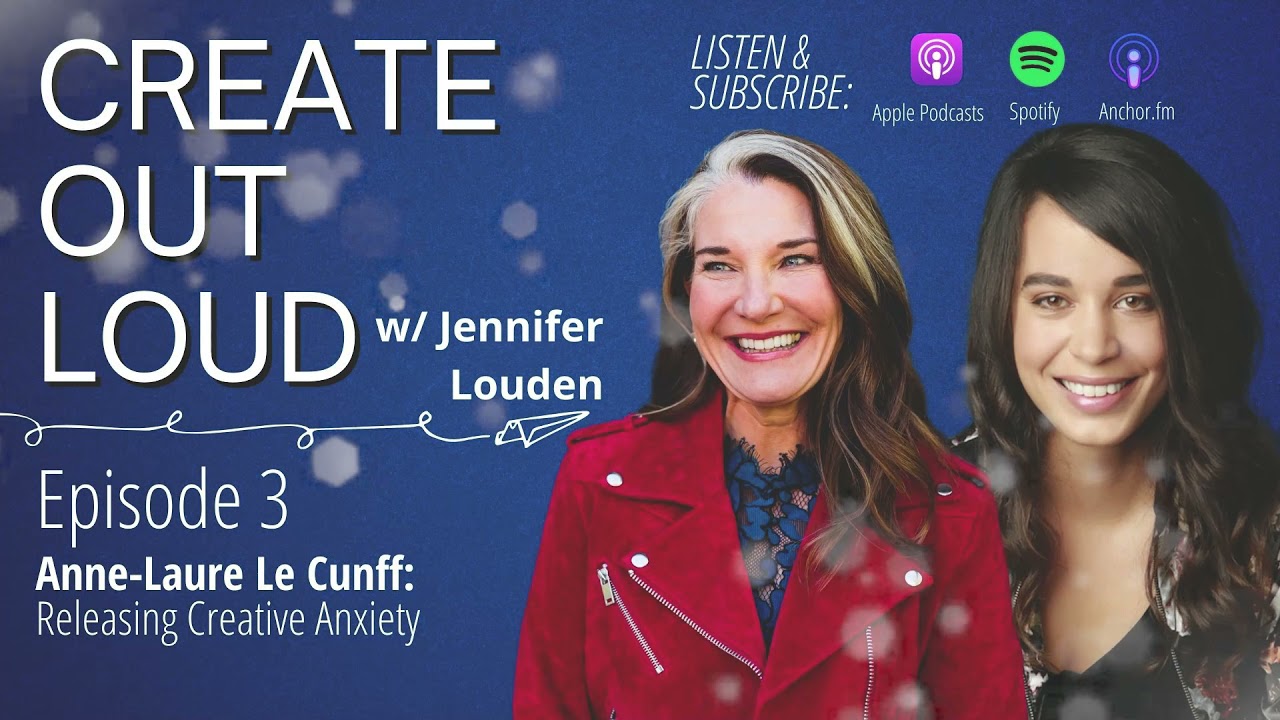
In this episode of the Create Out Loud podcast, host Jennifer Louden interviews creator and neuroscientist Anne‑Laure Le Cunff. The conversation opens with a personal anecdote about learning‑related mispronunciation and quickly moves to Anne‑Laure’s core challenge: time anxiety. She distinguishes three forms—existential, death‑related, and future‑oriented—and explains how labeling the feeling, aligning actions with personal values, and journaling can defuse its paralysis. The dialogue then traces Anne‑Laure’s career trajectory: from a product role at Google, through a failed startup, to a master’s in applied neuroscience at King’s College. She describes the “lost period” as a moment of questioning purpose, and how she re‑oriented by asking what she would love to work on even without pay, leading to a focus on the brain and mental‑health research. The interview shifts to the business model behind her newsletter and membership community (Nest Labs). Anne‑Laure recounts an iterative, rather than plan‑first, approach: starting with a sponsor‑backed newsletter, then moving to a tiered membership that offers free content to attract readers and a paid community for deeper engagement. She shares concrete metrics—~30 000 newsletter subscribers, 2 000 paying members, $8 000 MRR—and highlights the primary growth channels: Twitter and organic search. Self‑care for creators is a recurring theme. Anne‑Laure describes screen‑addiction mitigation (no phones in the bedroom, separate work desk), the importance of non‑screen hobbies, and structured breaks to avoid burnout. She also tackles the cultural myth of “toxic originality,” arguing that creativity is fundamentally combinatorial and that curation or incremental improvement is valuable. This leads to her “mindframing” framework, which blends growth mindset, metacognition, and self‑authorship to give creators agency over their thinking. Curiosity cultivation is illustrated through her note‑taking practice that creates “idea‑sex” by juxtaposing authors across time, and she mentions her current learning focus on philosophy of well‑being, mind, and science. Finally, she offers practical advice on balancing business growth with learning—regularly resetting the calendar, pausing non‑nourishing tasks, and listening to internal signals of burnout. The episode ends with both hosts summarizing take‑aways and encouraging listeners to explore Anne‑Laure’s newsletter and upcoming podcast episodes.
Chapters
Hey, welcome back to Create Out Loud. This week we have the incredibly interesting conversation with Anne-Laure Le Cunff, and she's gonna tell us about how to be more mindfully productive, how to have idea sex— yes, it's as good as it sounds— how she's made a living and grown her newsletter and membership community in a record time, and lots of good nerdy neuroscience. I loves me some nerdy neuroscience, especially when it's around how to create with more ease and better mental health and embrace the natural challenges of being a creative. So come on in, you're gonna love this conversation with Anne-Laure Le Cunff. Oh, wait a minute, why am I not saying her name in my voice? Because I have a learning disability. It shows up in all kinds of weird, interesting ways. I'm trying to be positive there, but one of them is mispronouncing people's names and certain words. Now, in our culture, that is often a sign of being dumb or not educated, and I get really embarrassed about it. And what happens when you get embarrassed? You do it more, you freeze up, and you do not create out loud. So I try to practice, you know, getting the support that I can and need, and making fun of myself, and stumbling over myself, and editing a lot of this podcast so that you don't hear me mispronouncing things. But I wanted to tell you about it because so often we listen to other people's work and we're like, "Wow, that's so easy for them." Maybe we don't think it consciously, but subconsciously we're like, that's so easy. In creating a podcast, writing, so many of the things I do aren't easy for me at all, but I won't stop because creating makes me happy and it's one of the ways that I serve. I just wanted to share that story with you. So then let's just get to this great conversation with Anne-Laure Le Cunff Le Cunff. Huh, pretty good. I did it. I didn't think about it. All right, I'm going to start right away with my fear. I have learning disabilities, and so pronouncing your name makes my heartbeat fast. Will pronounce it for me?
Yes, it's Anne-Laure.
Anne-Laure. And, and do you have things like this that are built into you that get in the way of your incredible productivity and success? Do you have things like that, the way your brain works?
Definitely. I think my biggest one, my biggest fear, is time anxiety. Oh yes. Yeah, always afraid of not having enough time, of not using my time in the most efficient and useful manner. And you would think that would make you very productive, but actually it can be paralyzing.
I'm so glad you jumped right to that because that's actually that— you did your first YouTube about that on your new YouTube channel, which won't be new, y'all, when you're listening to this. There'll be lots more videos by now because she's so productive. But it was profound for me because I— that, that brain process that is always monitoring how long things are taking I don't know exactly how to name it, but I'm familiar with it. And that is so well developed in me. So your thoughts about time anxiety really have been profound. Could you name the 3 kinds there are for our listeners?
There is existential time anxiety, death time anxiety, and future time anxiety. And the— so the future one is the one where we worry about the future. It's all of these what-if questions. What if these things go wrong? What if I don't achieve my goals in the future? What if I don't become the best person I can? Existential time anxiety has the even deeper meaning of what is the meaning of my life? And am I using my time in the most meaningful way? And finally, the one that is linked to death is the one that I think we've all experienced. And that we all think about from time to time, but it is, on the day of my death, if I look back, will I be proud of what I achieved? And this is a really big one. I think it's not something we think about every second, obviously, but I think everyone does think about it from time to time.
I think it's actually incredibly motivating, whether it's the Buddhist perspective of reflecting on your death like the Dalai Lama does every morning, his moldering body. Very graphic, or it's really, it's how we make meaning. And we are meaning-making creatures, right? And this is something that you help your readers and your membership followers, members, what's the right word for that? People who belong to your memberships, I do. And I've been obsessed with making meaning since I was little. And one of the ways we make meaning is to really think about how are we affecting and making the world a better place. But here's the question I have for you. Some of the people I work with, they just, they go into freeze when that happens, right? Fight, flight, or freeze. Those are so hard for me to say. That freeze, I can't do it. Nothing I'll do will ever be enough. How do you help your people with that? Or yourself?
Yeah, the reason why I think I can help people with this because I'm also struggling with it. So I'm applying the same methods that I'm recommending, but I think it's really about making time for self-reflection, going back to the basics of what time well spent means to you. What do you actually care about? Uh, what are your actual passions and interests? Maybe who are the people you want to spend most time with in your life, which is very important, both in your professional life and your personal one.
This concept of time anxiety has been just gigantic for me. Let me just give you an example. I was talking to a good friend of mine the other day. It was the middle of the work day. I don't usually take time to go for a walk, but we have a new puppy, so I was walking the puppy and it was a beautiful day. And my friend has cancer and she's doing great and she could live as long as I do, but it's there. And so we were talking and I wanted to be really present and really mindful, but I was feeling that time anxiety of there's so much to do back in the office. But then I labeled it time anxiety. Sometimes these distinctions are so powerful just to go, "Oh, that's time anxiety. It's not the truth." And then the way out, at least for me, is to remember what I value. I value this friendship so much, and I value being present in my life so much, and I value feeling, you know, the sun on my skin. And I just— I just dropped right out of it. I mean, not perfectly. It wasn't like, "Oh, the angels sang," or anything., but it was better. It was better. So check that out. If you can label it and then remember what, what do you value about that moment? And maybe you don't, and maybe it's like, oh yeah, I'd like to get out of here, or yeah, this is a waste of my time. So it can work the other way too.
And journaling, I think, is a really good tool for this because it helps with stopping these racing thoughts that are not going anywhere and just creating anxiety. It allows you to take this break to breathe and to put your thoughts down on paper. By doing this, you can really try and understand your emotions better and manage them better as a result.
Absolutely. And the research on journaling is so interesting because no one seems to have figured out how it works, but that it does work to develop that almost sense of a thinking of yourself in the third or third person.
Definitely. And it's, uh, it's a bit like meditation and running in the sense that this is a really hard habit to build. Most people will tell you, I know that every time I have managed to stick to journaling for a while, I felt better, my thoughts were clearer, my emotions were more under control, but somehow it's really hard to actually stick to this habit.
I use journaling when I want to, so when— I don't do it every day. I do it when I'm upset, I do it when I can't think clearly, when I'm in those ruminative, ruminative thought patterns. I do it when I'm trying to think through things because Like Joan Didion said, you know, I don't know what I know until I write it. So, and that actually brings me to a question for you. So you were at Google and then you went into some product development, digital product development. Am I getting that right? Something like—
I founded a startup.
Start— founded a startup. And then you went through a period of being lost that, that brought you to your, your degree that you're pursuing at King's College in applied neuroscience. Tell us about that lost period. This is one of the things I'm just obsessed with in the creative life and in life in general, wrote a book about, right? What do we do in those lost periods? And then how did being generative help you get out?
I think it's even harder for people who, up to the point where they get lost, have had a pretty good idea or thought they had a pretty good idea of where they were going. And that was my case. Working at Google was the dream job. And growing at Google, working on increasingly interesting projects with bigger teams, more and more ambitious, etc., that just felt like the perfect career path for me. So when I left and then decided to work on my startup, that was also the next step. That's what people do in Silicon Valley. I was based in San Francisco at the time. You work for one of the big tech companies and then you leave and then you do your startup, you raise money, you're successful, which the numbers don't show because it's like 98% of startups failing. But once that didn't work out for me, we broke up with my co-founder. All of a sudden, I didn't have the next step. I didn't know what was the next logical thing that I should do with my work life and with my life in general. And again, you know, when we were talking about time anxiety, I think reflecting is again one of the most powerful tools that you can use. And so I decided to go back to the drawing board and ask myself, what is something I would love to work on even if I was not making any money? If you decouple the, the money, if you decouple the material success from the, the work, what is something that I would still want to wake up in the morning, learn about, research, share with the world, etc. And for me, that's always been how the mind works, how the brain works. And this is how I decided to go back to school, which some of my friends thought was kind of weird. They were like, isn't that a little bit late? Typical time anxiety again, to go back to, to go back to school.
Oh, that's great.
Yeah, so that's, uh, how I found my current path, and I let it emerge based on first principles of my passions and my interests. And only after that, the, the business idea emerged around the, the passion.
Yeah. I just want to reflect on that for a minute, because I know some people listening will be like, well, lucky you that you could think of not think about money and you could really think about your passions. But I just want to question if that thought is coming up for y'all. Not that it's not real, not that money's not a real thing, not that I don't have to pay my mortgage, but that we often use it as a way to even have the conversation with ourselves, right? Even if it may not be possible for 5 years or until you pay off a certain amount of debt or the kids get through college, are you even allowing yourself to ask? I have chills right now from your story because I know how often I have done it to myself. Like, no, no, no, no, you can't really ask that question.
Absolutely. And what's really interesting today is that there are so many learning resources online and ways to upgrade your skills that again, if you just ask yourself, okay, if the money didn't matter, what would I want to do? And if right now you can't go full-time on this thing that you want to pursue, You could still keep your current job, pay back your debts, etc., and maybe block a couple of hours a week where you go online, use one of the many free websites there are where you can learn about just about anything, and little by little start building your skills in that area. This way, the day where you're financially more secure, you already have a little bit of knowledge and you have, you know, you have explored that curiosity, you have given it a chance to grow, and you have a better idea of where you want to go.
And you've taken your own desires seriously.
Yes, absolutely.
Instead of putting them off for another day or putting everybody else's needs first. I love that. All right, you talked about making a business out of it. Let's talk about your business model, if you don't mind. You have a membership site. I'm a member of it. I have a membership site, so I'm always really curious about how people set it up and how you build it. Can you talk a little bit about the thought process of building your business? Kind of go backwards to, or back when you were making those decisions? 'Cause one of the questions I get so often from students and clients is, well, what's a business model? And what business model should I have? And this kind of idea that if I just have the right business model, it's all gonna be so neat and clean and tidy.
Yeah, so I didn't get the, I didn't build this business model in one day. I didn't do what some people do, they sit down, they write down a business plan and off they go. I also think that for lots of people, it actually doesn't work very well when you do it this way. And I really believe in the power of iteration. So—
Me too.
Yeah. So I, um, I started with a blog and initially I was writing this blog and the business model was very simple. I had a newsletter and I had sponsors. So every edition was sponsored by a product or startup or company that was in the space I'm occupying around productivity, creativity, mental health, and all of that. And after a while, I felt like that was a lot of work, a lot of back and forth, sometimes for just one edition. Each sponsor had different requirements. It was really hard to scale. So I asked myself, what is a more scalable business model? And around, um, around the beginning of 2020, I saw more and more people starting membership websites, paid communities. And I thought this is great because it would mean that I can have several levels of engagement. Can have the lower level of engagement where you just read my newsletter and you get it for free and this is great, but you're entering my funnel. And then if after a while, after reading a few newsletters, you're thinking this is great, I actually want to go a little bit deeper, I want to discuss these topics with fellow curious minds, I want to attend events or workshops, then you can join the membership. So you have this kind of two levels of engagement. And I'm completely okay if the majority of people stay within the newsletter, as long as there's a little percentage of people who convert and decide, I want to go deeper. I want to engage even more with the content.
I love that. That's a nice generous way of thinking about it too, you know, and your newsletter is always so well done and so well researched.
Thank you.
Yeah, I enjoy, I always open it and I always read it. And we always know that we can send those things out and not everybody opens them. So the title of your newsletter, the tagline is science-based newsletter for makers to practice self-care, cultivate their curiosity, and dare to create. And all of these are my passions as well. But I actually helped start the conversation in the popular culture about self-care in the early '90s. And to me, it has just become something almost unrecognizable. But I wanted to ask you, what do you see self-care for makers and self-care for more people who are— frankly younger? Do you think it's like— what's the definition? How has it changed? How is it perceived?
I think one of the biggest challenge, uh, I think one of the biggest challenges for makers and maybe even for younger people is that the lines between work and life have completely blurred in the past years. It's really hard for someone who's a creator, a writer, an entrepreneur to have the discipline, the self-discipline of saying, okay, I'm closing my laptop now, the day of work is over, this is rest time. And it's very easy, especially when you're very passionate about your work, to overwork yourself. So it's very interesting how there used to be quite a lot of resources for to help people who had burnout because they didn't like their job anymore, they were unhappy. But there was very little out there for people who were burned out because they loved their job too much and they had a really hard time creating this line, drawing this line in the sand and saying, I also need rest, I need leisure, or not all of my life is work and I'm not fully defined by my work. So I think this is one of the big challenges. And for younger people, but I'm hesitant to say younger people because I think this has become such a generalized problem for everyone, but— Screen time, just the amount of screen time that we have. The fact that nowadays both your work and your relaxation time is very often on the screen. Finish working and then you open Netflix, or you finish working and then you go scroll on Instagram, or you go on YouTube. So you don't really let your mind rest and take breaks, proper breaks from work. And it's no wonder people are exhausted.
Yeah, it reminds me of taking— I don't know why— proper breaks from eating. You know, when you snack all the time and you're never really hungry but you're never really full, and it's this very restless feeling. I've been doing— I mean, before COVID my husband works in conservation and he has regular work hours and rarely works on the weekends. And so he's really trained me over the years to be like, you need to take the weekends off. We've had a lot of debates about it, we'll call it that nicely. And I've gotten a lot better about vacations and weekends, but COVID smeared everything. Like, well, why? We're not doing anything. Why shouldn't I keep working? And it really led me to creative burnout. And you wrote recently about your creative burnout. What's been helping you get out of it? Not being on the screen.
Not being on the screen. I think artificially creating a different space for work and for life. I It may sound silly, but I was doing everything from the same table and I ordered an actual desk that I put in another place and that's where I'm working and then that's it. For the screen addiction, I suffer from like most people. I have been having it. I've had a new rule for a few months now, which has been really helpful too, which is no phone in the bedroom, no screens in the bedroom really. So now I only have paper books or the Kindle. That really helps my brain kind of like wind down at the end of the day before going to bed. And I already realized that I fall asleep more easily. And in general, just having hobbies that don't consist in being in front of your screen is really good. So we ordered board games, we go for walks. It's really funny because I really didn't think that these were the kind of activities I would enjoy this much, but in these times, it feels like such a privilege to just be able to go for a walk, to think about something else. And it's very good for your mental wealth, your mental health as well. So those are a few things that I've been doing to get better and not suffer so much from creative burnout.
Yeah. Oh, that's great. And I think there's also just that, that whole, piece of, I'm passionate about this, I love it. And it's taken me a lot of years to realize you have to leave something in the tank. You know, it's not about leaving it all on the field and, you know, just like getting it all out there. It's like, it's okay, it's all right, you can pace yourself. It doesn't mean you're any less devoted or committed to your work.
Yeah, and when you think about it, in order to generate creative output, you need creative input. And that includes rest, that includes rest, that includes inspiration, feeling inspired by reading, by watching interesting documentaries maybe. Or also one of the most nourishing things that you can have in your life is a good conversation with a friend, making space for that. This is where I get some of my best ideas by having an interesting conversation with someone who asks really good questions. This is amazing creative input, and that usually results in really good creative output as well. So I love how, where you're saying about the idea of this tank, you need to fill it. You need some fuel in order to be creative.
Yeah. I have so many times completely emptied my tank and it's a horrible feeling. It's a horrible feeling for creatives. Um, so that brings me to, you've been writing about the importance of curiosity for our creativity and wellbeing and things like asking questions of yourself or chatting with friends, reading outside your field. Being inquisitive, writing like we've been talking about. How else are you these days cultivating your own curiosity, especially in these strange times?
I'm taking lots of notes at the moment, and I try to connect them together. This is something I absolutely love doing because instead of just having a dialogue with one author, I can also make different authors talk to each other. I can start seeing—
I love that. It makes me think of puppets.
Yeah. I was imagining them more like around a dinner table with the puppets facing each other off. That's better.
The dinner table is better. Puppets is controlling and strange.
I love it. So yeah, it's, it's been really interesting to think that you can take different authors throughout the ages and you can make them have a conversation. You can see different patterns, different angles around a same idea, which helps to also ask good questions and maybe see some gaps and think, What is something else I can contribute to this conversation? Which has been really helpful. So it's both a way to follow my curiosity, but it is also a way to nourish my creativity.
I love that. I love that. And that actually leads me to this. The other day I said something to my husband about toxic originality. And it's this concept that came to me that I'm sure you've observed in our world, in the maker world, especially for, for people who are teaching or leading or coaching, that everything you say has to be stunningly original or it has no worth. And I see it shut down people from creating anything. Have you seen— have you observed this as well?
Oh, I actually wrote an article about this because— you did?
I haven't read it. I'll define it.
Um, I, uh, basically in this article I explained that, uh, Creativity is combinational in nature. It's always about combining other ideas and something that's very— I love the term you just used, Anne-Laure Le Cunff— it's very toxic. It's this misconception that creativity is this inspirational muse that is going to come and whisper something completely new to your ear, and then you're going to create it. Whereas it doesn't work like that. Usually most of what is perceived as original is a combination of ideas from people who came before you. And what you can usually do, and this is one of the best ways to bring value, is to just kind of like share your own different tweak or angle on an idea, add a little something, improve on stuff that you've seen done before. And that's an amazing contribution to make. And sometimes I see lots of people who don't even get started with creating content or creating anything in general because they say, I don't have any original ideas. And I tell them, you don't need to. Even curation is amazing and is needed. Curating the 3 ideas of— 3 key ideas of an author and presenting them in one article for someone to get that very quickly, that's incredibly valuable as well. So there's so many ways to create. The only one that I don't believe in is having an idea that just comes out of thin air and that is completely original and that no human being has had before.
It's so true. I love that. I love that. And that's true for, you know, every discipline. It's true for painting and fiction writing and dance and you name it, sports, you know, everything. I love that. I couldn't agree with you more. You don't have to be original. You don't have to be original. You don't have to be original. I mean, we really need to think about, rethink this idea of originality and how it can become toxic and keep us from creating. Whose work are you afraid to take in? I, total honesty, have avoided certain people's works, whether it's, you know, books, movies, music, whatever, because I'm afraid that then I'll be like, "Oh, they already thought of that. Now I can't write about it." And that's so false. Sometimes you are going to discover that someone has said— okay, a lot of times— a thought that you've had. So you're going to push yourself to combine, to to find something new, to have your own take on it, to take a stance, to have an opinion, to develop a voice. I am really, you can hear the passion in my voice because I pissed at myself for how many times I've done this and really I'm on a quest to get out of toxic originality for myself. So this also relates to, you have taken what I would say is creative agency. You have taken a stand for your ideas while you're in school. Another thing that I hear a lot is, "I'm not ready. I don't know enough." Where did that creative agency come from, or how did you develop it, or how do you like to have— how do you like to help people develop it?
There's a concept that is extremely interesting and that I discovered in my first few months of my master's in neuroscience at school called the generation effect that shows that by creating your own version of a piece of information or content, you're both going to understand it better and remembering it better. So initially I started creating my own content as a way to teach myself better and as a way to learn in public. And I've always been very transparent about the fact that I'm a student. It It's written everywhere on my website. I'm not trying to hide it. I'm not trying to pretend that I'm an expert. I'm learning and I'm learning in public. So I'm taking people's hands and saying, hey, do you want to come with me on this learning journey? I think this is probably much more enticing actually for people than having someone who says, hey, I've got it all figured out. I know everything. Rather than someone that says, hey, here is what I'm learning about. Here are my challenges. And here's, that is something new that I discovered this week, for example. So I think it's really important for people to realize that anyone who's an expert today started knowing nothing about their topic. And what they did is that they started learning, and along the way they started sharing what they were doing and sharing more. And if you look, you know, even in your case, I'm sure if you look at your early work versus your work today, there must have been so much improvement, which is a good thing. Again, for me, if you look back at your old work and you don't think that it's crap, it means you didn't improve. Not a good thing. So it's good to think that it was not that good, right? So that's what I tell people when they say I'm not ready. You will never be ready. What— I'm not even sure what it means. And the best day to start is today. So just do it and learn and grow. And you will laugh when you read some of your previous work from years before and think, oh, No, I'm the one who wrote that. And you're proud that you can see that it's bad.
It's so true, and it's even more painful when it's in a printed book and you're like, "Oh, can I take every copy of that book that exists? 'Cause I don't— oh my God, I didn't know how to write a sentence." Yes, I deeply agree with you. Okay, so one of the things that I hear so much in ways that sometimes I feel powerful and wonderful and other times just sets my teeth on edge is is the word mindset. And sometimes it's so unspecific or used so crazy bad. I know that you approach mindset from a science-based way, and I believe you call it mindframing?
Yeah.
Could you talk about that just a little bit?
Yes, so instead of just talking about mindset, which I agree with you is vague, I combine 3 different aspects of understanding how your mind works and of generating agency for yourself in order to create the right mindset for you. So it does include growth mindset, but not only. It also includes metacognition, which is basically thinking about thinking. So it's really this self-reflection of trying to understand how you think, what works, what doesn't for you, how do you learn better, um, you know, how do you communicate in the communicate best, how do you receive information best, etc. So that's the second pillar, metacognition. And the last one is self-authorship, is the belief, the deep belief that you can shape your own life, which is extremely important. And I do think that if you have growth mindset plus you use metacognition, you really think about your own thinking, and plus you have this belief that you can shape your life, To me, this is a mindset that is actually helpful and that's going to help you grow as a person, both in work and in personal life.
Absolutely.
Yes, yes, yes.
I'm doing the dance over here, you all.
Yes.
What, what part of supporting creative people do you love the most?
I love that I get— I love that I get to learn so much. They are I think not that many types of jobs where you're being taught so much by your target users or customers. And sometimes I feel like I should pay them for everything they're teaching me rather than the other way around. So this is definitely for me, the biggest gift, the fact that every time I have a conversation, every time I read something that they share in our private community, I'm just grateful for all of this new knowledge, the diversity of experiences. Having a global community means that there's lots of different voices, different, lots of different approaches. So this is to me the best part. Working with creatives means that I get to learn so much every day.
How have you grown your business and your following?
In terms of numbers or in terms of, yes. So I started, uh, the newsletter a year and a half ago, and I almost have 30,000 email subscribers at the moment, which I'm really happy about. And we currently have 2,000 members in the community. The membership costs either $50 a year or $100, and you get the exact same thing regardless of how much you pay. So if you're a student, or maybe unemployed at the moment, you can go for the lower price tier. And if you feel a bit more comfortable, you can subsidize other members by paying a little bit more. It's quite interesting that about 25% of people take the higher price membership, even though I repeat several times on the landing page, you're not going to get any more content or anything else than if you pay the lower one. So it's really nice to see how generous people can be, especially online where you're hiding behind a screen and you don't have to— no one's going to know that you paid more or less. Um, and yeah, so I'm currently at, uh, something like, uh, $8,000 recurring revenue in monthly recurring revenue. And since, yeah, since I started the membership about a year ago, so pretty, pretty phenomenal. But, uh, but it's, uh, it's good. And, uh, it's just, um me and, uh, one person who's part-time in helping with the community. So it's a pretty lean business as well.
It's very lean. So what's helped you grow the newsletter, which propelled the community?
My best friend is Twitter. It's definitely been the biggest source of traffic to my website and, uh, of subscribers to the newsletter. And second, what I really like as well, and I really want to grow, is search engines and Google. Because Twitter, for it to work, I need to tweet, I need to be active. It's, it's proactive work. I need to come up with stuff, tweet it, etc. Whereas search engine traffic literally works in your sleep. People are searching for a question, you're the one who has the best answer, and they just come to your website. And if they like it, they subscribe. So it's much more scalable for a small business like mine.
And it's perfect for your material too, because there's so much information that answers specific questions. One of the last questions I always like to ask— this has been a terrific conversation, super, just, I feel very, very energized and alive and bright from talking to you and your energy. I like to ask, well, what are you going to learn next?
So this year I'm focusing on studying philosophy. I I just got accepted in a course for this summer at Oxford University to study philosophy of well-being. And I'm currently taking one of their online courses about philosophy of mind. And I'm probably also going to do philosophy of science, but I think it's really interesting how lots of people coming from hard sciences like neuroscience may not think that philosophy is the most useful topic to study because it's maybe not as data-driven that hard science would be. But to me, I find it really interesting to think about the, you know, just meaning of human life, how the human mind works, what is consciousness, and what do different cultures think about these big questions. And I really don't think that philosophy and hard sciences are incompatible. I actually think that they can complete each other. And it can help you think deeper around these topics. So philosophy is the next thing I'm focusing on.
I said that was the last question, but now I'm gonna ask another question. How do you make time to balance the business growth and the making of the money with learning? That's one of the things I struggle with the most and business growth and taking care of my clients and students wins too much of the time.
I'm not going to lie. It is very hard and I often have to press the reset button and say, okay, let's just look at this calendar and figure out what I actually need to do in there. For instance, doing a podcast conversation like we're doing right now is something I do when I don't feel burnout, where I feel like I have things under control. But if at any point I'm feeling like I'm getting into a period of time where it's starting to get too much, I will tell everyone, no podcasts this month, this is just going to be next month. So it's really about staying in tune and connected with how you feel. It's not perfect. I have times where I feel like I'm getting very close to burnout, but I'm paying attention. And I think this is the most important thing. And once I feel like something is wrong, there's too much going on, I go back to the basics again. Self-reflection, looking at what are the things that actually matter and kind of like close the loop with time anxiety that we talked about. What is time well spent for me out of everything on my plate? What are the things that actually bring me joy? And for example, learning for me is something that is very nourishing. Spending time with members of my community is very nourishing as well. Whereas there are other tasks that I don't find nourishing at all. They're necessary for the business. And when I feel like I may be burning out soon, I give myself permission to leave aside everything that I don't find nourishing for a little while, just so I can recharge and relax and then get back into it.
Beautiful. That, that really makes sense and gives me a lot of ideas for things I can do myself. Thank you for this conversation and your time. It was wonderful.
And thank you for your amazing questions. I think for me, you know, 90% of the fun of this conversation is having great questions, and you're were so thoughtful. So thank you so much.
My pleasure. What are you going to take away? There's so many practical ideas in this episode, it may be hard to limit it to one. You don't have to. You can take more than one takeaway from the takeaways. I'm going to take away idea stacks. I'm going to take away putting— even like making piles of my books, 2 or 3 books together and saying, okay. I'm also working on a new note-taking I want to really get out of the habit of just flagging a lot of stuff and then never going back and having those ideas interact with each other. And I just love what we talked about with toxic originality. That feels so important to me. So what's important to you and how are you gonna remember it? Are you gonna make some notes? Are you gonna text someone? Are you gonna have a little idea sex with a few different ideas from this podcast episode and maybe one of the other ones in this season? And speaking of idea sex, go to nestlabs.com and just read the newsletter articles that Anne-Laure has created there and combine some of those ideas. You will learn so much. Nestlabs.com, devour every issue and learn so much. And what conversation do we have for you next week on Create Out Loud? We have two screenwriters joining us, Meg LeFaux and Laurien McKenna. We're going to talk about when you Once again, a thread in a lot of these conversations. Everything's going really well. You're a really successful producer. You're in Pixar's story department, but it's not your calling. What do you do? That damn calling thing. We're going to talk about this really great insight that just rocked my world about what you're doing it for. And hint, it's not to get chosen by the big production company. We're going to talk a little bit about getting nominated for an Academy Award. We're gonna talk about how do you manage the anxiety of the freelance life and money and what do you do when things go really south. Again, it's a really nitty-gritty, honest conversation and look at being a creative in a very particular industry, but all kinds of insights that apply to all of us. So I hope you'll tune in. I hope you subscribe.
But guess what?
This week I'm not gonna ask you to go review my podcast. Oh my gosh, I am so throwing that under the bus. I'm gonna ask you to go to JenniferLouden.com and check out some of my articles on creativity. I write something new just about every week. And why don't you subscribe and see if you like that coming into your email box. And if you've already done that and you've already reviewed this podcast, hey, why not share it with somebody else who might like it? It's a great way for us to grow. I appreciate you so much. And I know what you're gonna do this week. You're gonna create out loud.
More from Anne-Laure

How to Use Curiosity & Experimentation to Flourish, with Dr. Anne-Laure Le Cunff

Stop chasing goals and start running tiny experiments with Anne-Laure Le Cunff

Why You’re Still Waiting To Figure It All Out | Anne-Laure Le Cunff | EP. 391


Tiny Experiments: How to Learn, Grow, and Navigate Uncertainty — Anne-Laure Le Cunff



Stop Setting Goals. Try This Instead | Tiny Experiments with Anne-Laure Le Cunff


