How to Rewire Your Brain for Joy, Growth, and Curiosity with Dr Anne-Laure Le Cunff
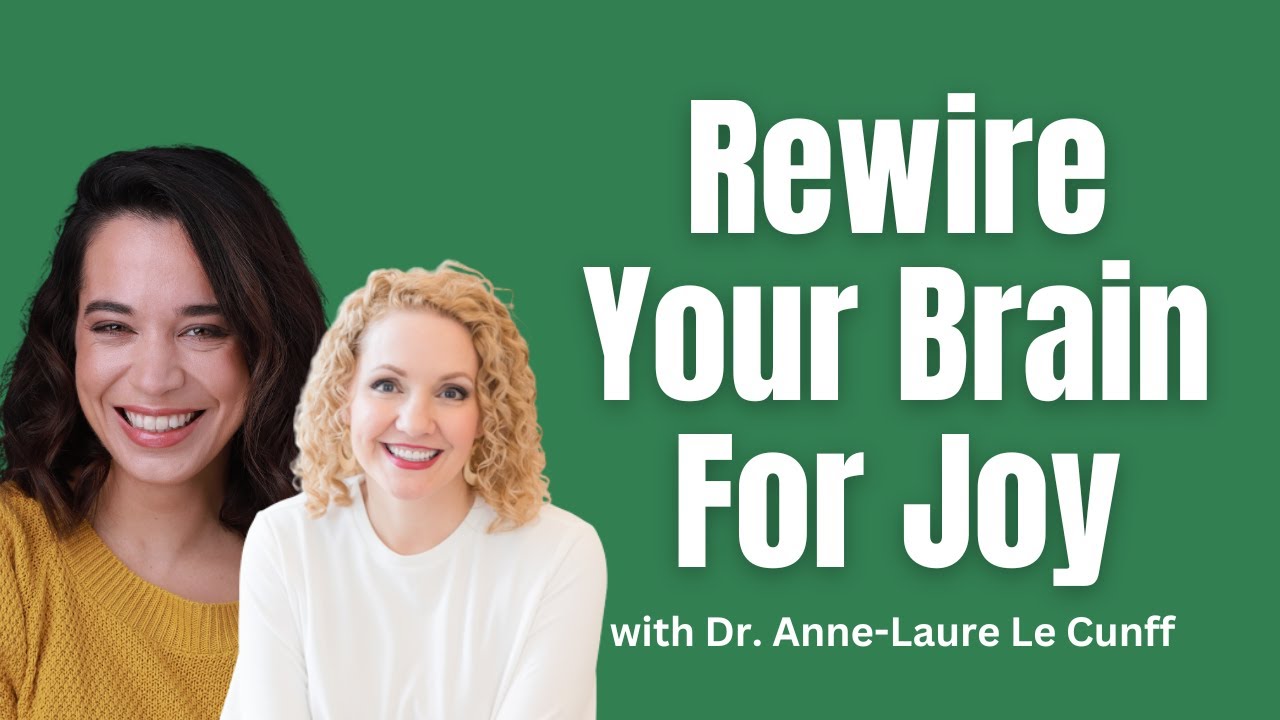
In this conversational interview, host SPEAKER B talks with neuroscientist, entrepreneur, and author Anne‑Laure Le Cunff about her journey from a high‑profile product‑marketing role at Google to studying neuroscience and founding Nest Labs. Le Cunff describes a pivotal moment of honest self‑reflection that revealed an internal sense of emptiness despite external success, prompting her to quit Google and later launch a startup that failed because it followed a scripted, fear‑driven path. She critiques the cultural myth of a linear, five‑year career plan, arguing that such planning stems from anxiety and a need for control. Le Cunff introduces the scientific method as a life framework: formulate hypotheses, run tiny experiments, and define success as learning rather than predetermined outcomes. She shares practical strategies for managing anxiety and imposter syndrome, including recognizing them as evolutionary signals, using the prefrontal cortex to re‑frame the response, and a simple “thank‑the‑anxiety” exercise. A concrete tiny experiment—walking for 20 minutes daily for 20 days—illustrates how small, curiosity‑driven actions can improve mental and physical health, boost sleep, and foster exploration. Throughout, metaphors of opening and closing doors are used to encourage trying, learning, and discarding unfit pursuits. The interview blends neuroscience explanations, personal anecdotes, and actionable advice, setting the stage for the second part of the conversation.
Chapters
Instead of trying to control everything, instead of trying to have the 5-year plan, what would it look like if I just started by being curious and letting go of the outcome and just experimenting?
Welcome back. Today we have part 1 of my conversation with Anne-Laure Le Cunff. She's a neuroscientist, an entrepreneur, and one of the most original thinkers on how we can learn. And grow and create. I think she's absolutely amazing. I'm so excited to introduce her to you. She left a high-power job at Google to study neuroscience, and now she conducts research into the neuroscience of learning and curiosity at King's College in London. She's also the founder of Nest Labs, a company that helps people think better and live more intentionally. Her work blends science and creativity and practical tools that challenge a lot of current myths. Like the myth of the perfect linear path. We always want a linear path to success, right? I read her book, Tiny Experiments. It blew me away and I was so excited to have her on the show. This is part 1 of 2. Sometimes when there's so much that I want to learn from people, I will break it into a 2-part show. This is one of those. As I said before, she's absolutely brilliant. I am a huge fan of hers. I'm so excited to have her on. Let's get started with Anne-Laure. I am absolutely giddy to have you on the show. I have your book here in my hand, Tiny Experiments. It's your first book. You are absolutely brilliant. I've been telling everyone about this book. There's, there's so much great content in here. I don't even know where to begin. I think my first thought when I read this book was, why has no one taught us this way to live, to create little experiments and see what we actually want out of life? There is no time in education system when you're growing up where someone says, hey, you don't have to have it all figured out. You don't have to create a life that's just difficult goal after difficult goal. Let's see what works for you. And I love that freedom. So let's, let's do just a quick story on you. You're working at Google. You're kind of burned out. You go home to France to visit your family and what happens?
Then someone, when I was there, asked me, so how's life? And you know, it's such a simple question. We ask it all the time and we never really think about it when we answer. And usually we say something like, yeah, sure, things are good. Uh, everything's going fine. But for the very first time in my life, I actually listened to the question, how's life? And I let myself think about it and I let myself be honest with the answer. And the answer was that on the outside, life was good. I had a really good job at Google, great team working on interesting projects. I grew up in France, but I was working in the US, which had been a dream since I was a child. So on the outside, everything was great, but on the inside, I was feeling empty. I was feeling like I was following a script. I was following as if my ambitions were not my own ambitions. I was feeling like all of the choices I was making were based on the expectations I thought other people had for me. That's really what put in motion a moment of reflection when I started doubting whether I was on the right path. And, uh, not long after that, I quit my job at Google.
And what was your role at Google?
I was in product marketing for digital health products. It made it even harder. To leave because I was working on one of those products actually helping people be healthier. And so you have this added kind of pressure feeling like you're working on a purpose-driven mission and that you're doing something good for the world. And how selfish of you is it to think that maybe you want something else out of life?
So how did you know exactly what you were going to do next?
So that's where I would not do it the way I did at the time. I was so anxious to go from, you have a job at Google, you have it all figured out, to you have no idea where you're going, that I decided to cling to the first blueprint I could find of what you are supposed to do when you leave a job, like a job at Google. For anyone who has worked in tech or who has friends who work in tech, You might know that the next sanctified kind of project you're supposed to work on after working at a big company like Google is starting a startup. So, right, that's what I did. I started a startup for all of the wrong reasons because I was scared because I needed a script because that's what I had been doing my entire life. And so I left my job at Google thinking that I would finally be free and do my own thing. Only to then start copy-pasting another script that was based on what other people were doing around me. And it's only, only when my startup failed that I finally, finally accepted that I had no idea where I was going and that it was not a bad thing. I was still in my 20s and it was okay not to know where I wanted to go. And now that I'm not in my 20s anymore, I also know that even when you're not in your 20s, It's actually completely okay not to know where you're going. And in fact, nobody knows where they're going. Some people are good at pretending. Sometimes we're very good at fooling ourselves, but we don't know where we're going, and that's okay.
I think one thing that I'm continually saying to people is that with every decade of our life, we get to kind of have a new life. You know, those of us with families, we have our family and that looks the same. Careers are changing so quickly. We're gaining new skills. We're building new businesses. We're writing books. We're doing all these different things that this concept that when you are a teenager or when you're in college, you're going to pick what you're going to do and you're going to have a job and that's just your whole life is so outdated. I mean, it was really just a sliver of time when that was accurate, but that changing things around and doing something new and to some degree blowing up The things that we felt like we should be doing because we worked hard for them is the smartest thing to do.
Yes, absolutely. I think the reason why, even though we know at an intuitive level that we don't need to know where we're going, we don't need to have a plan. I think there is still a very natural response to uncertainty, which is one of fear. And so a lot of the planning we're trying to make, a lot of trying to have a 5-year vision of trying to know what our career is going to look like and trying to create really what is an illusion of certainty comes from a place of fear and anxiety. We wanna feel in control.
Yeah. When I'm working with clients, they will often say, I would love to make, for their business they're starting or their business are growing, I'd love to make a 5-year plan and then a 10-year plan. And I go, that's cute. And that looks great on an Instagram ad when someone is trying to sell you something, but we're not Nike. So we don't really need a 5-year plan. And even Nike doesn't exactly know what they're doing in 5 years. Like, we need to be flexible. We need to do the right things. We need to put in the work to get you where you want to go. But this idea that we are casting this vision for exactly the life we're going to have is just a recipe for disaster. We have very similar mindset on kind of a focus on the steps as opposed to the outcome, where the focus on the output versus the outcome. People are always shocked to learn about me whenever I have a book come out or the app. I never have a goal for book sales. People ask before the app launch, you know, how many people do you want to download the app in the first month? And I go, I, my work with a book or the app or anything else is to do a great job. And what happens with it happens, but I can't control how many people buy my books. I can't control how many people listen to the podcast. I can't control how many people download the app. And just the idea of trying to live my life like I could control that is miserable. Talk about the science behind focusing on output versus outcome.
Well, this is really what I discovered when I decided to go back to university to study neuroscience. So after my startup, I asked myself, what am I actually curious about? What is something I would love to explore and to wake up in the morning and do, even if nobody was watching, even if success, or at least the traditional definition of success, was out of the equation? And for me, that had always been the brain. I had always been curious about why we think the way we think and feel the way we feel. So I went back to university to study neuroscience. And then I discovered or rediscovered, I had probably heard about it before, but I had completely forgotten about it, but I rediscovered the scientific method. What's amazing with the scientific method is that exactly as you just described, it's not focused on the outcomes. A scientist, when they conduct an experiment, cannot focus on the outcome because they don't know what the outcome should be. If they knew already, there would be no point conducting an experiment. So instead of starting from a fixed outcome, a fixed definition of success, a scientist starts from more of a hypothesis, a research question. So they say, huh, I wonder what would happen if I tried that. And this is what you do. This is how you experiment. And for a scientist, success is not getting to a specific destination. Success is learning something new. If by the end of the experiment you've discovered something you didn't know before running the experiment, that is success. And something clicked for me when I, when we studied this in my neuroscience class. I wonder what that would look like to apply in any other area of my life and my work instead of instead of clinging to certainty, instead of trying to control everything, instead of trying to have the 5-year plan, what would it look like if I just started by being curious and letting go of the outcome and just experimenting? And so this is really the science behind the idea of conducting tiny experiments. It's really letting go of the anxiety we have when we try to cling to a predetermined outcome, when we try to have certainty, and instead being more playful, being more curious, and trusting that as long as we keep on trying new things, we keep on experimenting, even though we don't know where we're going, we are going to grow in the process.
Yeah. And that is going to give us answers and help us understand things and help us have fun and help lead us to new opportunities because, like, kind of going into personality types, I'm an Enneagram 7, if you're familiar with the Enneagram. People always think I'm an Enneagram 3 because I've had a lot of business success. I'm the kind of person that gets a lot done, but achievement is not what motivates me. Fun and options are what motivate me. So success is a byproduct of living my life in a way of going, I see this door over there and there's, there's a, there's light coming through the crack of the door. I'm just going to open it and see what's on the other side. And half of the time it's nothing. The other half of the time, it's something fun to experiment with. It's why at the beginning of this conversation with you, I said, no one teaches us just to experiment and see what we want. No one, no one teaches kids or adults. Let's just have fun with something for a little while and see how you feel. Will you talk about that experiment you did of just going for a daily walk and what that did for you and your life?
I just wanna first touch back on the metaphor you just used. I love it because I think that's the issue. We're teaching people to only open the doors where they're 100% sure they're going to find something interesting behind it. And also, We're not teaching people to close doors that are not interesting. Just imagine if we could just have a little peek and just say, oh, what's behind there? Huh, actually not great. You close it and you go into the next door instead of, you know, having to stay in that room because we do that to ourselves also. Stay in a career we don't want to stay in, keep on working on a project we hate because now that we open the door and we're in the room, we're supposed to stay in the room for a while because If not, it doesn't look like we tried hard enough. So I actually never used that metaphor before, but I love it.
Or do you think it triggers feelings of failure in people so they don't wanna close the door?
Yeah, I think we have this feeling that people are watching us while we open the door and we have to say, hey, look, I'm trying. And, uh, and if it doesn't work out, we need to, to show that we tried really hard. When in reality, if you follow the fun, it can also be just that you give it a try and it's not for you. It might be for someone else. It might be the kind of project someone else might enjoy, but maybe it's not your thing and that's completely okay. It's not failure. Again, think like a scientist. If you've learned something new about yourself in the process, now you know this thing is not for you. You've learned something new. That is success for a scientist.
As I coach women in their businesses, one self-sabotage habit that I see that happens to a lot of women is the fear that they will try something and they'll look foolish, or they'll try something and they won't be whatever level of success they think they should be to the masses. And the masses tends to be their mom or their sister or their friend or a nosy neighbor. It's not the masses. It's, it's someone, but this fear of looking foolish, the fear of looking like something didn't work. Will make a lot of women not take steps in the future and not be willing to do an experiment at all. From a neuroscience perspective, how can women not get stuck in that self-sabotage loop?
The most important step, I think, is removing some of the self-blame that there is around feeling those feelings. So I've seen with a lot of people I, I work with and in the lab with participants, people feeling like they should not have this fear of being judged. And I think first it's important to understand that it is a completely natural evolutionary response that we have as human beings. Being judged positively by other people meant survival before, because being kicked out of the tribe meant certain death. So we are wired. To try and behave in ways that are going to get us the approval of the tribe. And so we're always asking ourselves, even if it's not at a conscious level, but we're always asking ourselves, am I doing the right thing? Am I doing anything that might get me judged and rejected by other people? So I think first knowing that it's just your brain doing its job, trying to protect you, and there's nothing wrong with you for having this anxiety and this fear of being judged is step number one. Then step number 2, once you know that this is completely normal, that this anxiety is normal, your amygdala going in overdrive because you don't want to be judged is completely normal, reminding yourself that as human beings, we also have a capability that very few other animals have, which is to engage our prefrontal cortex and say, okay, I know this anxiety is here, but I can change my response. To that anxiety. A little exercise that I find really helpful is actually looking at your anxiety as if it was a person and just say, thank you. Hi, welcome back. Thank you for trying to warn me. Thank you for trying to protect me. Right now I'm okay. I'm okay. It, I'm, I'm actually going to try that thing and I understand what you're trying to do here. You're trying to protect me. You want us to survive. I am in no danger of death here. We're going to be okay. I'm going to try that thing. And so this is a very simple exercise where you're not trying to shut down the anxiety, getting rid of it. You're not blaming yourself for being anxious. You're thanking the anxiety, which is just a signal from your brain, and saying, I'm still going to do that thing. Hmm.
That's so good. Because yeah, the anxiety's just trying to keep us safe. Yeah. And it won't be the end of the world if it's not perfect. Yeah.
I, um, get a lot of anxiety. For example, when I do public speaking, my anxiety is always here before going on stage. I have those little cramps in my stomach, sweaty pants, my heart is beating faster. And this exercise has been so helpful for me because in the past I was trying to get rid of the anxiety, which was making me even more anxious, whereas And now I really see it for what it is, my brain trying to protect me and also a sign that I'm doing something new, different. I'm getting out of my comfort zone. And so there is going to be a bit of anxiety and it's completely normal. And so I say, hello, thank you. And I go and I do the thing.
I love that. I was the same way with speaking for years and years until I was backstage and I was with a, a, another, a male speaker who's all over stages everywhere and just so confident on stage. And he saw me and I was so nervous. And he said, what are you doing? And I was like, oh, I'm just get this way before I go out. And he goes, oh, this is what you do to hype yourself up. And I said, no, no, no, I have anxiety. I'm nervous. And he goes, no, no, this is your body getting excited to go on stage. You need to recognize this not as anxiety, but as your body like turning on to go on stage. And I went, Oh, and that's been a real game changer for me to go, okay, my palms are sweaty. My stomach hurts. My heart's racing. Not because I'm terrified, but because this is how my body gets ready to go on stage. And that's been a helper. But going back to what you said a second ago, that is exactly what I tell women when they're dealing with imposter syndrome, that imposter syndrome is a great thing because of course you feel imposter syndrome. You're doing something new to you. You're stretching. It's new. If you didn't feel imposter syndrome, it would be crazy because it's new and it's a good thing because you're stretching and you're learning and you're doing something new. You just have to push through it. And you will always feel imposter syndrome, but you feel it when something is new because of course you do. So that way, when you feel it, it doesn't terrify you. You go, oh, I'm doing something new and it's a little scary and I'm not sure if I can., but I'm gonna push through it. And then before I know it, I'll wake up in the morning and I'll go, what do you know? I'm the kind of woman that does this and it'll be second nature. But I think we feel imposter syndrome and we think it's the end of the world, right?
Yeah. It reminds me of a manager I had, a woman at Google who told me that the only two kinds of people who never have imposter syndrome are the kind of people who don't get out of their comfort zone or the kind of people who don't know they're out of their depth.
That's brilliant.
And I really liked it. I, and I was like, okay, so I'm the third type, the type that re— I know I'm out of my depth, but I'm, I'm going to try it and I'm going to learn and I'm going to grow.
Yeah, absolutely. Because I had so much fun on that rabbit trail. Let's go back to the experiment you did just with going on a walk every day.
So while I was on my book tour, I love saying book tour, but these days, and you would know, you've written so many books, a book tour actually involves a lot of staying in front of your computer and recording podcasts. So there's not much of a tour going on. You're actually just at home. And so while during my book tour, that's what I was doing. I spent a lot of time recording podcast conversations with different people talking about the book. And I realized after a week or so that there were entire days where I would wake up brush my teeth, have coffee, sit down in front of the computer, and then only get up in the evening, 8:00 PM. So 12 hours later. And so outside of quick toilet breaks, I would just in front of the computer the entire day. I was starting to feel the effects on my mental health and even my physical health. I was low energy, bit cranky. I had my husband on the phone one night. I don't even remember what he told me, but I got angry very quickly, very impatient, which is really not like me. And so again, little signals that maybe something is not going so well right now. And so I ask myself, what is a tiny experiment that I can run right now to try and figure out a way to take care of my mental and physical health? And something I could tell that had to be very tiny because I had very little bandwidth, both in, in, both in terms of, of time, but also mentally speaking. So it had to be simple. It had to be tiny. And I designed a tiny experiment where I said, I'm going to go on a 20-minute walk every day for the next 20 days. It did not matter where I would go or how fast I walked, or if I listened to an audiobook or anything like that. I just had to leave and go on a walk for 20 minutes and then come back. And it was amazing. This is why I love tiny experiments because it doesn't have to be something big. It doesn't even have to be something where you're 100% sure it's going to work. You're just curious. You feel like maybe this could help, maybe let's give it a try. And very often you unlock benefits that you have not even thought about. In my case, I was in Austin during this, this part of the book tour. I ended up exploring the city and seeing a lot more of the neighborhood than I would've had if I had stayed at home. I slept better at night also, and there were lots of walks where I would go for 20 minutes, but actually come back 40 minutes or an hour later because once you start and you're on your walk, you wanna keep going. And I generally credit that tiny experiment for being able to maintain my mental health during the book tour.
I love that. And I, I love it that it's open-ended and it allows us to give ourselves grace to see if we like something, if something works for us. And then again, we can close the door if we don't like it. How great was she, right? Of course, I'm giving away a copy of her book. Go ahead, tag me on Instagram. You can tag her. Her handle is @neuranne. So it's N-E-U-R-A-N-N-E. Think of it like nur, like neuro, and Anne, but because she's French, it's Anne. So @neuranne. I love it so much.
Tag us.
You'll be entered to win her book, Tiny Experiments. If you are watching on YouTube, thank you for watching. All you have to do, make sure you're subscribed, like it, leave a comment, and you'll be entered to win as well. And as always, thank you for being here. Thank you for investing in you. We're talking neuroscience. We're talking life. We're talking really, really fun things to expand our mind on. I love it that you're the kind of person that wants to do this with me. Thank you for being here. Thank you for being a friend. Thank you for letting me be a friend to you. This is so fun. To get to read a book and then talk to the author of the book and share it with you. Thank you for being on this journey with me. I just want to remind you that the work you're doing is really, really important. I'm proud of you. I believe in you. I believe God is with you on this. You may be feeling a little bit discouraged. Let this encourage you. You can think of things as experiments. Not everything is black or white. You don't have to make all the decisions in the world. Figure out what you like, figure out what you love, go with it. God is with you on this. Pray into it. Pray for a word. Pray for clarity. Well, praying for clarity, that could take a while. Pray for next steps. How's that? In the end, just remember that you cannot break a woman who gets her strength from God. I'm excited about this information for you. I'm excited about what God has for you. Thank you for being here with me. I'll be back with you in a couple of days. This will be on Monday. My family's texting and it's going through. Um, okay, yeah, let me re-ask it.
Okay.
Oh, we're good. Okay, that's better. Okay, here we go. I'm getting all this ready. Yeah, no, I'm so excited. There's so much to cover. Sorry.
More from Anne-Laure

How to Use Curiosity & Experimentation to Flourish, with Dr. Anne-Laure Le Cunff

Stop chasing goals and start running tiny experiments with Anne-Laure Le Cunff

Why You’re Still Waiting To Figure It All Out | Anne-Laure Le Cunff | EP. 391


Tiny Experiments: How to Learn, Grow, and Navigate Uncertainty — Anne-Laure Le Cunff



Stop Setting Goals. Try This Instead | Tiny Experiments with Anne-Laure Le Cunff


