Neuromyths in Education with Dr Anne Laure Le Cunff
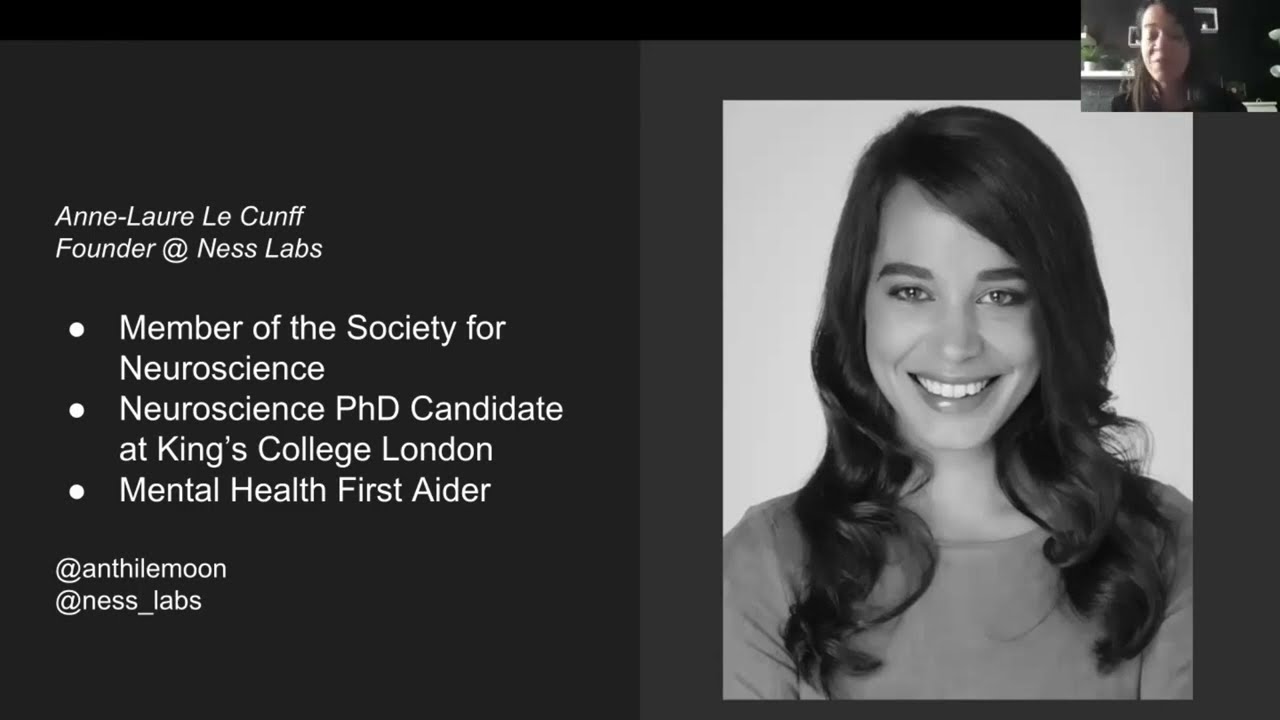
Anne-Laure Le Cunff debunks neuromyths—false beliefs about the brain that spread through schools and popular culture. Over 90% of educators endorse at least one, from the "10% of brain use" myth to learning styles and the Mozart effect. She walks through what's actually true about brain training, spacing, sleep learning, and dyslexia.
Chapters
Thanks so much for inviting me today. This is very exciting. I'm going to give a short talk, as Naomi said, about neuromyths in education, and there's also going to be a little bit of an interactive game in it. So it's my first time this week trying it. Hopefully it's hopefully it goes well, and if it doesn't, I guess it will be a learning experience. So bear with me while we try this. So as you know, this is Brain Awareness Week. There's a lot going on, both with the association that you are launching this week and also on the official website. So I just, just wanted to say that I highly also recommend checking the calendar on their website because there's so many interesting talks this week. Too many for me to join all of them, but I highly recommend checking it out. So this is me. I'm Anne-Laure Le Cunff. I'm the founder of NestLabs. This is basically an online school to help knowledge workers achieve more without sacrificing their mental health. And we give them tools to try and recognize the signs of burnout, have more honest conversations around mental health at work, and to help managers create a psychologically safe environment for their teams. I'm currently enrolled as a PhD candidate at King's College London, where I did my master's before, and I'm also a mental health first aider. And for anyone who's on Twitter, I'm very bad at LinkedIn, but these are my handles if you want to get in touch afterwards. So what's a neuromyth? A neuromyth is a common misconception about the brain, and if you look at the etymology of the word itself, It has two parts which are pretty transparent: neuro for the brain and myth for misconception. But something that most researchers agree about that is not part of the etymology of the word itself is that neuromyths are incredibly common. They're very prevalent. They're very common misconceptions. And you may think that this is not a problem, but it is, especially in education, as we're going to see in this session. So why first are they so common? One of the big problems is that they are increasingly used in popular culture. So in movies, for example, the thing with neuromyths is that they are exciting. They make you feel good. So if you take, for example, the very common one that an average person uses 10% of their brain capacity, which as you can see is actually written like The phrases on the poster of Lucy, which is a very popular movie. Why does it make you feel good? Because you feel it made you feel like whatever challenges that you're facing, if you're struggling to learn something new, if there's something that feels a little bit difficult to acquire as a skill, it's because you only have access to 10% of your brain capacity. And you may feel like, oh, you know, one day we'll find a way to unlock those 90% that I don't have access to right now. And that day I may be able to achieve everything that I want to achieve. And so this is partly why a lot of people believe in these myths. Another very popular one, for example, is that we are either right-brained or left-brained. And so that's the same. You feel like, oh, I'm struggling with this, like this is a little bit harder than I would like it to be, but this is because I'm more of a right-brained person or more of a left-brained person. And marketers obviously love those myths. There are lots of products that are built around those myths where they ask you to pay money to unlock all of that side of the brain that you don't have supposedly access to, or those 90% that you don't have access to. So there are a lot of companies who are benefiting from the fact that these neuromyths are so popular. There's an amazing systematic review that I'll go back to at the end of this session that shows that they're incredibly prevalent in education. And this is where it starts becoming a problem because it means that teachers, educators, instructors are basing the way they're educating children and adolescents, and even sometimes in adult learning programs, on neuromyths. So I want to play a little game. This is the part that's a bit new for me this week, giving it a try, but let's see if that works. I'm first going to try and have a lot more of you in the side of my screen so I can I see your videos. So I know not everyone can turn their videos on, and that's fine. But basically, I'm going to go through some common— some— they're not all myths because it would not be a game if they were all myths. I'm going to go through statements about the brain. Some of them are facts, some others are fiction. So what I want you to do is, after I go through each of them, is to give me a thumbs up on camera or to say "fact" in the chat if you can't turn your camera on, or give me a thumbs down or say "fiction" in the chat if you can't turn the camera on. So just try and think if you think that these statements are correct or not. Okay, let's do the first one to see how that goes. First one, fact or fiction: brain training games can improve memory and focus. Give me a thumbs up if you think that's true, or thumbs down if you don't think that's true. Okay, most of you think that's true, at least that's what I'm seeing on camera, and that's fiction, unfortunately. So the problem with brain training games is that they are going to help you become better at playing brain training games, but there's no transfer effects. So it means that the more you play them, the better you're going to become at the games, which makes me feel— you feel like you have an improved memory and focus, but that's not going to be applicable to any other daily tasks that you have in your life or in your work. So what I recommend people is to keep on playing them if you enjoy playing them. They're fun, right? So that's fine. That's the goal, to have fun. But if your goal is to improve your memory and your focus, maybe don't pay money for these brain training games because they don't actually have any transfer effect that you can use in your other tasks in your life. Another one, Fact or fiction: spacing out learning sessions is better than cramming for a big exam the night before. Thumbs up or thumbs down, or you can put it in the chat. Thumbs up, thumbs up. People look less certain now that I put one at the beginning that looked like it was true and it wasn't. Okay, so mostly thumbs up here, and that's good because this is a fact. This is called the spacing effect. And it shows that, and I think a lot of the reason why lots of you had a thumbs up was also because you probably experienced this at school, right? If you spend, you space your learning lessons, you feel you're going to build more long-term memories versus cramming everything the night before where you're going to be able to regurgitate the information on the day of the exam. But then if I ask, ask you a week or two weeks later what that was all about, you're probably not going to be able to remember anything. So this is actually a fact, and so this is something for educators too that would be good to encourage with students. Fact or fiction? You can acquire new knowledge while you are asleep. Thumbs up or thumbs down? This is a bit of a 50/50. I see people doing this. You can't. It's either fact or fiction. So, this is fiction, and that's one of the ones that made me probably the saddest when I discovered that that was not true because when I was a kid, that was my dream to just be able to listen to audiotapes and learn while I was asleep. That just sounds amazing. Unfortunately, that's not possible. You do need to engage actively with the information in order to build those long-term memories. That doesn't mean that sleep is not helpful for learning, But what happens while you're sleeping is the consolidation of the knowledge that you have acquired during the day rather than the acquisition of new knowledge. So this is fiction. Very sad, but this is fiction. Fact or fiction? People with dyslexia read and write backwards. Thumbs up or thumbs down? Thumbs down, down, down. That's good. Most of you think this is fiction. And it is fiction. So something that's interesting, and you'll see that that's the case with most neuromyths, is that they're grounded in a tiny bit of fact. There has been research usually, but that has been misconstrued afterwards, and that has become a neuromyth. So almost all children actually reverse their letters when they start learning how to read and how to write. That's part of the process. And yes, people— this people with dyslexia will sometimes have trouble in reversing those letters, which shows that they're struggling to read and write. But two things. First, it doesn't happen with all of them. And second, it doesn't mean that because it happens in a child, they're dyslexic. So it's actually a really bad way to determine whether someone is dyslexic or not. Fact or fiction: we learn better when we receive information in our preferred learning style. Thumbs up or thumbs down? Mostly thumbs up. This is fiction. Yes, this is fiction. So people do not have a learning style. They have a learning— we mostly have learning preferences. So you may enjoy better learning with a specific in a specific way, whether it's like visual, auditory, etc. But research shows that that doesn't mean that you're going to learn better. So if we match people with their preferred learning style, they're not going— you're not going to see any better learning performance. They're not going to learn faster and they're not going to remember things better. So this is a bit similar to the brain training apps. If you find it more enjoyable, why not? But the concept of learning styles and of matching people with this style so they would learn better is fiction. Fact or fiction? Listening to classical music makes children smarter. Thumbs up or thumbs down? Thumbs down, thumbs up. A bit of a 50/50 here, and I get why, because this is based— I love the reactions. What? Yes, because this is actually based also on some research that has been conducted but that has been then also misconstrued to the point where the researchers got so annoyed they published another paper afterwards saying, can you please stop forcing your kids to listen to classical music because of our research paper? Because that's not what we said. What they did is that they make people, they listen to Mozart, and yes, they saw something happening. What happened is that they saw an improvement in spatial reasoning skills. But so as you can see, that's not general intelligence, and also it only lasted for 12 minutes, so not that helpful. Again, if you love classical music, please do listen to it. I think it's very nice, but don't use it as something that is going to make you or your kids smarter, and let them listen mostly to what they want to listen to, because there's no music that you can use to make them more intelligent. Fact or fiction? The brain is almost fully developed by the age of 3. Thumbs up or thumbs down? Down, down, down. Yeah, so we have a vast majority of you saying that this is fiction, and this is fiction, so this is good. So yeah, the brain keeps on developing way past childhood and into adolescence and adulthood. And I think, yeah, one of the parts that's very important, for example, is the prefrontal cortex, which is super important for decision-making and the higher level kind of reasoning, and which is not fully matured until we reach our mid-20s. So trying to cram a lot of things in 0 to 3 years and thinking that this is the most critical period is not true. You should keep on trying to learn and take care of your brains way after the age of 3. So I'm going back now to this. I hope that was fun, by the way, but I'm, I'm going back to the systematic review I mentioned at the beginning. Thank you for the little clapping, that's nice. So they found that one of the most prevalent ones was the one about learning styles. So they found that in most, almost in more than 90% of the studies that they included in their systematic review, some of the educators believed in that neuromyth. And I'm just going to go through some quickly, some of the most common ones that they found in that systematic review. So as I mentioned, learning styles, very common. The 3-year myth, as it's called, is also incredibly common. Then there's the left brain and right brain one, the fact that we're either right-brained or left-brained, which as I mentioned is not true. Of course, there are functions that tend to happen in one hemisphere rather than the other, but as an individual, you're whole-brained. You're not right-brained or left-brained. So this is also a very common one. We only use 10% Reducing of brain capacity, very common. And as we saw, it is used in a lot of Hollywood movies, so that may explain why it is so common for people to believe this. And another one is that children are less attentive after consuming sugary drinks or snacks. I am not saying to give them sugary drinks or snacks because we know that is unhealthy in and of itself, but it is not going to have any impact on their attention. So now that we have had this little game and that you know what neuromyths are, I just want to share a few resources in case you want to become a brain mythbuster. Yourself, and you want to keep on dispelling these myths after this session. So first, I am just going to recommend a couple of resources. Those books, those two books, Great Myths of the Brain and 50 Great Myths of Popular Psychology, are absolutely amazing. The first one has more of a neuroscientific approach to it, so it is really more about the brain, the processes, and the functions. And the second one, which I think is also very interesting, takes more of a behavioral approach to it. So it does have a lot of things that are very practical and that can be used in education that may not be mentioned from the pure neuroscientific book that you have on the left. And then you have this audiobook, which I cannot recommend as much as I recommend the books. I just know that some people enjoy— again, learning preference, not learning style— but some people enjoy audiobooks better. So I don't find it as strong and comprehensive as the two books that you see on the left. But people who really like audiobooks— I have friends, they don't read books at all, they consume all of their books as audiobooks. If that's you, this is still a really good resource around neuromyth. Another resource is the Dana Foundation, which is organizing the Brain Awareness Week this week, and it has a lot of resources. In particular, the Q&A about the brain section that they have on their website is really nice, really well written in lay language that anyone can understand, and it is addressing some neuromyth. One of my favorite resources as well, and I pulled quite a few of the, the ones that we looked at in the game, from there is Brain Facts. And you know how a lot of people have been complaining, complaining about the rise of fake news. They're basically combating brain, um, fake science when it comes to the brain and neuroscience. And they have a whole section if you filter by neuromyth that is literally just questions as the ones we did together, and you can click and it tells you if it's fact or fiction with a short scientific explanation that's also very easy to understand. And finally, obviously, there's the Applied Neuroscience Association, which is brand new, just launching this week, but I know there's going to be a lot more resources added to the website, and there's going to be more events like this one. So I really encourage you to join and to sign up to events so you can keep on learning and keep on having more information to make you a better brain mythbuster. So that's it for the knowledge sharing aspects of it. And we have time for a few questions, so thank you.
More from Anne-Laure

How to Use Curiosity & Experimentation to Flourish, with Dr. Anne-Laure Le Cunff

Stop chasing goals and start running tiny experiments with Anne-Laure Le Cunff

Why You’re Still Waiting To Figure It All Out | Anne-Laure Le Cunff | EP. 391


Tiny Experiments: How to Learn, Grow, and Navigate Uncertainty — Anne-Laure Le Cunff



Stop Setting Goals. Try This Instead | Tiny Experiments with Anne-Laure Le Cunff


