Should You Follow Your Passion with Anne-Laure Le Cunff
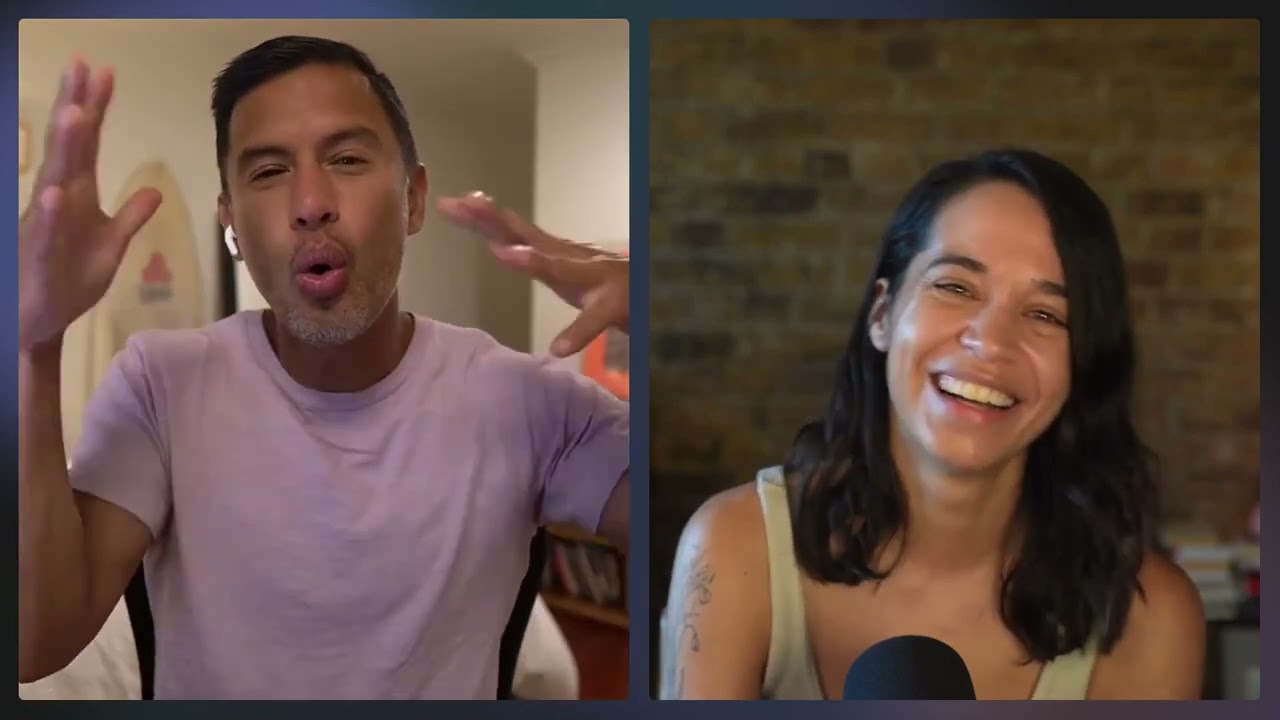
In this Rad Friends podcast episode, host Speaker A interviews Anne‑Laure Le Cunff, founder of Nest Labs, PhD candidate in psychology‑neuroscience, and author‑to‑be. The dialogue weaves through her three main professional pursuits, the unique burnout she experiences from caring too much, and how she balances ambition with mental health. They explore her multicultural background (French‑Algerian heritage) and its influence on identity and representation. The core of the episode is a deep dive into the question “Should you follow your passion?” – unpacking definitions of passion versus interest, the danger of all‑consuming “jackhammer” versus exploratory “hummingbird” approaches, the role of attachment to outcomes, and how immigrant mindsets shape attitudes toward work, safety, and self‑actualisation. Anecdotes such as Polynesian navigators using testicles for navigation illustrate the contrast between embodied knowledge and modern quantified self‑tracking. The conversation concludes with reflections on sustainable engagement, the importance of process over results, and recommendations for creators.
Chapters
Welcome, welcome everyone. Welcome Anne-Laure to the Rad Friends Podcast. I'm so happy to have you here. How are you?
I'm good. Thanks so much for having me. Always a pleasure to chat with you.
You, you've got the dope studio looking good with that fresh bouquet look.
So yeah, finally I've, I've been treating all of my flats as if I was going to move out in 2 months and it's the first time I'm finally accepting that I'm probably going to stay here for a while. So I invested into a proper studio.
All right. I love that. So tell us, you, you just were at the, the Every conference, my friend Dan Shipper and, and a bunch of other writers and thinkers. You roll into one of these conferences and people go up to you, you're like, hi, I'm Anne-Laure Le Cunff. How do you tell our listeners, how do you spend your time?
Okay. Yeah. So I, by the way, I was very sad that you were not at that conference in person.
I know our one chance to meet in New York.
I know, because yeah, for everyone listening, we actually have talked so many times over Zoom with Kayva, but we've never met in person.
So it's one of my life goals, but it is, it is the classic Rad Friends ethos where, you know, so many of these like true friendships have been built over Twitter and the internet and Zoom, and we will meet though.
Exactly. One day, one day. But yeah, so if I was asked at a conference what I do, what I spend my time on, I would answer that I divide my time between 3 things mainly. The first one is NestLabs, which is a small business, a platform where we teach knowledge workers how to achieve their ambitions without sacrificing their mental health. The second thing is a PhD in psychology and neuroscience. I'm halfway through. And then the third thing at the moment is writing a book. So, uh, quite a few things. Yeah.
Needless to say, you're probably a busy person.
It's, it's fairly busy. It is honestly the busiest I've been in my entire life, and I don't think that would be sustainable over the very long term. Right now I'm having a lot of fun because everything I'm doing is so new that it still feels like this very playful exploratory process that does take a lot of hours. So yeah, I think, I think once I become very familiar with the process of writing a book or doing research, maybe it will lose a little bit of its appeal and it will feel like too much work. But at the moment it doesn't, which is great.
Well, you, you've given us, by, by the way, just kudos, you're a fucking badass that, that is those three things. You run an, you said small, you run an online business, you're getting a PhD and you're writing a book. So those 3 things are normally you do one at a time and you've taken 3. So, which actually will be, it's going to provide some ample fodder for the question of, are you following your passion? But we're not, we're not, we're not going to, we're not going to talk about that yet. Tell, I love. This, you said balancing productivity, ambition, and mental health. What is like, what is the, the challenge that, that you are in that part of your business that your readers, that your audience comes to, to help you navigate?
Yeah, so the, my audience is mostly made of people who are very ambitious, very creative, and who have at least like who have experienced burnout at least once in their lives, and they haven't experienced the kind of burnout that a lot of people talk about. If you Google burnout, most of the results you're going to get are going to tell you about horrible managers that give you too much work or projects that you don't care about, or values that are not aligned between what you want, what you're interested in, and versus what your team or your company. Is values and the type of burnout that a lot of the people in the Nest Labs community have experienced and the type of burnout I have experienced is it's because I care too much. I actually really want to do all of that stuff. And there's almost this kind of like shame of feeling like, why am I doing this to myself? Nobody's forcing me to do this. I don't have the horrible boss telling me, do that. And when that happens, you know, you try to find solutions and currently most of the solutions that are available, if you do a quick Google search, don't answer that question.
Hmm. And so it's, wow. I mean, you're really getting to the heart. I mean, that's why we're, we're friends on so many levels, you know, come for the productivity, stay for the existential, you know, we're, we're, we're playing in the same, in the same sandbox, which is maybe like if I were to be a little more uncouth, it's like, why are we so fucking nuts?
Yes. Maybe I should change the tagline on the Nest Lab landing page to that.
Why are we so fucking nuts? Right. And I mean, if you look at the questions that we've explored, and so for, for our new listeners, this is a pilot. This is the, the third, fourth episode of the pilot where we have a question, kind of a quasi-philosophical question that we explore. And so, so many of these questions, including the one today, should you follow your passion, tie into this question of like, why are we so fucking nuts? Maybe that should be the name of the podcast. So we had the question, this one's going to be so juicy with our mutual friend, Carl Richards. Why do we fear being ordinary? Which is probably kind of the other side of the burnout coin or a, another side of the burnout coin. The one we just recorded with Susie was why are we so obsessed with growth? So we kind of like get into like capitalism and like the, the myth of the, like the belief of the individual and the self, all that. With Lawrence, we talk about is freedom overrated? So a lot of productivity is in pursuit of freedom, but freedom, the, you know, is like water, right? You can't like put it in a, in a box and just hold it, right? It's, it's got this ongoing thing. So, so we're gonna, we're gonna catch up on all of that today. Tell us though, your parents were just in town in Paris, or you were hanging, or you were hanging out with your parents, right?
Yes. Yes. I was in Paris last week and, yeah, it was, it was really great. I feel very fortunate that I can both live abroad in a very international daily. I, I live in London, but I can still jump on the train and be back in Paris and visit my parents very quickly. And that's actually been part of maintaining my mental health. I feel like that I can just go and very quickly recharge my batteries at my parents when I need to.
And they're in Paris?
They are in Paris. Yes. They, they've always lived there. What descent, where are they from or My dad is French and my mom is Algerian.
Okay.
Yeah. So I'm half and a half, and I did grow up in France, but I visited Algeria quite a few times with my mom. So, and at home it's always like family from my mom's side coming in. So it's always like speaking Arabic and French. And at Christmas we have like halal turkey and champagne. It's always kind of mixed. It's really fun.
I love that. We were joking on WhatsApp that our parents in another lifetime would be friends. There was this like very jovial photo of your dad in a sarong in the rain, just like with a beaming smile. I'm like, that's it. That's my dad energy.
I love that photo of your dad as well on the beach and like just like being very goofy as well. Oh yeah.
He's doing tai chi. It's not goofy. I mean, I think it's great, but he's doing it. No, he is, he, no, he is very goofy. Is, we call him the Cambodian Harrison Ford because he definitely, definitely looks like Harrison Ford. I would, do you, I've always wanted to ask, do you, do you identify, you know, you grew up in France, I grew up, grew up in the United States. Your, your dad's French, your mom's Algerian. Do you identify as like a child of immigrants?
I, it has changed a little bit actually. When I was a kid, I think because of my mom who's worked so hard to integrate herself in France, because she wasn't born in France, she, you know, her first language is Arabic. She came to France. She actually struggled a lot with racism when she, she grew up in France and trying to get jobs and all of that. She even changed her first name from Hadra to Sandra. So it would be something that people can pronounce and that sounds French. So growing up in that environment, and she, that's also why my name is Anne-Laure. You can't do, even in France, it sounds super French. It's, she went for the Frenchest first name possible. So I grew up just saying I'm French basically. And then as an adult, I realized how much of my, who I am basically is the fact that I grew up in a multicultural, multicultural family. Where every day I was hearing those two different languages, where I was eating the, the two different cuisines, where I was wearing miniskirts to go to school in France, and then wearing the veil when I was back in Algeria with my family and being able to navigate all of these different environments and the different codes and connecting with people who have completely different values. That's such a big part of me that now I do introduce myself and I, I do consider that double heritage part of my identity a lot more than when I was a kid.
That's awesome.
What about you, by the way?
Yeah, I, so I'm, it's a strange story for me because my parents, they, they both immigrated to the United States. So my mom's half French, half Cambodian. Then, but then I went to international school and then my parent, my dad my parents, my dad worked at the United Nations. So I was always in this like multicultural world where my best friends were Palestinian, Ethiopian, Ukrainian, Norwegian. Like it was, you were rare if you were a white kid named John in my school. So it was a very international, but I was kind of the opposite where I craved the, I think my parents tried pretty hard to assimilate, assimilate us, integrate us culturally. There were just some weird things like, like I don't know any '80s movies because look, we never watch '80s. So people will always quote '80s movies. Like, sorry. Even though I'm pretty, I mean, very strongly identify kind of as, as American. But I think part of what I was asking in that question is like, I definitely have that like immigrant mindset of like grinding and everything has to be a struggle. And there's an extreme lens of frugality through everything. There's a bit of risk aversion. And I think at a much deeper level, I think that for a long time, I just, I wanted to be accepted by Caucasians. Right. So I kind of like walked away from my Asian-ness and, and I'm, I think, I mean, I've been told that I, I look ethnically ambiguous. People are like, oh, you could be Indian. You could be Brazilian. You could be like a Pacific Islander. And so I've kind of leaned into that ambiguity to be like, I'm I'm not Asian, I'm not Cambodian, like mostly cuz I wanted to assimilate culturally with Caucasians, especially as I left this international cocoon. The one thing that's been really strange or, or interesting now is that there's been this like wave of kind of like the show. Did you watch a show? What's it called? Beef with Ali Wong.
No, but I've seen clips on YouTube. I see which show you're talking about. I've seen hilarious clips even without watching the whole show. I was laughing.
Beef.
Yeah.
And so there's this whole kind of celebrate, like celebration of Asian, mostly men, whether it's shit, I don't know, the Marvel movie, Crazy Rich Asians, the Bobby Lee podcast. It just, it really feels very recent to me, especially with the male side of things. And it's kind of let me reengage with my own Asianness by hearing other people talk about what it was like to be an Asian kid growing up, because I grew up very Asian in that regard, growing up in the '80s and the '90s. So I've kind of like had this weird coming full circle of cultural experiences, but, but very deeply connected to kind of Asian-ness now. Maybe it's like, it's, it's kind of hot right now.
So, you know, I feel like there's definitely something happening and it's, it's really good. One of my really, really good friends who was my flatmate, I can never remember if you say flatmate or roommate in the US, but I was—
say what you say.
Yeah. So who I was living with when I was living in San Francisco, and she's Vietnamese, but she was born in the, in the US, but both her parents are Vietnamese and she's going through a very similar arc. Uh, where she did everything she could as a kid to assimilate and, and, you know, they really embracing as much as possible the American aspect of the culture she grew up in. And now that she's older, she's actually embracing, I was going to say again, but just embracing for the very first time her Asian-ness. And it's been really helpful to have all of those icons now, these examples in, in your culture, in the US. Like, I don't, I don't know if that's really the case in Europe yet as much as in the US, but very often culturally speaking, a lot of things start in the US and then trickle down to us a little bit later. We're a bit slow here in Europe, but I feel like it's amazing. And she did tell me that if, you know, if one day she has kids, then it makes her feel more confident that they will have all of these examples growing up. Examples that she didn't have while she grew up.
Well, you know what it made me realize? Because I think I, I understood it. This question of representation, you know, so there's like representation of, you know, women seeing other women in the C-suite or an African American kid seeing anyone that looks like him doing, or her doing that job. Go down the, you know, LGBTQ, trans and so on. And I, you know, I guess like stating my bias is kind of a straight cis, you know, Asian male, I haven't had to think about a lot of these issues, particularly in the worlds that I operate in finance, tech, and so on. But he was, when I was hearing, and it's mostly through comedians, specifically a comedian named Bobby Lee, when I'm hearing him talk about his, she's 10 years older than me, talk about his childhood, just like the candies that they would eat, the way, you know, you would be disciplined by your parents. It's like, it's like an A is awesome. A B is like you're bad. A C is like, I'm going to kill you. You know, like the way they talk about grades and all that stuff, it was, it was like, wow, like that person had the same lived experience as I did. And it really just kind of, again, I don't, I mean, I guess secretly I wanna be a comedian, but I don't harbor the desire to be a comedian, but just, I could see that it was at one of these moments where like, oh, okay. Like I now feel why representation matters. Where before it was just the thing that I would read about.
Yeah, no, I absolutely, I also think that's why these kind of like projects, the podcast that you're, you're running right now and any kind of space we can create to have those conversations and to give representation to different models of success, different approaches based on different cultural backgrounds, different values, and just showing that there is contrary to what the media showed us while we grew up. And luckily for us, thanks to the internet, the media has become a lot more diverse now, which is amazing, I think. But when we grew up, there was this very specific model of success that was, that we had. And, and we thought, oh, that's what success looks like. So I think any kind of space for conversation that we create where we can showcase diversity and success and in values is amazing.
Yeah. Oh, I, I love that. All right. So we're gonna jump in before we're gonna jump to our question in a second. So the question is, should you follow your passion? But before we do that, I always ask the, our guests to find like some clip or some meme, something that made them laugh. And so this one is actually going to guide us cuz passion is a, is a guiding, it's a north star, it's a compass. So what was the, what was the, the funny tweet that you shared with me before?
I'm pulling it. It's a, it's, it was amazing. So it was Austin Alred who posted this tweet, and it was basically about this tribe of Polynesian seafarers who basically used their testicles to feel the vibrations of the sea and to navigate in this way, to know how deep the, the water was in the specific spot, to know how strong the currents were. They could apparently, they could even know how far and in which direction the nearest island was, just feeling the vibrations of the water through the canoe by having a direct contact with the, yeah, their testicles' skin with the canoe. And I found this first hilarious, obviously.
Yes. But the 12-year-old in me is, wants to just, uh, roll over the floor and start, start.
Oh yeah. I love that. I was laughing when I read this. And also once I, I start just stupidly laughing like a kid, I was like, how amazing it is how connected to their bodies these people are. That they can navigate the world in this way by direct touch. And obviously again, like the kid in me was like, ha ha ha, testicles. But still, and how different their experience is from the one that we have today and where it made me think about how. You know, now to know how stressed we are or how well we sleep, we look at our Apple Watch to tell us that. And where we base— our bodies are so amazing and are completely capable of giving us that information if we were able to still listen to our bodies. And so I just thought it was absolutely interesting to see this example of people, again, very funny, but fascinating how connected to their bodies they are versus how in our modern societies, how disconnected we've become by becoming very super connected to technology. So yeah, that was the philosophical aspect of it. And as I, about, yeah, the story about Polynesian sea voyagers using their testicles to navigate.
I love that. Who need, who needs an Apple Watch when you've got a pair of testicles, right? But it is, this is actually gonna be a future rad question is have we lost the ability to feel?
Hmm.
And I think these like, Anne-Laure Le Cunff, all these wearables, it's like, dude, I know if I slept well, like, it's pretty obvious, you know?
Exactly. And it, I, I do think that it gives us the illusion of control over our health because we have all of this data and we're like, oh, look, it's, this is looking red. This is going up. This is going down. I know what's going on. And I don't know if it really helps us regulate how we feel as well as if we were just taking the time to listen to ourselves a little bit more. So yeah, that was, that was my, me For you.
I guess I know, we know your, your next episode will be around this question of feeling and optimization or quantified self. So we're gonna, we're gonna have you back once we make it out of the, out of the pilot. So, all right. We're gonna jump into the main event. Our question for today, for those of you listening, if you want to engage with us, so we at Rad Reads run these group coaching cohorts. So imagine having this kind of conversation with a group of peers like-minded in philos— life philosophy, career, and so on. So check out radreads.co/coaching if you wanna learn more about that. All right. Should you follow your passion? I'm gonna, I'm just gonna hand it over to you and have you, have you kick us off. What is—
Yeah, it's, it's an interesting question and that's why I picked it from your list because it's a question where a lot of people feel like the answer is obvious. And actually it was super interesting for me to see to see that you posted the question on Twitter in advance of this episode to see what people would say. And so I scrolled through the answers and a lot of them not only said, yes, you should follow your passion, but they said, obviously you should follow your passion. And it's fascinating. It is always something interesting and something you want to dig in when people think that the answer to a question is obvious, because very often It actually isn't that obvious. Mm-hmm.
Yes.
Um, and so should you follow your passion? I don't have a clear answer, but I think that it is not an obvious answer.
Mm-hmm.
I feel like thinking that it's an obvious answer is actually dangerous and is the reason why a lot of people are suffering in terms of their professional lives, but that, that has become so intertwined in our personal lives as well. So in their lives in general, because of that, a lot of people are looking for their passion, like that one passion that you're supposed to find in life and then follow. So first, what do you do if you don't have that passion? A lot of people are not going to question the fact that maybe it's because it's stupid endeavor in the first place to look for a specific passion. They're all going to think that the problem comes from themselves, that they just haven't figured it out yet for a reason or another. So that I think creates a lot of anxiety where there shouldn't be any. And then second, something that I find interesting is the idea that you have that one passion. And so once you find it, that's it. And so it kind of negates the idea that you can first have have several simultaneous passions at the same time, or maybe even sequentially during your life. Maybe you can have a passion for a little while and then have another one and then another one. But then that doesn't correspond to the idea of that passion with a big P, like you imagine it, it should be when you ask that question of should you follow your passion, the big one passion in your life. So again, I don't have a clear answer and that's why we're going to talk about it together, but I, Don't think that the answer is obvious.
Ooh, spicy. Well, I would say as a starting point, what maybe definitionally, so we can situate ourselves, like what is a passion? Right. So I looked it up in the dictionary. It's a barely controllable emotion. So, uh, so should you follow your barely controllable emotions? Right. I mean, the interest in my mind, when I heard that, I didn't think of an emotion. I thought of it as an activity or a series of activities versus a feeling. Right. So that was it. That's an interesting one.
But does that come though from, because the way you describe it, I think of when we talk about, I don't know if you say that in English as well, but in French we say the crime, if I translate it literally, it's crime of passion.
Oh, okay. Crime of passion.
You know what I mean? Like when a lover finds their spouse with someone else and they kill them both. Got it. And you get, it's not a regular homicide. It's a crime of passion because they could not control themselves. And so I feel like passion has all of those different definitions.
Yeah. Interesting.
And so in that sense, no, don't follow your passion. If you have a very strong emotion. That you cannot control, maybe take a deep breath and think about it.
Yeah. No, it's, it's, yeah. Uh, sorry, I cut you off.
No, and I was just going to say that there's also this, this other, I was thinking more of the second definition of passion, which also is actually kind of related to the one you shared, but it's this thing that you almost cannot control. You, you really wanna do it as the kind of project or or work or hobby or, or whatever it is, or knowledge that you wanna acquire where you just can't, you, you, you can't stop yourself. You just wanna do more.
Yeah.
You wanna make more, you wanna learn more. And so it's very interesting. I never thought about it this way, but there is an aspect of not being able to control it.
Yeah. So let, let's, let's, let's do a speed round. What, like, what would you say are your passions right now and are you following them?
Mm. I've always had a hard time answering this question because I, and this is, that's why I picked it from, from your list. I, I didn't wanna go for something too easy.
Yeah.
I, I don't know if I have anything that would qualify as a passion in that question as I understand it. Mm-hmm. With the obviously follow your passion.
Mm-hmm.
I have lots of interests.
Mm-hmm. Okay. So we got passions versus interests.
Yes. I don't think there's anything I'm doing right now that feels absolutely uncontrollable and where, like, I love writing. I absolutely love writing. It's one of the activities where I don't need anything to get myself in the flow. I just open the Google Doc and I just disappear and people can talk to me. They can be loud music around me. Anything can happen. The house could be on fire and I'm just so focused on what I'm writing and I just Love it. But if you told me tomorrow you cannot write anymore, ah, actually it is, maybe it is a passion. I would be really sad. Yeah.
Okay.
Maybe writing then, writing.
So if you, if something that you do that if you were, if it was taken away from you, you would be really upset, right? That's kind of like the crime of passion, right? It's like you kill the person who took your lover, I guess. Is that?
Yeah, exactly. Yeah. I think. If someone walked in and was like, you cannot write anymore. Mm-hmm. I would commit a crime of passion. Yeah. So writing, writing would be my passion. Yeah.
Writing is a passion.
What about you?
I would say, I, I'll answer that. I mean, I'd say one of the definitions that kept coming up was this kind of, you'll see it in different ways, like kind of in Julia Cameron, The Artist's Way, where it's what brings you childlike wonder. That's kind of an interesting question. For me, I say what, what brings you aliveness, which is, I think is a form of uncontrollable energy. I think another thing would be something, I think Corey Wilkes said something that you're constantly dreaming about or thinking about. Yeah. So it'd be an interesting, so it, it's, it's just cool that like, I think that we have all these words like career, passion. Happiness that we just throw them around. Like we all know what they mean, but we actually don't know. And that's, I mean, that's why you and I are writers is because you could take a word like career and deconstruct it into its, its, its some parts. So what are my passions? I would definitely say surfing. And so I, well, I would say I get an aliveness. I'll, I'll use my definition. Aliveness. Barely controllable emotion when I'm doing physical activities, when I'm kind of lost in them. So I surf pretty much every day. I do yoga a couple of times a week. I weightlift. I might learn Muay Thai or some kind of martial arts. So like those things, but I never, there's, I could only do them for so long.
Right.
I don't want to surf for 5 hours a day. I want to surf for an hour a day. Right. So that would be one thing, this kind of aliveness that comes from movement. I would say another one for me is creativity or creative expression. And so I get really fired up again, aliveness. Again, I keep coming back to that word when I do creative projects. So this is a creative project. Writing is a creative project. When I was doing the Instagram Reels for, you know, whatever, 200 days, that was a creative project. Listening to music. So kind of create dressing. Those are all kind of creative expression brings me aliveness. I'd be lying if I didn't say money at some, to some extent, or maybe not, not money, but games. So kind of intellectual games where Wall Street being, I don't know, it's the ultimate intellectual game, but it's an intellectual game where you can kind of have winners and losers. I think this is a dangerous one for me and maybe for others, but definitely for me, because I then take Wall Street, like the game of Wall Street into, into like entrepreneurship or writing a book and everything becomes like games/competition. So games is probably an unhealthy passion. And there's something— I don't love this word in this context, but love or kind of human connectiveness, people, like being around other people. So those are kind of like the— that's how I would think about passion. And so if you took my old job, I followed one of the, and I think passion is also non-stationary, meaning it changes over time. I think if you took my initial career, it was passion around like winning that game and playing the game. And, you know, I was dabbling with other stuff, but now I very much am following. I, it's almost like a litmus test of am I going to do any, including this podcast, right? I didn't want to do a regular podcast where I interview, I mean, I am interviewing an author, but you know what I mean? The book circuit podcast, the Tim Ferriss style. I just didn't want to do that. That didn't bring me that sense of aliveness. So, but this captures this kind of creativity and human connection and love and all that. So that's kind of where, and the interesting thing is that like family is, two things that are not in the list of passion is family. And like making the world a better place, like, like social justice or, or, or issues. So I don't know that, I don't think that's how most people would answer the question, but what do you think?
No, that's a good answer. I was just thinking when I was listening to you talk that it was interesting how you mentioned how you cannot surf for more than 5 hours. And I think it's the same for any kind of passion and you're like, it fires me up and it's just the vocabulary is really interesting. It's like. It's as if your passion almost consumes you and you have just so much to give to your passions in a specific amount of time, maybe in a day or in a week. And then you also need non-passion time, like time that is maybe a bit, you know, more restful or maybe less generative. That requires less energy because if you're passionate about something, you're probably going to give it everything. And at some point, your energy stores are going to be empty and you, you do need to recharge them. So it just almost begs the question of what's the right balance here. And at some point, at what point, like trying to fill your life with only things that you're passionate about becomes almost, you go from passion to obsession almost. It's, it just becomes too much. Like, as they say, I think, what's the saying about the, the dose is the poison or something like that?
Oh, yes.
You know, where anything—
I don't know the saying, but I, I don't know the exact saying, but yes. Yeah.
It's like everything in moderation, including moderation, right? Yes. You want, you want to make sure that you have space that where does you not, that is not dedicated to full, to following your passions?
Yeah. Oh man. I think that's why, I mean, I have different stress-related ailments. Like I've ground all the enamels off. I've been a teeth grinder for, since I was 15 or 13. I just, good news. I, it's the first time the dentist has said, it looks like you've stopped grinding. And so it took me 8 years from leaving Wall Street to stop grinding. That's it. To go back to the testicles example, the mind-body connection, we can always use that as a sound point of reference, but the mind-body connection is, is no fucking joke. Right. It took me 8 years to stop grinding my teeth after I stopped setting an alarm. Let's just use that as a proxy for, for the type of lifestyle. But I love what you said there, that passion implies this all-consuming nature to it, which is just un— it's just unsustainable. It's almost like pursuing happiness, right? Happiness versus— and again, the words start to become weird, right? Wanting to always be happy versus always be satisfied or content, right? Being always being happy seems actually very anxiety-inducing.
And even, even Not even, I don't think it's also healthy trying to, to seek, seeking to be always satisfied or content. I think it's a lot more realistic and healthier to just accept that life is going to be made of fluctuations in terms of how you're feeling. Ideally, what you want to do is to have some sort of baseline and knowing that sometimes it'll go slightly up, sometimes it'll go slightly down. Sometimes you're going to feel really good about something. Sometimes you're, maybe you're going to start feeling like you're dancing with burnout, but you're not going to go all the way quite there. You're going to notice it.
Yeah.
And be able to bring yourself back up. And as, as long as you can keep on doing that little dance, this oscillation over the long term, you'll be fine. But if your goal is to stay too close to that line, that always having the straight line and always being constantly perfectly happy or content or satisfied, you're probably actually going to end up feeling really anxious all the time because it's an impossible state to, to reach and to maintain at all times.
And you're not making, to go back to this space for feeling, you're not making space for, like, we're humans, we're gonna have emotional volatility, right? It's just by definition who we are. And if you're always trying to regulate it to some tight mean of contentment or happiness or so on, it reminds me actually, Johnny shared in that post Elizabeth Gilbert definition of passion. So there's the jackhammer, which is you just, you pick a thing like I'm a writer and you jackhammer and it's just like, you just constantly pushing downwards, using all your force. It's really violent, kind of pushing things like really, you know, aggressively pushing stuff out of the way, destroying things in the process, loud, cacophonic, like chaotic and so on. And then there's the hummingbird approach. And the hummingbird is kind of a grazer of sorts and an explorer. Driven by my words, not hers, kind of some kind of a, maybe I'll use my, a pull for aliveness, you know, pulled from one flower to another flower, spend some time, time there. And the, the interesting thing about the hummingbird is that they're actually cross-pollinating. 'Cause they're taking one thing, you know, pollen from one flower and bringing it to the other flower. So they're actually merging. These two passions, interests to create a meta, a meta-interest of sorts in the sense that, you know, you have this passion around, you know, mental health and your, and the internet and writing and you're tying it together in a PhD and in a book, right? You're not just following the passion of like being a writer, although we did, I guess we established that that was your passion. So yeah. Do you Do you see yourself as a jackhammer or as a hummingbird?
Absolutely a hummingbird. And that's what I mean, like even like when I was like, yeah, I guess that's a passion. I still don't, I wouldn't, I would never say if people ask me, what's your passion? I would never say writing out of the context of this conversation where we had all of the background around it of defining what a passion is in, in that very specific context in general. Again, I do think that I have lots of different interests and it feels like I'm constantly discovering my passion versus following a specific passion, if that makes sense.
Yes. Say, say more about that.
So it's basically, it just the way you explained it of following different interests, not necessarily passions, and then connecting them together. And discovering new paths, new connections, new ways to play with ideas that are new is really something that feels like building your own sandbox or your own playground. And it's a very childlike experience of almost grabbing an idea or a topic of interest, following a path and being like, what, what happens if I take this thing and I, I just, you know, use it, like connect it to this other thing. But what happens if I do that? What happens if I take this question, but I look at it from the angle, from this different perspective, from a different maybe school of thought or from a different industry? How would they look at that question, et cetera? And so you never look at any of these topics or these areas of research in my case. And say, oh, that's my passion. I'm so passionate about this. But all in all, I think if you look back again at the definition that you gave earlier of this uncontrollable need to, to keep on playing with the thing or, or just like engaging with the thing, this very nebulous, like this ball of, uh, of yarn with a bunch of random ideas, like That would be the thing I'm passionate about because that's what I'm excited to play with every morning when I wake up. And that would be my passion basically. And I'm just constantly discovering it and reshaping it. And it doesn't have this linear feeling of having this one passion and following it where I know where I'm going.
Yeah. I think as we're talking this through, I think what follow your pa— I think what people hear when someone says follow your passion. Is follow your interests. So people might hear follow your passion and like, oh, I love surfing. And so can't be a professional surfer. Most people can't be the professional thing in their, in their domains, especially not in sports. So then the next question is, should I start a blog or should I become a journalist for, or should I become a coach or should I go work on the management team Should I manage a surfer? Should I go work at a surfboard company? I don't, it feels like that's a very, I think that's what I think. If I try to put on my layperson's goggles and someone says, follow your, you know, the graduation speech, follow your passion. I think they're saying follow your interest. And it's interesting with like, with my, my daughter just graduated kindergarten. And so they go to all the, they had the little presentation. When I grow up, I want to be a teacher, a dad, and it's it's basically teachers, athletes, vets, fire, police, not very few astronauts these days. Space is not cool anymore. And so I think that, I think that the follow your passions is your follow your interests, but it's, it's that same question that you asked the kindergartner at 18 years old or 21 years old. And they're like, I, all this time, I really, I love animals. But I don't think I want to be a vet. And, but then I think what I suspect what happens is that they love animals, but they, they don't want to be a vet or it's not economically possible to be a vet. They might live in London or New York. They can't have a ton of farm or anything. And so they completely close the door on their love for animals. And the love for animals either takes a backseat or then when they try to bring it in, they try to put it on this pedestal that it It will make, it will bring me so much happiness. 'Cause you know, one of the, the things like, what was the thing you dreamed about when you were a child? It was like animals and being a vet. And so I feel like there's this kind of jujitsu that's happening where it's like, do this thing. I think that's the thing. It's like, is it the interest or is it the emotion? Because if it's the emotion, the emotion transcends interests. But the interest doesn't transcend interest.
Yeah. And then in what you're describing, there's also a being and actually doing.
Mm-hmm.
There's being a vet versus being with spending time with animals, like, which would be more the doing, taking care of animals, the doing, being a vet. And in the same way, I don't know if that's still the case, but a few years ago, the number one job or profession that kids mentioned when you asked them that question was YouTuber.
Mm-hmm. It's gone up since.
Okay. Well, amazing. I don't, I do think it's a, it's a, it's an interesting job, but in the same way that people used to say, kids used to say astronaut, it's a status-driven answer rather than a, so a being, what an identity-based answer. I wanna be a YouTuber. I wanna be an astronaut. I wanna be a vet versus I wanna take care of animals. So I think this one is pretty aligned because I think actually kids understand what a vet does versus other professions where I wanna be a YouTuber. Do you understand that that requires spending hours filming yourself, editing videos, sourcing music, you know, doing research, et cetera, that it's not about just being a celebrity and A lot of kids don't understand that. Same with at the time, if you look like a, a decade ago, astronaut, do you realize that it means spending a lot of time away from your family, that it, it's like very hard training, et cetera? No, the only thing they see is astronauts on TV talking about their mission on the ISS, et cetera. And so there's also something interesting here about, are you really passionate about what it entails? To be that thing that you want to become. Are you really? And again, I think the, the vet is actually a really good counterexample to what I'm see— I'm saying because kids understand what a vet is. And so it's one of the jobs I think where they really understand, but very often even adults, we don't realize that we're pursuing an identity that is very status-driven when were not really passionate about what it would entail day in and day out to do the thing that is required to become that person, to get to that status.
Yeah. I mean, sports, I think sports is a, a count— it's a counter to that, but there's this very hard line where you just, it's like physically not possible for most people to be a professional athlete. But YouTuber, I think that's actually YouTuber and athlete. Are the classic distinction of what you're describing. 'Cause that everyone has had, or most people have had some fantasy of being a professional athlete, but at least most men that I know. And, but then you think about like an average NBA player, they're on, you know, they make good money, probably a million dollars a year, but they, every 3 years they change teams. Like, how do you, you don't see your kids grow up, right? And, and you're not even a star. You're the, you're not even starting in the starting lineup, right? So that's sports, but then there's YouTuber where it's this, I think there's the demo that the fact that everyone can be a YouTuber is a very dangerous part of being a YouTuber, 'cause it's actually not true. But it's more true than everyone can be Michael Jordan, right? Because at least there's not that physical limitation. But you, I mean, you nailed it, right? There's like, you're pa— are you passionate about passion, right? Like the idea of it versus the thing itself. Corey Wilkes had this great post, or, or there are a few people that have written about this idea. Actually, it was Nick Majuli. He said, you know, everyone wants to be a famous DJ. But I haven't seen the Avicii documentary, but he was on the road and he was up all night and he was lonely and he hung himself, right? Everyone, I mean, it doesn't get better than being a world-renowned DJ, but when you look at what's behind, and that's the interesting thing about passion is to be able to travel the world playing music. Listening to records all the time. You have to be passionate about music. Like there's, you don't have a chance of being at that level if you're not passionate about it. I strongly believe that, you know, that, but it's, it's such an interesting juxtaposition of there's the identity that you said, then there's people overlook the trade-offs, right? And that's kind of that burnout question that you alluded to. To earlier, and then once you get there, you're like, oh, is that, is that really what I wanted? I mean, spend a day with Ali Abdaal and you may reconsider wanting to be a YouTuber.
Yeah. And it goes back to what we discussed earlier that I mentioned this idea that passions consume you and maybe if the passion is, is too strong, then you get in that situation again, you burn out or, or even worse. As you mentioned, and so to just be a little bit controversial, wouldn't you be better off if you didn't have any passions? If, if you only had, and I know you mentioned that people mean interests, but for the sake of this question, I really wanna make the distinction here between that all-consuming passion, the lack of control, the strong emotions. The, the, the very deep need for it in your life that would make you terribly miserable if it was taken away from you. So let's say that's passion. And then on the other side, interests, things that you're super curious about that bring you joy, that you're really excited to explore. But really, if tomorrow someone tells you, you cannot play with that thing anymore, you'd be a bit sad, a bit disappointed, but you'd be okay. And so with those definitions, maybe it's better to not have any passions. I don't know. I don't know if that's true, but I just wanted to ask you, what do you think?
I think it comes back to this question of these kind of overachievers, ambitious people. And we're gonna take an introspective turn here. I think that many people, and I'll put myself in this category, who are very driven and very motivated. It comes from a sense of lack. So like they don't feel like they're, they're inherently good or inherently enough. And so I don't think it matters whether it's passion or interest or all of that. The starting point is broken. And so every other path you take doesn't fix a broken starting point. Right. And I know I was broken. I'm being dramatic, but in some ways I am broken in the sense that I, I don't inherently feel that I'm a good person. And so I'm constantly overcompensating by trying to do stuff, passions, interests, hobbies, everything under the sun, basically boiling, you know, boiling all of the water on the earth. So that would be the one thing. Another existential way that I would look at it. This is very kind of Eastern related, is the attachment and the control to the outcome. So I think that there's a passion. You could be passionate about getting interesting people together and having conversations or passionate about writing a newsletter. But the minute you start becoming attached to the outcome, how many people read it? How much money did I make? How many people shared it? How many downloads did this get? You start to get into that unhealthy place. So it's almost like passion without attachment would be okay. I don't think it's the passion in that case that causes the burnout. It's the attachment on one end, or it's the like flawed, flawed way we see ourselves.
Yeah, it's actually very similar to burnout, where a lot of people have this misconception that burnout comes from too much work, when really it comes from the quality of the work, what type of work you're doing, and a lack of alignment between what you value and the type of work that you're working on. And in this case as well, what you're saying basically is that it's not about being too passionate or too obsessed about something. It's really about where do you direct that obsession and that passion and If your eyes are on the prize, on the outcome, on the result, then automatically it has become, it is going to become unhealthy.
Yeah. Yeah.
Yeah.
That's what I think. I don't know. Do you, how do you view, I mean, you do, you're a driven person and you have, there's a lot of outcomes to your work, financial outcomes, status outcomes. You know, internet viewership outcomes. How do you look at the, how do you, how's your relationship to the, to, to the outcomes?
I definitely can almost, if, if I was a little bit more data-driven in the way I manage things, which I'm really not, I would most certainly find a correlation in between the times I started worrying a little bit too much about the outcome and when I started getting very close to burnout for sure. And as soon as I manage to just take a little step back and refocus myself on the process and the joy that it brings me versus what the outcome is going to be, it always helps me rebalance my mental health and get back into a good place. Almost every time I'm anxious, it's because I'm future-focused and I'm trying to figure out what's going to happen. Are they Even I'm thinking about the book, for example, my happy place is when I'm writing, when I'm in the flow, when trying to find ideas, I'm reading papers, trying to connect all of those research findings and trying to tell a story. And I'm reading different books and talking to friends and I'm listening to them and I'm like, actually, your life story would be amazing for chapter 8. And this is great when, when I'm In that creative flow, I'm super happy. And when I start thinking about, you know, when last time I sent the first few chapters to my publisher and for one week I was just waiting for the feedback and obviously my mind went in the darkest places. What if they hate it? What, what if they, they regret signing this deal with me for, for the book, etc.? And so as soon as I become future focused, I start having anxiety. And as soon as I remember it's not in your control, actually, you're just doing the thing and you're doing your best. And actually the more fun you have, usually the, the better work you produce. So just focus on the present moment. I know it's, it's something that we keep on repeating, but I do think that it is so important and it's such a good way. To make sure that you direct your passion where it's going to be the most fulfilling for you. And again, if you want to use the word passion when I'm not even sure that that's the right thing to use. Yeah.
Have you read The Power of Now by Eckhart Tolle?
I haven't, but I've read enough articles that mention it and so many posts that I have a pretty good idea of the main idea. What are you thinking about?
It is so, it's so good. It's, I hate his writing style. It's like very patronizing and very, very non— as writers, it's very non— it's not ornate. It's almost like a ChatGPT wrote it. Just like, just straight succinct and to the point. But it's, it's one of these books. I read it a while ago and it just, it didn't resonate with me. I feel like it's one of those books that has to find you. And I think back then I just dismissed it as like the, the, the trash bin of woo woo, you know? It was, I was less open to those ideas, but it's a really powerful point that there, there is nothing else except right now and everything, these stories that we make to fill up the now, remove us from the now and cause us anxiety. And I, I'm so guilty of that. It's like, you know, I'm a very future. I think ambitious people tend to be very future-focused because they're using today for a better future, but you're kind of shitting on today. You know, people like myself when you don't follow that. Now again, I don't think, I think it needs better branding 'cause it sounds too woo woo. But I, I think you, the, the thing that, that, that you said that resonates with me is when I have the most fun is when I create the best work. And when I create the best work, it usually, not always, gets the best outcome or the best recognition. And it's— and this is why I asked you the immigrant question at the beginning. I think that there's definitely an immigrant mindset that the world cannot work that way, mostly because immigrants have grown up in a world where that just didn't work. Like they had no proof of that. Not only did that not work, if you did it that way, you wouldn't, you know, you jeopardized many things. But I really do believe, and this is from a place of privilege, but even though, you know, like once you've covered basic needs, shelter, food for yourself and your family, that if you lean into that joy and that aliveness, fun, we've been calling it a bunch of different things, passion. Is, it's almost, Eckhart Tolle would say it's the only way to exist. Anything like, anything that is not any life that is countered to that is, is a life of, uh, of angst and frustration. So it's powerful.
Yeah, absolutely. And I'm, I'm thinking also that there's been a little, a massive shift and I'm looking at my, my parents and I'm thinking of my, my mom. Because talking about immigrants, but she definitely felt like work was an enabler for the things that brought her a lot of joy, which was family for her. And so the most important things, she kept on repeating it, is that she was like, my job is done if you have a roof on your head and food on the table. That was, was the most important. For her and, and I can tell she only started relaxing once we all had jobs and we all had again a roof on our heads, food on the table. And that's when she started relaxing a little bit because before that she was working so hard all the time and being so anxious that we would lack anything. And I think a lot of kids who have immigrant parents will recognize that from, from their parents. And so the idea, and we do talk about it nowadays, and for her, the idea that I'm actually having a lot of fun working, it's so foreign to her. And she also, she understands it because we've talked about it a lot and she's so happy for me. And you can tell that she's so excited to see that things are changing and that her, her kids get to work on stuff that they love. My, my brother also started a company. He's a developer. He's having so much fun doing this. My sister is also having a lot of fun with what she's doing. And this is not an outcome that my mother ever, ever really tried to pursue for us. She was always all about safety. And now we're showing her, look, we have the safety, we're covered, but we also have the fun on top of that. And I can see that she's amazed at that and that she's super happy for us. And that, as you said, for her it was not even something she would've even considered pursuing.
Yeah.
During her career.
That's so, it's beautiful to, that just the sort of, the story is beautiful. And the fact that you get to show your mother that like all, everything that you did is leading us to here. I'm actually, as you're saying it, I'm actually thinking of Maslow's hierarchy where it's just like, which I think you would, I'm sure on your blog, there's some flaws to, to that methodology, but you know, safety and, you know, safety and shelter are like the bottom two layers. The third layer, I believe, is love and belonging. And then I forget what the top two are.
The top one's self-actualization.
And then there might be one below that, I think. But it's funny because your mom in that, in that flawed framework, your mom, we'll put a link to why it's wrong if you've written about it at the bottom too, your mom, that was it. And I think that's a very classic immigrant story is that don't even fucking worry about level 3, 4, and 5 until you got 1 and 2 for you and your kids covered. Right. And here come the kids because of that. We get to 2 and we're like, we're like, gimme 5, you know, I'm 22. I want 5. I, I don't want 2. I don't want 3. I don't want level 3. And I think it's, it breaks my heart often that a lot of parents never then go back for themselves to get to 3, 4, and 5. 'Cause they just, it, all they knew was 1 and 2, right? Like the base levels. Yeah. But it, but then there's, and there's also this beautiful moment that your mom, maybe he, and it sounds like your mom is exploring those and there's the bonus of seeing it through her children. So I just, I don't know, there's just so many moving parts in that.
Yeah. And to, to your point, I think, and I, I realize that it's not always the case that you have a good enough relationship with your parents that you can do that, but for those who do have a good relationship with their parents. I think it is one of those things where most of the education you got, you got from, from your, your parents came from teaching by example and just like showing you their principles, et cetera. And I feel like there's something beautiful when you get a bit older to reverse a little bit the situation and become the teacher yourself.
Yes.
And the same way they helped you grow, to then help them grow as well so they can keep on, on, you know, learning about themselves, about what they like, et cetera, and showing them also that there are different ways to do things than the ones that they've known. So yeah, I guess for, for people listening, like try and teach something new to your parents. I think this is an amazing thing to try and do.
Yes. Oh, beautiful. Beautiful.
Oh, wow.
So that's, I think that's a good note to wrap us on. What, so what do you think? Where do you think we landed? Should you follow your passion?
I think that I, I, I'm a, I'm a little bit more open to the idea of passions at the beginning, but just make sure that you know what you're following because very often you think you're following your passions, but you're following something else.
Yes. Yes. And I think to me, just that the whole exercise is like, is it an emotion? Is it an interest? I think that's a very, I never thought about it that way until, you know, we, we, we work through it. So anyone being told to follow, you know, think about the words, think about the words that you're using. Like, what does that mean? I mean, the dictionary definition wasn't particularly satisfying, so we kind of had to extrapolate into, you know, what we think it means and Then when you get to follow your interests, it's a very different conversation, which I, again, I suspect that that's what most people are saying in that, in that conversation. So, oh, this was amazing. Thank you so much. I can't wait to do this again. And again, this is, this is an example where I've no, I've been resisting looking at any of the metrics. I told my team and my friends, I'm like, podcast. Don't even think about anything till you've done 100. I mean, it is a, it is one of the worst mediums for escape velocity. 'Cause there's just, there's no virality, like it's, there's no virality in it. So you've got to be, it's actually a great example. If you want the outcome of a podcast, good fucking luck. You, you need the Joe Rogan. It's not a coincidence that Joe Rogan has 1,900 episodes, right? So. So yeah, so with that, but I do, yeah, what I was gonna say is that I'm following the fun, I'm following the creative expression, I'm following the philosophy, the whiz, the pursuit of wisdom. I wouldn't say that that's a passion of mine, but definitely an interest of mine is the pursuit of wisdom. And so to get to do it, to get to do it with you is incredible. And using, you know, floating whimsical testicles as a As a, as a guiding compass is, is, you know, the, the, the way to go. I always ask, 'cause we, you know, we've been in this creator game for a long time now, so there's multiple generations that have emerged since us. Who is, who is a creator, writer, thinker that you want to shout out that our listeners should go check out?
Yeah, so I recommend to go check out the work of a creator called Alisa X. Really? And she's on Twitter. I don't remember her handle, but we'll put it in the link. Yeah. And so she's a developer and designer and now writer because she started a newsletter talking about her old process and she's approaching all of her projects as a little experiment and she documents everything that she does and she really picks every time projects where she actually doesn't really know how she's going to build the thing before. She starts doing it. The result is always absolutely amazing, but the most fun part is following her as she tries and figure it out. And she's so candid. You were talking earlier about, you know, being vulnerable and just like sharing everything that's going on behind the scenes. And that's exactly what she's doing. And she's quite young compared to us, probably at least 10 years, maybe 15 years younger than us. And she's just a shining example of what the new generation is going to create. So I highly recommend checking out.
Oh, I love it. And where can people go find your work?
My work, just go to naslabs.com and you can sign up to my newsletter, which I send every week and where I talk about just those kind of topics, but probably a little bit more from a neuroscience perspective than philosophical perspective, but still like those kind of topics around mindful productivity, ambition, creativity, et cetera.
Awesome. Well, thank you so much, Anne-Laure Le Cunffff, and thank you listeners. We are excited to see you in the next conversation.
More from Anne-Laure

How to Use Curiosity & Experimentation to Flourish, with Dr. Anne-Laure Le Cunff

Stop chasing goals and start running tiny experiments with Anne-Laure Le Cunff

Why You’re Still Waiting To Figure It All Out | Anne-Laure Le Cunff | EP. 391


Tiny Experiments: How to Learn, Grow, and Navigate Uncertainty — Anne-Laure Le Cunff



Stop Setting Goals. Try This Instead | Tiny Experiments with Anne-Laure Le Cunff


