The Making Of: Anne-Laure Le Cunff
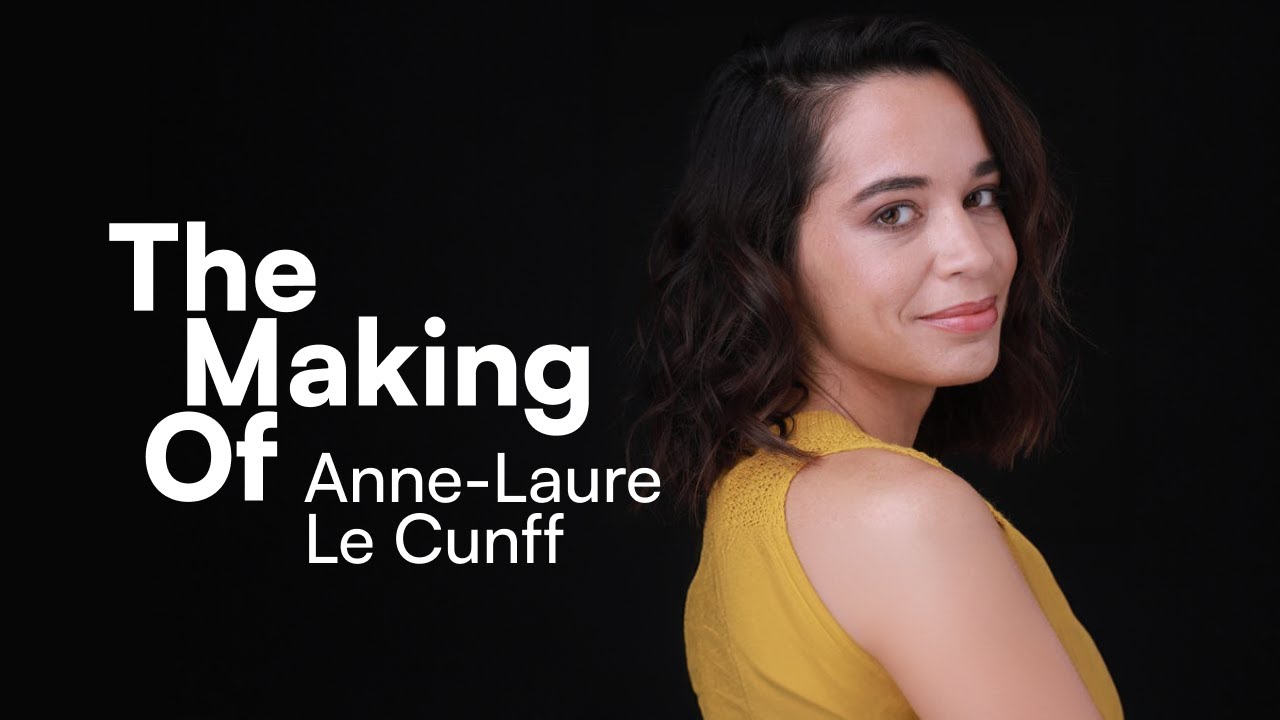
This content was created by Anne-Laure Le Cunff. This content was uploaded by Anne-Laure Le Cunff. This is a YouTube interview titled "The Making Of: Anne-Laure Le Cunff" (content_type: YOUTUBE) recorded/posted on 2024-06-26T17:13:02Z. It is an English interview-style conversation featuring Anne-Laure Le Cunff (respondent, appearing as SPEAKER A) with interviewer Alexis Teichmiller and a brief interjection from Lucas Rosenstock. The discussion covers Anne-Laure’s background (growing up in France, early interest in writing and online communities), her internships and career at Google, leaving to start startups (including a failed startup), returning to study neuroscience, founding Nest Labs (a newsletter and learning community), choices around creative freedom and boundaries, handling negative feedback, and tactical details on growing and running her newsletter/community (Product Hunt launch, SEO, word-of-mouth, and lead magnets).
Chapters
My first internship at Google was a very lucky meeting with someone on a plane. I didn't have any experience in tech, didn't have the kind of CV that young people who apply at Google normally have, didn't go to an Ivy League university, didn't speak English because I was born in France. We spent the entire flight trying to communicate with a lot of drawings on a napkin. I told him I was looking for an internship, and through that I got an interview at Google.
When did you decide it was time to leave?
Left Google to build my own startup. My startup failed. Life can take you in different places sometimes, not exactly what you expected.
Your newsletter, very close to 100,000 subscribers, is that correct?
At first, Nest Lab started as just a newsletter.
Was there a sense of freedom?
If I don't try to be the startup founder that has raised X million, don't try to be the VP VP of product at Google who has a team of 50 people. What is it that I'm really curious about that I would love to keep on exploring that would make me happy to wake up in the morning even if nobody's watching? I get to make a living doing the thing I love the most, which is writing.
Speaking of writing, I want to get into the mechanics of your newsletter.
How can you write a weekly newsletter that is so in-depth and so well-researched every week, that must take hours. You must be so exhausted on top of everything else you're doing. And my answer every time is, let's go back to Anne-Laure as a teenager. Young Anne-Laure, if you told her that this would be her life as an adult, I think she would have been a lot more excited about adulthood than she was at the time.
Into the world of Anne-Laure. Welcome to the making of Anne-Laure Le Cunff. So I think we should start here. Let's go back to Anne-Laure as a teenager. Teenager. I want to know what she was like, and when you look back, can you see any indicators that you'd be doing what you're doing now when you start to connect the dots back to who you were as an adolescent?
I was a bit of a nerd. I loved reading. I loved writing. I, yeah, I was a bit of a bookworm. I used to spend a lot of time in my bedroom just reading novels to the point where my parents were sometimes forcing me to go outside and do things in the outside world. So I think there were some seeds in there from my childhood as to what I wanted to do in the future. I really dreamed of becoming a writer, but I thought I would write novels with dragons and the kind of like fantasy stuff. I had no idea I would be writing research and nonfiction. So life can take you in different places sometimes, not exactly what you expected. Um, another thing that I really liked doing as a kid was coding, building websites. I got my first computer, or we got our first computer because it was at the time where, if you remember in the, you know, early 2000s, you had one computer. Per house, and, uh, we were timed by our parents where it was like, you have 30 minutes and you can do whatever you want, but then you have to, you know, give it to your brother and your sister because they want to play with it too. So I used to spend a lot of time online building online communities. I was managing one of the biggest forums for online writers when I was 15 or 16. Um, yeah, we had like 20,000 members, something like this. It was for young writers.
You were an OG community manager.
Yes. I didn't really think about it like this at the time. I was just hanging out online with other people who liked writing and we would post our writing and everybody would share feedback. We would have little online competitions. It was a lot of fun, but that's also definitely something that has been a seed for what I'm doing today. I'm obviously using Circle nowadays. That didn't exist at the time. It was a good old-fashioned PHP BB forum, hand-coded, uh, where I was so obsessed with making it pretty. I would change the theme every 2 weeks, which probably was very confusing for the community. But yeah, those would be the main things, writing and building online communities that I already really liked doing as a kid.
Wow, it's so cool to hear your story and then what you're doing now. Like, there's a lot of parallels there. Um, so I want to kind of jump a couple years past your adolescence into— you had two back-to-back summer internships at Google, uh, whenever you were in college, which then led to a full-time job where you worked there for 3 years. I want to know how that first internship came to be. What got you into, into tech and into that first internship?
I think spending a lot of time online like I did at the time, you would just naturally become interested in tech. I was fascinated with how it all worked, what was happening under the hood, how all of those pixels came together and created those magical experiences that I loved so much and so many of my other online friends loved. So I really, so I always had that fascination, but my first internship at Google was actually a very lucky, um, I'm losing my words. Literally haven't talked to anyone in two days. Sorry. So you're the first person.
I know that feeling when you work remote, you don't see anybody for a couple of days. It's real. So it's okay.
That's what editing is for. Those internships at Google, they were the fruit of a lucky meeting with someone on the plane. I didn't speak English when I was younger because I was born in France and my mom thought it was very important for me to learn English. So she sent me to San Francisco for the summer to live with one of her best friends who had just moved there. And on the plane there, I was sitting next to a person who was working in tech and we spent the entire flight trying to communicate together with a lot of drawings on a napkin, trying to just talk about our lives, what we liked without using any English because obviously I didn't have any. And I stayed in touch with this person for years who became my mentor and who helped me even choose what to study in university, who helped me navigate what I wanted to do in life. And when I was 20-something, I told him I was looking for an internship and he introduced me to a lot of different people he had been working with over the years. And through that, I got an interview at Google and that's how I got my first job, really. It was a very intense process. I had, I think, 8 interviews. It was, it was hard to get in, but I genuinely think that I wouldn't have gotten in at all if I didn't have that introduction in the first place. So it really helped me get a foot in the door.
I think that is such a unique, wholesome story of a chance encounter turning into something so meaningful and kind of life-changing for you in a lot of ways. I think a lot of times we can be presented with those opportunities, What about you in that moment decided to lean into that interaction with that person on the plane? You know, you could have had your head buried in a dragon fairy book, you know, as one does. What, what like kind of urged you to have that interaction with them?
I think this comes from my mom. My mom is Algerian, my dad is French, and my mom grew up in a very poor family. She really is the definition of a self-made woman. And she always told me growing up that I should always ask for what I want and people can say no if they want to, but I should always make the most of these connections. For her as well, all of her success, she can probably trace back to having met someone who gave her a chance at some point. People who saw past the fact that she didn't have an education. People who saw past the fact that she didn't have any relevant work experience, but who trusted that she would learn on the job. And that's how she built her career. And I think that's what helped me ask this person, can you maybe help me find an internship? Even though I didn't have any experience in tech at that point, I definitely didn't have the kind of CV that young people who apply at Google normally have. I didn't go to an Ivy League university, none of that. But I did what my mom would've always told me to do, which is just ask and you'll see what happens.
Wow. So when did you decide that you wanted to go and, and actually stay at Google full-time? So I'm sure there was a process. You went back for the second year for the internship for the summer, and then you ended up taking the full-time role. What went into your decision to join Google full-time?
I really couldn't imagine any other option that would be that much fun at the time. It was about 10 to 12 years ago, and I know Google has changed a lot. It's become a much, much bigger company now, but at the time it still had, when I joined, a little bit of that startup spirit to it. I was still fascinated with how, as I say, pixels come to life, what happens under the hood, and it was really considered the Mecca of tech, like everything important when it came to tech happened there at the time. So it felt like this incredible opportunity for me to learn, for me to become more acquainted with how tech works. And another thing that was great at Google at the time was that once you got in, they really trusted that you could really achieve anything that you said you wanted to try. So there were lots of opportunities to try new projects, to work on things that you'd never tried before. You could, you know, travel and work with international teams. I felt like being in my early 20s, this would be the best kind of school in terms of learning how to manage projects, how to think about product development and all of these kinds of things in a way that maybe a different kind of company outside of tech wouldn't have provided in the same way. Hmm.
I always think that there are moments in our career, and I don't think all jobs are like this, but I tend to sometimes think that some jobs can actually be like an MBA. Is that how you felt similar to your time at Google?
Yeah, I never really put it in those words exactly, but that's what it was. It was accelerated learning with a community of peers that I could learn from as well. So very similar to an MBA. Yes. Yeah.
When did you decide it was time to leave?
When that magic I just described started to fade. So after a while, I felt like I understood how it worked, not tech in general, but how the company worked. I had a very clear idea of what it took to be successful. I knew that if I worked on specific projects or if I collaborated with certain teams, I could very quickly advance my career. I had a very clear framework for what success looked like. And if I had stayed, I could have kept on progressing like this in a very linear way. But I felt like I was too young to have this path already written in front of me with a step-by-step recipe to follow. I felt like there was more to the world, more to work, more I had to explore. I wanted to keep on going out of my comfort zone. And I felt like at this stage in my career, Google could not provide this anymore. So I decided to leave.
Did that lead you to finding this push towards starting something on your own? Because I know that, I know we're going to get to Nest Labs. I promise, uh, we can't not talk about it, but there were a couple other businesses that you started that didn't gain traction. How did you process the experience of starting a new venture and it not working out?
That's the interesting thing is that when I left Google to build my own startups, I thought I had left the linear path to go and start an adventure of my own. But I realized pretty quickly that I was just on another ladder. There were still very clear codes as to what makes a startup successful. Um, I spend a lot of time reading everything that was on the Y Combinator website, how to find a co-founder, how to raise money, how to design the pitch deck. How to build an MVP and all of these kinds of recipes really that had been honed over the years by previous startup founders. And obviously there is no guarantee for success when you build a startup. My startup failed, so I'm a prime example of this, but I think the numbers are something around like 98% of startups fail. So it doesn't mean there's a guarantee for success, but I still felt internally like I was following an externally designed roadmap as to what success looked like. I got my first feature in Wired magazine, and I was really happy about this because that was one of the milestones, being in Wired or TechCrunch. I met with investors, I had my first pitch competitions. And I loved it, but I also realized that for a while that it was not so different from what I was doing at Google and the mode of working that I had. It was just riskier and more fast-paced, but a lot of the codes were, were quite similar. So when that startup failed, instead of deciding to do another one, I gave myself time to just explore what it is I'm curious about. Even if I remove from the equation any external definitions of success, if I don't try to be the startup founder that has raised X millions, if I don't try to be the VP of product at Google who has a team of 50 people under them, if I remove all of those external definitions, what is it that I'm really curious about that I would love to keep on exploring that would make me happy to wake up in the morning, even if nobody's watching? And in my case, it was understanding how the brain works. I had always been curious about why we think the way we think or feel the way we feel. And so instead of starting another startup, I went back to university.
I love that because there's an aspect of these natural pauses in life where it kind of sounds like you went through this recentering. Of who am I, what is it that I want, what labels or external, like, structures don't work for me anymore. And you kind of connected with this idea of there's more for me to learn. I want to go explore something that I don't know. Was there a sense of freedom there that you were intrinsically looking for that tech and the startup world didn't give you?
Yes, absolutely. Uh, not starting a second startup was actually the scarier decision of the two because one of them again, had a pretty clear path laid out in front of me. Again, not guaranteeing success, but at least I knew what I was supposed to do. Whereas with the other one, I had absolutely no idea. And that felt like absolute freedom, which is a bit scarier, but also felt a lot more exciting at the time. So it was definitely the sense that I wanted to keep on exploring and this sense of, I was seeking a sense of unknowing. I wanted to be in a state where I didn't know what would come next.
There's something really humbling about that. Isn't there? It's like that fear, but you bump into humility. How do you feel like that shifted your relationship with your ego?
I—
oh, that's a serious question. I think I've already— I think I didn't necessarily have a very big ego in the first place, but Everything I was doing to try and build self-confidence was based on the perception of others. I've always been a bit of a people pleaser, and in my work, I was always trying to do the thing that would maybe get me the most positive feedback from other people. I wanted to be perceived as smart, as helpful, as someone that is contributing in a really big way to the team. And once I left that path and I started focusing on what I was most curious about, there was this kind of like new playground that opened in front of me where all of a sudden I had to build my self-confidence based on my self-perception. And I couldn't rely anymore on the accolades of others, on that positive feedback loop that I was always chasing. I had to have that deep inner sense of self, like, satisfaction, intellectual curiosity that is driven by something that you want to explore yourself versus something that will bring about authority, a sense of external expertise and the admiration of others. So I don't think it made my ego necessarily smaller or bigger, but the quality of it has definitely changed in the process.
How do you think that then changes how you view success and failure? Because so much of success and failure, especially in the entrepreneurial creator startup space, is dictated on an external measurement system. Whereas, and I love this discussion, I love that you're sharing this because that inner knowing, that inner self-confidence, you know, what is a success to you might be different for someone else. And it becomes more personal, your successes and failures. So how does, how does that maybe shift the way that you view failure and success now? Because it's so based on your own, I guess, inner framework of confidence.
That's the great thing about this sense of unknowing that I have developed now and being comfortable with not having visibility over where I'm going is that when you're not on that kind of linear path anymore, there's no end goal either. And it's only when you have an end goal that you can fail because you're not reaching your destination. I currently don't have a destination, so I can't really fail. The only thing I'm doing is experimenting, trying new things. And in a similar way that a scientist who's conducting experiments would not see unexpected results and then feel like, oh, shameful, I'm so bad, this is terrible, I failed. They would just look at the data and say, oh, that's interesting. I did not expect this. How can I use that data to better understand what's happening and to incorporate that new knowledge into the next version of my experiment? This is how I'm living my life and approaching my work now, where everything is an experiment and every single bit of data I'm collecting is part of a new cycle of experimentation. So I can't really fail. I'm just learning and growing.
Even that is— for what I'm hearing is that's rooted in freedom, like the freedom to test things, the freedom to experiment and not feel like you have to have this set path or the set instructions even. And I, and I wanna dig into this later, but I'm even curious, like now the entrepreneurial world. Has a formula. You know, you grow the audience, you grow the newsletter, you grow a community. Like, you know, you have— you, you launch a course. There's like these very set kind of expectations or pathways to success. How have you combated that like tendency? Because as, as the creator economy continues to grow, there are these like kind of set pathways that have been proven similar maybe to your experience with the startup world. There's this, there's this set of, of steps that you take. How have you bumped into that or revolted against that?
Um, as you've experienced that with Nest Labs, it's especially hard for online creators, I think, to resist this temptation because As it says in the word online creator, we're all online. So there's this giant leaderboard of people posting about their learnings, sure, but also their success. And when everybody's so transparent with their success, it can be very easy to want to just copy paste what they're doing in the hope of having the same level of success. The thing is that. It actually can work sometimes. You can actually apply what someone did and it will also work for your business. So I don't really think that's the issue here. The problem is more about, is it working for you at a more personal level? So I know, for example, that a lot of my friends who are online creators are seeing a lot of success with YouTube. Because of that, I've actually fallen into the trap of thinking I actually need to do YouTube as well. I need to do that. And I've tried several times and the reason why it wasn't working was not necessarily because of the numbers, because I actually grew at the beginning my YouTube channel fairly quickly, but it was so much mental effort for me. It was really taking an emotional toll because I actually am not particularly comfortable recording myself on camera. So every time I knew that today was the day I was supposed to film my YouTube video, that was the one thing that was occupying my entire mind, all of my thoughts, dreading the moment I would have to sit down in front of the camera and film myself. And then I would cringe when I would see the final video, but still post it because you gotta do YouTube. So that's one example where it took me a little while to see that and to notice that it's not because it's working for some of my friends. That I have to do it because if it's making me miserable, there's no point doing this. And really going back to freedom, which you've mentioned a few times, what's the point of being an online creator if then you're creating those artificial constraints on yourself where you have so little freedom that you may as be, you may as well be employed and work for someone else. So it's very, very hard and I definitely still struggle with it. To this day where I'm seeing other people's success and I want to just do the exact same thing they're doing. And it takes me a little while sometimes to consider whether this is the right thing for me or not. So I, I would really recommend for anyone in the same situation to just make sure to have a little bit of space for self-reflection and ask yourself those questions. Is this going to make me successful? Yes or no, but also at what cost? And is that a cost that I'm willing to pay? And ideally you want to be in a situation where you're very happy to pay that cost and it almost doesn't feel like paying a cost for it. An opposite example is my newsletter. I get a lot of questions sometimes from people saying, How can you write a weekly newsletter that is so in-depth and so well-researched every week? That must take hours. You must be so exhausted on top of everything else you're doing. And my answer every time is, it's not taking any energy from me. It's giving me energy. I'm looking forward to sitting in front of my computer every week and open the Google Doc and write my newsletter. And I think those are the kind of projects and those are the kind of pathways to success that we need to be looking for as an online creator.
Yeah, they're indicators of where we are gathering energy. And I love the piece too of pausing for self-reflection. Back to this, this thread I'm hearing from our conversation of freedom, something that I really admire about you, and I actually heard you talk about this in an interview with Barrett Brooks on his podcast, Good Work. So when you founded Nest Labs in 2019, which is a learning community for people who want to achieve more without sacrificing their mental health, you mentioned that you wanted to launch a community that allowed you to have a playground where you didn't have to be the expert. You got to learn alongside, you know, your community. I want to, I want to pause here and go deeper into that intentional decision because I think that there can be pressure to be the expert, to teach, to have the frameworks, and to almost feel a little bit separate from your community because you're helping them move forward or achieve a result, whereas you are in your community and, and a part of the learning environment with them. So what went into that intentional decision when you started Nest Labs?
At first, Nest Labs started as just the newsletter, and I used it as a way for me to consolidate everything I was learning in university about neuroscience and try to turn this into practical advice that people could apply in their daily lives. It was a very selfish decision, to be honest, because I just wanted to learn better and I felt like writing about what I was studying was a great way to do that. And then in March 2020, we all know what happened. It was the beginning of the pandemic and I had a lot of people reply to the newsletter and say that they were feeling lonely, disconnected. A little bit depressed and anxious and that they were really missing having conversations with colleagues. So that's why I created the NestLabs community at this point. I did not create it because I felt like I had something to teach to others. I created it because I wanted to have a space where everybody could come and connect together. So the, the very, even like first days of the NestLabs community, were really rooted in facilitating connection between members rather than me broadcasting my knowledge to the community. And it just progressed very organically from this, where because of the kind of people who read my newsletter, who tend to be fairly high agency, curious, kind, and generous people, a lot of people started offering teaching what they were learning. To other members of the community. So most of the programming we have in the community nowadays is hosted by members of the community for other members of the community. It's really peer learning. And I really love that because sometimes I can pop into a session and just listen in as well and take notes and learn from those members who know about things that I don't know about. So it wasn't necessarily something that I planned, but it felt like the most natural decision. And again, it was a little bit selfish because I gained a lot also from being part of a community where everybody's teaching something to each other and I can be one of the students as well.
I wanna break this next question into two parts and it kind of goes to what you mentioned on the meaning of it and how organic that has been for you. I wanna break it into meaning and metrics. So, How has Nest Labs fulfilled a part of your dream or maybe even a part of your purpose? How has it changed your life? Um, and then how has Nest Labs impacted your life financially? And was that the goal or has that been almost a byproduct?
Hmm. In terms of meaning, it would be really hard to convey how Nest Labs has completely, completely changed my life. I get to make a living from doing the thing I love the most, which is writing, which is so fortunate and lucky. And I know very rare. This is one of those passions that people have where it's actually really hard to make money from it. The other thing that connects the meaning and the money is that I have actually decoupled the writing from the money in the sense that because Nest Labs is a subscription, it's just recurring revenue. I don't have any pressure to write viral pieces or to try to appeal to a new audience. The only contract I have with my audience is to keep on delivering interesting content every week. Because of that, that gives me enormous freedom to explore the topics that I care about. That. Is also very rare because a lot of people who make a living with online writing, there is a direct connection between the money they're making and the actual content that they're writing with a lot of pressure to write the kind of content that will drive a lot of clicks, which means also advertising. And that's the revenue model of most media companies online. So that's connecting the meaning and the money. The way I'm making money is allowing me to find more meaning in the way I'm creating content. And in terms of the metrics, I'm completely financially independent now. I don't have to worry about money. I'm really in a situation when, again, they're so deeply interconnected, it's really hard to separate them. But the fact that I don't have to worry about the financial aspect of things, and I can just get up in the morning and ask myself, what is it I want to research today? What is it I want to write about? What do I want to share with my community? This is such, again, a lucky place to be in. And going back to young Anne-Laure, if you told her that this would be her life as an adult, I think she would have been a lot more excited about adulthood than she was at the time.
I think that's really beautiful because you have worked so hard. I know you mentioned luck, luck and hard work. And so much intentionality went into the structure of the business. And also, something I want to call out here is how you've taken care of yourself and honored yourself through the way that you've built your business. And I, I, I feel the sense of like calm and peace from you. And I'm curious, how did you get to a place where you decided And maybe this was, maybe this was subconscious for you, but you decided that you were going to build something that you would continually take care of yourself through versus I'm going to sprint and I'm going to hustle and then I'm going to like maybe burn out or I want to quit. It seems like you have found a way to manage running the business and taking care of yourself. Really well. Has that always been the case? Have there been moments where you've had to shift things so that you could take care of yourself in order to be the businesswoman that you are?
Okay. Sorry. Oh, that's definitely not always been the case. I, The very beginning of the Nest Labs community was very intense because as I mentioned, it was during the pandemic. So everybody, literally everybody was online and the community we had at the time was very welcoming, very tight. People would spend entire days hanging out on Nest Labs. We had maybe 3 to 4 Zoom events every day. Where people would share things that they were learning. They were also just online circles where people could talk about the challenges that they were going through. I cried several times during some of these and I was not the only one. So we were really deeply connected to each other and spending a lot of time together during the lockdowns. And after life started going back to normal, I tried to maintain the same level of engagement in the community because that's all I had known. And that was the definition of success I had for NAS Labs. That was obviously in hindsight, not sustainable at all, especially now that I had a social life again and I had other projects and I was not glued to my computer from morning to evening. But it took me a little while to realize this and I burned out in the process trying to maintain that same level of engagement. Um, and nowadays I have found a balance again. I've hired someone to help me as a community manager, which I didn't have at the time. So I stopped trying to do everything myself. I've also become a lot more comfortable telling community members that I'm not going to show up at every single event. I will join the ones that seem interesting to me and I will maybe pop in and like maybe leave before the end sometimes if I have something else that I need to do. But it's a lot less self-coercive these days where I'm really participating in the community a lot more like a fellow member. Than a community leader. And I'm relying a lot more on my community manager to take care of the day-to-day and make sure everybody has an amazing experience without necessarily having the need for direct contact for me or me having to solve daily problems. So it's been really amazing and it's really made me fall back in love with the community now that we have It sounds like I'm talking about a lover, but we have a healthier relationship.
We have boundaries now.
I have boundaries. Yes.
Well, when you started, you don't always know what you're building sometimes until you've built it and you don't know the constraints that it might take on your time, on your mental health. And two, you started a mental health focused community. And then it was impacting your mental health. And so you had to make, you know, almost model what it looked like to set those boundaries to your community, which is really beautiful. You also recently posted on Twitter, X, what are we calling it, recently, about this. You actually wrote a very transparent story of when you launched Nest Labs and when you needed to take a step back and people stepping in and you wanted to recenter and focus on writing, and then you had gotten— you'd announced that you were going to write a book, and you got some really negative feedback about that. Can you talk to me about how you approach those comments as a scientist and as a, you know, natural experiment? You— do you take that as feedback? Do you take that as data? What do you do with that, and how do you think your framework for categorizing that kind of feedback could help creators not internalize it.
Yeah. Yeah. This was really hard when I got that comment from someone who emailed me and saying like, uh, remind me to not buy your book. How are you going to write a book when you already don't have time to manage the community? You're going to have even less time. I'm very disappointed. I'm leaving, I'm deleting my account. And it was hard because at first I almost never received that kind of comments. I, I'm very fortunate again to have an amazing community and everybody's so kind that I would normally not receive that comment, at least delivered in this way. And that brings me to how to deal with these kinds of comments. I think it's very important to separate the content from the way it's delivered, the content and the delivery. And in this case, even though that's not how I reacted at first, I was really heartbroken when I read it. But once I've managed to kind of recenter myself and reread it from a place of having a bit, little bit more distance with it, I realized that there were two parts here. The delivery was very hurtful, uh, telling someone you're disappointed in them, uh, being a little bit snarky and they, they were just, the way it was phrased, I don't know if the person had realized that, but it was phrased in a way that it was designed to hurt really. And it worked. But once you remove that layer, the delivery, the content itself did have some valid points. Yes, I was very busy. Yes, I was already struggling with managing the community at that time. That was that period of time I described before where I was trying to do everything myself and I was quite burned out. Because of that. And yes, writing a book would add an additional constraint and would require more time, which I have very little, I had very little of already. So in a way, this comment was a bit of a blessing in disguise because that was the trigger for me to finally hire a community manager to come and help me and to set those boundaries that we've discussed because I felt like I did not want to be in a position again to receive that kind of comment. And I also did not want to be in a position again to receive that kind of comment and feel like, huh, there's a good point there, actually, they're making a good point. So I wanted to address that part. So that's what I would say to anyone who's in a similar situation where they're running a community and they get that kind of negative feedback. Separate the delivery from the content. If once you remove the delivery, there's nothing left, then you can ignore it safely. It's really just a troll trying to hurt you and there's nothing to do with it. But if you ignore the rudeness or the hurtfulness of it, and there's still something interesting in there, take action on this, use it. It's still a piece of data. It's still useful. It was delivered in a way that maybe was not the best way, but it's still feedback. And feedback is so precious that you do need to take action on it.
That's incredibly helpful and actionable. I think that we can at times take any sort of negative feedback and like categorize it as not applicable. We're like, oh, that hurt. I didn't like how that felt. I didn't like the tone. And so therefore I'm throwing all of it out. And I think that just goes to your integrity to be able to separate the delivery from the content and say, what about this does resonate? What about this do I need to take action on? And I'm so glad that you have gotten to a place where you're focused on writing, you're focused on being a member of your community. And speaking of writing, I want to get into the mechanics of your newsletter because you are, I don't know if you are at, but very close to 100,000 subscribers. Is that correct?
Yeah. Over 100,000.
Congratulations. That's, that's huge, especially as a writer, right? Like not just as a business owner, but the fact that someone wants to open your email every week and read it is, is just so exciting. And like there's magic in that. So I want to talk about how, aside from consistently writing every week, can you break down what problem you felt like when you started the newsletter? What problem do you feel like that solved for you? And how did that grow? Like what specific tactics did you use to grow the newsletter?
So first, in terms of problem that I was trying to solve, as I said, The origin of the newsletter was really just me trying to have a playground, an outlet where I could think out loud and learn better. But I very quickly realized that a lot of the topics I cared about were topics that a lot of other people cared about as well. So I tried after the first few editions where it was really just me following my curiosity. And I now try to think about it as a, almost like a Venn diagram where I try to find the intersection between my curiosity and what my readers may also be curious about. This is the sweet spot, really. If I can be excited about the content, about researching it and writing about it, and if I feel like it may be interesting to my audience as well, usually this is going to be an indicator that at least some people are going to enjoy reading it. The consistency though is still very important because even after all of these years, I still don't have a perfect recipe to know what is going to work. There are editions that I poured so many hours into it. I spent so much time, so much energy. I sent it out and it was crickets. And then there are others where I was in a rush. I was about to board my flight. I was in front of the gate. I finished writing it super quickly. I hit send. And then when I land, my inbox is full of emails, people saying that Oh, that really resonated with me. You described a problem I've been thinking about for such a long time. I didn't know there was a word for it. So the consistency is really important because you don't know exactly what's going to resonate or not. You just, you need to keep on showing up every week. And in terms of growing the newsletter, it has changed a little bit. At the beginning, it was mostly social media and mostly Twitter slash X, where I would post every single edition there and people could click on it, read it, and then subscribe to the newsletter itself to receive the following editions. I was also very active in quite a few Telegram groups and Slack groups. And in these, I was contributing a lot. So it was completely okay for me to share my newsletters here as well, because I was posting a lot outside of that. So I wasn't just spamming random groups with the link. Because of that, people supported me also. A weird thing I did at the very beginning was launch the newsletter on Product Hunt, which actually brought me like 2,000 subscribers in one day, which was great when the newsletter was still tiny. And I really packaged it as if it was a product. I created a landing page. I had screenshots inside of a mobile phone. I had all of the benefits. It really looked like an actual startup landing page and I launched that on Product Hunt. Nobody said you couldn't, so I did it and it worked really well. And same, because I was so active in all of those different communities, a lot of people there supported the launch. And so it was one of the top products of the day that day. So that was at the beginning, a lot of manual sharing across channels where I was already active. Nowadays, because I have quite a few other projects, I'm writing a book, I'm doing my PhD, I don't have as much time to share the newsletter as I used to. So I usually write it and just send it and that's it. And most of the traffic comes from two channels. The first one is SEO because I've written hundreds of articles at this point. And again, those are topics a lot of people are curious about, so they look it up and Nest Labs will come up in some of the top results. I very often get people messaging me and say, wow, this is crazy. I've been researching different things and Nest Labs keeps on being in the top results. How do you do this? And the answer is that I don't do any crazy SEO optimization, but I have a body of content now that is related in terms of ideas and that I interlink deeply together. So you can click on words and it brings you to different articles. And I think Google really likes that. So I constantly show up on the first pages. And the second channel right now is word of mouth. A lot of people just read it, share it with other people. And it's been, it's been growing like this a lot too.
Do you share? So a common tactic for newsletter growth is also freebies. Do you ask them to subscribe and then give them something? Or is it mostly focused on, like, as you mentioned, SEO, and when they land on your website, they're getting so much value that they join the newsletter?
I think I still have one form that has a freebie at the bottom of my homepage on NestLabs, but it's not bringing that many subscribers. And I'm not a massive fan of this technique because I have found, in my case at least, that the quality of the subscribers is not as good when you do this. People will enter their email address, download the freebie, and then they're not necessarily going to open any of the subsequent newsletters. So I'm actually going to launch a different type of freebie that will be an online email course over 7 days, because I feel like this is a better way to deliver value in a way that's aligned with the format of the newsletter. Versus enter your email address, get a PDF, and then probably unsubscribe, which some people do, but others, they don't unsubscribe, but they just don't open the other emails.
That's a really great point. And I love that hot take, by the way. It's like that transactional tendency versus in a free email course, you're building a relationship over time. They're getting to know you, getting to know your writing, getting value over a period of time. And then they're almost like. This is such a marketing term, but they're indoctrinated into, into the world of Anne-Laure Le Cunff and they're more likely to engage and build a relationship with you when there's more touchpoints up front versus like the PDF and then unsubscribe. That's such a good point. Is there anyone— there's a lot of ways to structure a newsletter. Is there anyone or a source that you've used as inspiration or have you truly just curated your approach over time?
For the newsletter itself, it's been curated over time. The format has changed maybe a dozen times, uh, over the course of the past years. It started with a series of links to articles I had written over the course of the past, uh, few days because I used to, which is crazy to me now, but I used to write 5 articles every week at the beginning.
Wow.
Um, I only write one article every week now. So now the entire article is in the body of the email, which people told me they like a lot more because they can read it even if they're on offline versus having to click on something else. Um, interesting. And so even the design has changed a lot. I keep on playing with it and tweaking it a little bit like when I was a kid and I kept on changing the design of my online forum. I just love doing this for the online course though, I took inspiration from James Clear. I saw that he did something like that for around habits. He has this online course which is, I think, 7 days or something like this, and that's his lead magnet on his website. I looked at that and I felt like, well, if James Clear is doing that, this is probably the right thing to do.
He, he does seem like the, the godfather of the internet right now. Thank you for letting us kind of peel back the layers into the newsletter, because I think that it's always interesting what works for one person or what you find resonating, um, is a different strategy for someone else. And I always like to hear the nuances of like what works for you and why it works. Um, and I know that can help someone else. So I could talk to you forever. We haven't even gotten to dig into your psychology brain, which I am obsessed with looking at your CV. You make me want to go back to college. I feel like I want to go get degrees and learn things. So thank you for that energy that you put out into the world that, um, asks people or invites people to be curious. And so I want to end our conversation on this. So curiosity is a huge part of being human and especially for creators, the more curious we are about something. We want to solve it for someone. We want to investigate it and we want to, we want to use what we've learned to help or support other people. How do you think that creators can use curiosity to not only just understand themselves better, but also understand the people that they want to help better?
I think it's important. I think for online creators and for everyone in general, it's useful to think about curiosity in two ways, at two levels. You have internal curiosity and external curiosity, and both are extremely helpful. There's the internal curiosity of understanding yourself better, making space to reflect on what works and what doesn't work for you. And again, not necessarily just at the level of success. That you normally have when you think about your business, but also thinking about how it feels to get to that success. If it feels miserable, then maybe it's not worth keeping on going in that direction. So really making space for self-curiosity where you're reflecting on how everything is going at the moment and how it feels. It can be spontaneous or it can be something that you even schedule during your week. Some people do a weekly review, some people do morning pages, some people do different types of journaling. If you're not the kind of person who likes writing, you can even have a weekly accountability coffee chat with another online creator where literally the only prompt is, how are you feeling this week? And that's it. And some weeks you'll be like, yeah, great, everything's good. And other weeks you'll say, I'm feeling completely lost or I'm a bit burned out, but really Keeping a finger on the pulse of how things are going for you and how it feels. That's the inner curiosity part. And then the external curiosity is being curious about other people, about the world, about how things are going, how things are changing. Everything, all of that is going to have an impact on the direction in which you want to take your business, your work, your life, your relationships. So again, making space for this, and that can be space for learning and studying the market, just observing what other creators are doing. As I was saying earlier, you should really not copy paste what other people are doing, but if you see something that works, as in the case for me with this course that James Clear is doing, I'm absolutely going to do the same thing because I think it's going to work for me. You can use that. You can use that inspiration to keep on experimenting with your own business. Being curious about other people, whether they're part of your community or whether they are only other online creators on a similar journey, asking them questions about same, what works for them, what doesn't work for them, and taking those lessons and incorporating them in the way you make decisions. And just having this general curiosity about the world as well, just noticing trends, what is changing, what are things that are likely to impact your business. A big one, very obviously at the moment is AI. Being a little bit curious about AI at the moment, I think is a good thing. It's something that every online creator should make space for. So those would be the two ones, internal and external curiosity. And curiosity can be something that can be just triggered by something that you, that is outside of your control. But ideally you want to make space for it. You want to make space for that curiosity in a bit of a more systematic manner.
I'm inspired. I, I love the breakdown between the internal curiosity and the external curiosity. It gives us language to kind of categorize in our brain that inner reflection, things we're trying to understand and unearth about ourselves, and things that we're trying to understand and, and get clarity on or investigate externally. I, I want to have you back on and just have a whole conversation about curiosity and learning and unlearning, but Anne-Laure, I am so thankful for the time that we've had together. Can you share where people can connect with you, learn more about Nest Labs? And I know that you have a book coming out as well. So any information that you can share with us on that, uh, we would love to hear.
So you can follow my work and receive my weekly newsletter by going at nestlabs.com/newsletter and just enter your email there and you'll hear from me every Thursday. As for the book, I'm still writing it. It will be available for preorder later this year and available for purchase at the beginning of next year, but I'm very excited to share more in my newsletter soon.
Ah, well, I am subscribed. I can't wait to get more information on the book. Um, Anne-Laure, thank you so much for your contributions to the world and for letting us learn more about your story today. Do yourself a favor, go learn, go be curious with, uh, Anne-Laure's newsletter. And with that, thank you so much.
Thank you.
Hey there, it's your host Alexis Teichmiller. If you've made it this far in the show, I have a special surprise for you. We've interviewed a real person from Anne-Laure's community. Lucas is here to share the impact that Anne-Laure and Nest Labs has had on his life. It's one thing to hear from the creator, it's another to hear from someone whose life has been changed from their creation. Hi Lucas Rosenstock, I'm so excited to have you a part of today's episode about Anne-Laure. Tell me, when did you first discover her and her work?
So, I was on Twitter and it must have been like late 2019. And I was using Twitter mostly to network with other people in tech and get some tech insights, but I was also interested in topics around productivity, let's say. And yeah, I came across Anne-Laure's tweets. And I found it really interesting. And then I also subscribed to her newsletter. And then a bit later, when it was also the start of the COVID pandemic and there was less to do outside, that's also when NESLab started. And I learned about it from the newsletter and Twitter. And I said, okay, this is a really good opportunity to find out if an online community like this is something that that could be good or could be helpful. And yeah, it was the first also like paid membership community that I joined. And yeah, that's basically how I get started.
Amazing. She has a really impressive body of work, you know, between her blog and her newsletter and now Nest Labs. What specifically about, let's say Nest Labs in particular, what specific value or need did it fill in your life at that time?
I think at that point I was just really interested in learning stuff and connecting with people, maybe a bit outside the niche that I was in before. Mostly people are also software developers. And I felt Nest Labs had this really interesting group of people that Anne-Laure gathered. Which had different backgrounds but some overlapping interests. And yeah, I really enjoyed that about the community.
What have you learned about yourself through being part of Ness Labs and reading a lot of her work?
Hmm, that's a really good question. And I think I'm not so sure if I learned a lot about myself, but I think that I really learned that I enjoy this kind of community, this kind of exchange of peers with like-minded interests, but also a bit diverse. And yeah, I think I really only then, back then, I started getting into this kind of like broader online communities.
Hmm.
So this was a gateway to other communities for you then?
Yeah, that, that was the interesting thing because, um, there's a lot of, um, like adjacent communities. Um, so there's another community called Interintellect. Um, the founder of Interintellect is also a friend of Anne-Laure's. And, um, there's like a broader like scene on Twitter and I think there was also, um, a lot of like this personal knowledge space, which I was never like too deep into, but I always found it like very curious. And I think they were all like these different but adjacent communities. But really, NestLabs for me was like the gateway into this, into this, this whole world of online communities.
Yeah, it kind of opened up a door for you.
Yeah, that's a good way to put it.
Have there been any transformations in your career or in your life because of being a part of of the community as well as just reading her work, connecting with other people, like in, you know, not necessarily in real life, but as in real life as you can be online?
So I would say there are quite a few people that I met in Nest Labs that I also met offline later. And well, this was always like a really great experience to meet people first online, then offline. And there's also some people I started working with them, at least there's one guy that I'm currently working with who I met in NestLabs first. And I went on a trip to India last year and then I also met some people or especially one person that I met through NestLabs there. And so yeah, it's this whole like what we call the URL to IRL pipeline, the meeting people online but then connecting offline. And So that has been quite a big part of my life in the past years.
That's amazing. What specific memories were you able to make with them after meeting them in real life?
That's a good question. I can't really pinpoint any very specific thing. It's just this this whole thing of having like really great conversations with people.
Yeah, being able to go deeper, being able to have introspective curiosity. And that's a big thing with Nest Labs, being able to ask questions and be curious and be willing to not know, not know the answer. And, you know, as a professional in a career, As an adult, it can sometimes feel like we always have to have the answer. And I love that with Nest Labs, she's really bringing together people who are okay with not knowing, okay with discovery, okay with curiosity.
Yeah.
Yeah. And I would add one thing because, yeah, it's all about being curious, discovering new things. But at the same time, I think it's also about Like everybody is already an expert at something and also everybody has something to teach and everybody has something to give to the community. And what I feel also about Anne-Laure specifically is that even though she's like the one like leading the community, I think she plays a heavy emphasis that she's not like some leader or guru who knows everything and we are there to listen to her, but it's really like an exchange of peers. And she's also one of those peers and she also wants to learn from the community. And I always have the feeling that she really appreciates the input that she gets from the people reading her newsletter, being on the forums and everything.
Yeah, I get that sense too. She wants the dialogue, the back and forth, and she thrives off of that. If you could say one thing to Anne-Laure, what would it be?
One thing that I would tell her, I would say, keep up the good work. I think what you're doing really has value for the people in your community. So please keep on doing that, but also be mindful about it and don't try and do too much and burn out.
Every creator advice, right? I love that. Well, thank you so much, Lucas. This has been wonderful. It's really cool to hear your story. Yeah, thanks for having me. And yeah, I agree. I want Anne-Laure to keep creating so that we can keep being a part of her community.
More from Anne-Laure

How to Use Curiosity & Experimentation to Flourish, with Dr. Anne-Laure Le Cunff

Stop chasing goals and start running tiny experiments with Anne-Laure Le Cunff

Why You’re Still Waiting To Figure It All Out | Anne-Laure Le Cunff | EP. 391


Tiny Experiments: How to Learn, Grow, and Navigate Uncertainty — Anne-Laure Le Cunff



Stop Setting Goals. Try This Instead | Tiny Experiments with Anne-Laure Le Cunff


