Why Discipline Fails High-Achieving Women (And What Actually Works) | with Anne‑Laure Le Cunff
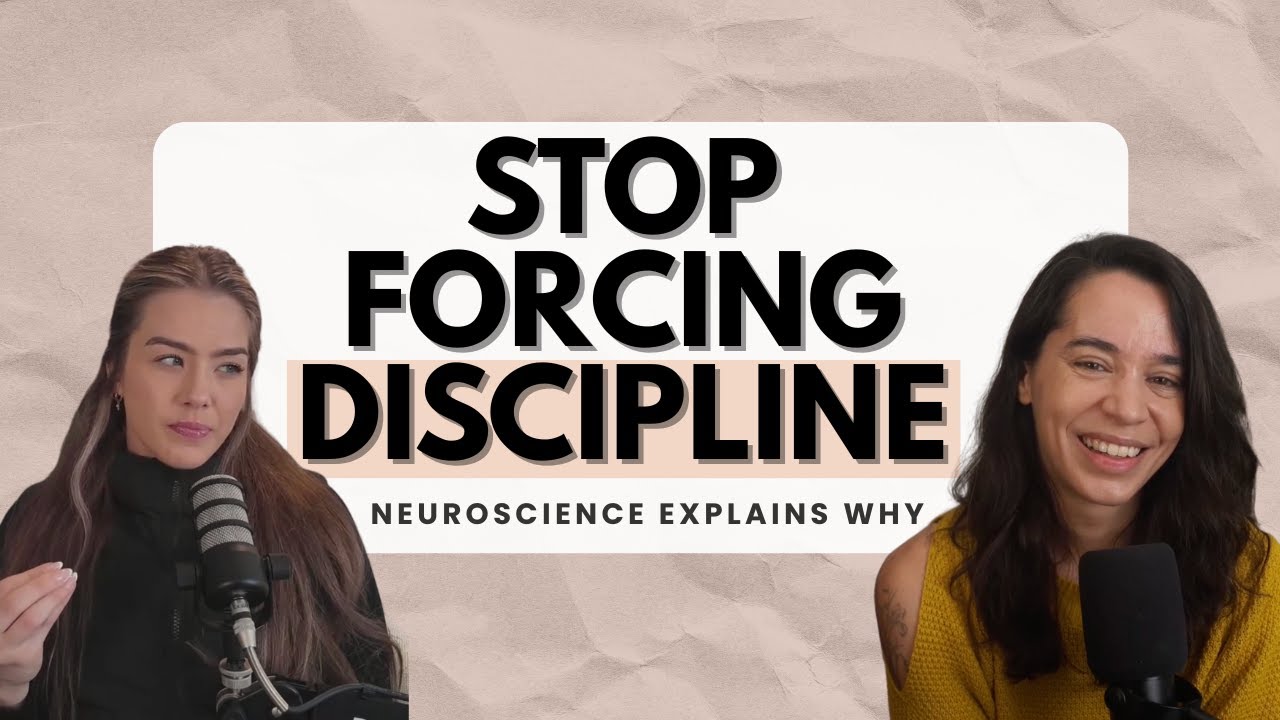
In this Female Blueprint podcast episode, Anne‑Laure Le Cunff shares how a life‑threatening blood clot forced her to question the relentless productivity mindset that had defined her early career at Google. She explains that high‑achieving women often confuse "potential" – what they could do on a best‑day – with "capacity" – what they can sustainably do given their nervous‑system state. Relying on willpower and discipline for more than 24‑48 hours leads to burnout. Le Cunff introduces three practical frameworks drawn from her neuroscience background: (1) Cognitive scripts – the unconscious, socially learned patterns that guide behavior, which can be identified and rewritten; (2) Self‑anthropology – a 24‑hour observational exercise where one treats their own life as field research to generate curiosity instead of self‑blame; (3) Tiny experiments – short, low‑stakes trials (action + duration) that let people test habits without committing to lifelong routines. She discusses how to assess daily capacity (sleep, hormones, cycle, jet‑lag, etc.) and intentionally schedule restorative pauses. The conversation delves into ADHD’s spiky attention and emotional dysregulation, the mismatch between neurodivergent needs and traditional 9‑to‑5 structures, and how entrepreneurship can offer more flexible environments. Le Cunff also mentions emerging research on ADHD during pregnancy, menopause, and motherhood, emphasizing the lack of tailored support. She challenges the "maximalist brain" belief that behavior change must be big, urging small, experimental steps instead. Finally, she shares personal habits like dancing as a free body‑movement tool for nervous‑system regulation and the simple mantra of "play first, work later," encouraging listeners to reframe productivity through curiosity, self‑compassion, and experimentation. The episode concludes with promotion of her newsletter (neslabs.com) and her book Tiny Experiments.
Chapters
and I was diagnosed with a blood clot in my arm that was threatening to travel to my lungs. When they told me, you have this blood clot and you need to get surgery as quickly as possible, I said, one minute, I need to check my calendar.
Women do, right? We just kind of push through things. We just are very go, go, go, go, go.
A lot of us make ourselves miserable because we confuse potential with capacity. You can use willpower and discipline maybe for 24 hours. 48 hours maximum, but you can't use that long term.
Welcome, Anne-Laure, to the Female Blueprint Podcast. I'm so excited to have you here today.
Thanks so much for having me.
I'm really excited to get into it. Um, a lot of what you post on social media I resonate so deeply with, um, just as someone who's Type A, ADHD, business owner, like all of the things. I have like a very strong personality. Um, I've gotten so many practical strategies from a lot of the things that you've posted, so I really want to get into your work. But we dive in, how did you even get into studying like behavior, the nervous system, all of it?
To give you the short version of it, I kind of think about my career in terms of two chapters. The first chapter was very linear. I can, I really resonate when you talk about the Type A personality, very ambitious, and I had a very traditional definition of success. So I Tried to get good grades in school, got a good job, started working at Google, climbing the ladder, all of that. And I was frankly a little bit obsessed with being successful in a traditional sense, to the point where I started completely ignoring my health. And I had a huge health scare in my late 20s when I was diagnosed with a blood clot in my arm that was threatening to travel to my lungs. But that's not what gave me a wake-up call. What gave me a wake-up call was my response to that diagnosis. So what happened is that in the hospital, in the doctor's office, when they told me, you have this blood clot and you need to get surgery as quickly as possible, my response was not, yes, sure, let's do the surgery right now or as soon as we can. I said, One minute, I need to check my calendar. And in that moment, my, somehow my to-do list felt more important than my own health. And this is really when I started questioning my entire sense of priorities of what was important in my life and in my work. And that was the beginning of a second chapter, the one I'm in right now, which is a lot more experimental, a lot more nonlinear. A lot more self-compassionate as well. So I ended up quitting my job in tech and going back to university to study neuroscience, to understand how the brain works. And now a lot of my work is around applying the science of the brain, of the body, of the nervous system to the way we navigate the world and to the way we make sense of our lives and the way we design them. Wow.
So going back to school kind of lit you up to kind of really dive deeper into this, the reason why you were the way you were. So when you started learning all of this stuff and uncovering the brain and how we behavior or how our behaviors are, what did you realize about yourself that you're like, oh, wow, these are the things that I need to change?
The huge realization I had in that moment, which I think a lot of people who also are Type A will probably resonate with is that my desire to be successful was ultimately a desire to feel like I was in control. It felt safer to feel like I had a plan, I had a vision, and I just had to execute on it. And on the other hand, it was scary to admit that I had no idea what I was doing, but I also had no idea what I wanted. I had no idea who I wanted to become. And, um, discovering from a neuroscience standpoint that this was perfectly normal, that our brains are designed for— to optimize for survival. And so our brains are constantly trying to give us this sense of certainty, kind of made me feel better about it in the sense that I realized that it was normal and it was fine. There was nothing I needed to fix about myself, but also reconnected me with own sense of agency in the sense that once I understood my natural automatic patterns, I could also decide to change them.
That's so good. I think you describe me so well, and I'm really keen on learning how you rewrote the patterns for your life then. After how long did that take? What did that process look like? Kind of unraveling what you believed about yourself and what your behaviors were, and how did you kind of slowly find this new experimental life?
I'm still rewriting those scripts. I think it's a lifelong process. I don't think we're ever done. But this journey really started when, well, first when I decided to go back to university in the sense that for the very first time in my life, I decided to do something just because I was curious about the topic. I didn't have a plan for it. This was not aligned with a specific project or a specific promotion I was trying to get. It was not aligned with trying to be successful in the traditional sense of the term. And actually a lot of people around me, both in terms of my work colleagues and my family and my friends, all told me that it was kind of crazy to go back and study neuroscience in my late 20s. Like, those are pretty long studies. So it was really just based on my curiosity. And, and in terms of starting this journey, a concept that I discovered in my studies that I thought was absolutely fascinating and that has since then informed a lot of how I navigate my life, my career, and I try to teach through my frameworks to other people is the concept of cognitive scripts. So cognitive scripts were discovered by scientists in the late '70s. Anne-Laure Le Cunff is a very elegant, simple study. I love those kind of studies where you can immediately understand what they did. So what they did is that they asked people, if I put you in this specific situation, how do you behave? How do you act? And what they realized is that most people, if you place them in a similar situation, tend to behave in a very similar way. And that's completely okay in lots of areas of our lives, right? Like if you go to the restaurant, you know that you're supposed to wait at the front and someone's going to come and ask you how many people, and then you're going to go and sit at a table and they're going to give you a menu, right? You're not overthinking every step every time you go to the restaurant. But did anyone teach you how to do that? Did your parents sit you down and tell you the steps in terms of how to behave at a restaurant? Nobody did that. And the way you learn that script is unconscious through observation of other people. You've seen enough people do it that now you know how to do it. So again, great for a lot of decisions that we have to do on a day-to-day basis. The problem is we follow cognitive scripts, not just to go to a restaurant, but in lots of areas of our lives where maybe we might want to be a little bit more intentional. So we follow cognitive scripts in terms of Choosing a career, choosing a partner, choosing our friends, choosing the way we dress, choosing the way we talk. And a lot of my work nowadays is really about unpacking those scripts, identifying them, and then deciding whether you want to rewrite them or not.
Oh my gosh, I love that. That's like the whole premise of my entire podcast. So it's called The Female Blueprint because we were given here, this is how you live, this is how you do this, this is how you do this, this, this, right? But we get to rewrite those things. Oh my gosh, you're the perfect guest. I'm so excited that you're here. So let's dive into that a little bit, and I want to kind of talk about, um, habits and behavior and discipline for striving towards things, because I have a lot of followers that are business owners, that are also just moms that are trying to find their way back to themselves, career-oriented people, and When you talk about cognitive scripts, I feel like we place a lot of pressure on ourselves from things that we've learned, maybe patterns that we've saw growing up from our families, um, our parents. And I think a lot of women blame themselves and struggle with their own, um, discipline and habitual things that they do over and over and over again, or don't do. Maybe they struggle with building habits. So Why do you think that a lot of women struggle with this? Like, in general, just like type A, like maybe overachiever, like super ambitious. Why do women struggle with these things even though it's kind of like part of them? Like, we want that, we have that drive, but at the same time we struggle with it.
Well, it really comes down to our— what psychologists called our self-concept, the way we we see ourselves. And when you're that kind of driven, successful, resilient woman, you see yourself as someone who's normally able to navigate any kind of problem, um, who's able to have agency. And with those scripts, you almost feel like you're not in control. So there's a lot of self-blame around it. You feel like, why am I behaving in this way that I know is not really aligned with the way I want to behave? Why is it so hard for me to break that bad habit? Why is it so hard for me to build that routine that I would like to incorporate in my life? Why is it that I tend to go for the default option because I know this is what's going to please my parents or my partner or my colleagues? And because usually those women are also very smart, they're able to see all of those issues very, very clearly. It's very hard for them to just hide it from themselves. So you have this kind of miserable combination of both very clearly seeing the issue and second, having the sense of helplessness, not being able to solve it, although you're kind of the problem solver for any other area of your life. And a great way to reframe this relationship with all of your default patterns in your life is really to let go of the self-blame and to try to look at them like a scientist. So let me explain what that means. When a scientist is in the lab and they observe a result that doesn't seem to make sense, they don't blame themselves. They don't go like, oh my God, I'm such a bad scientist. I should quit my job. No, they look at the result with curiosity. They ask, huh, interesting. What's going on here? What can we learn from this? And any woman can do that in any area of their life or work. If you notice that you keep on repeating the same patterns in your relationships or in your work or in your decisions, instead of blaming yourself, you can say, huh, interesting, what's going on here? What can we learn from this?
That's so good.
Wow.
I feel like I struggle with that. I, you know, not necessarily like always placing blame on myself, but getting— I don't I find myself like down the pathway of like getting curious of why I'm choosing that pattern or that behavior or that, or why is my thoughts going that direction? That's so good. I love that. What tips do you have on women who need some clarity for that? Because I feel like that allows them to start feeling their feelings a little bit too versus suppression, which I feel like a lot of high achieving women do, right? We just kind of push through things. We just are very go, go, go, go, go. So what advice do you have for somebody like that?
I'll give you a very simple exercise. It's one of my favorite exercises. If you're, you feel a little bit stuck and you're not sure where to start and you wanna start developing the sense of curiosity. So I call it self-anthropology. The reason why I call it self-anthropology is because this exercise is an invitation to pretend for just 24 hours of your life that you are an anthropologist. With your own life and work as the topic of study. The reason why I chose this metaphor is because I want you to think about the kind of job an anthropologist has and the kind of outlook they have on the world. So what they do is that they go and they study a new culture they know nothing about, and they have no assumptions, and they don't judge anything. No judgment whatsoever. And what they do is that they observe. They go in the field with their notebook and they take field notes and they ask questions like, why do people care about this? Why do they spend so much time on this? Why is this more important than that to them? Without judgment, without blame, just taking little notes and observing. Just curious. Yeah, exactly. Just being curious. So my invitation is to, to do this little self-anthropology exercise. Pick one day of your life that is very similar to a regular day, the kind of day where you go to work and you have your usual routine. And for 24 hours, take little notes. You can do that on your phone or in a notebook. And just those little observations, like, I really enjoyed that conversation with my colleague, or I felt really excited when I heard those news, or when I was stuck in that meeting, I just wanted to go and hide in a corner and disappear. All of these are little pieces of data. When you start looking at them with curiosity, that can become the seed of curiosity, a seed for experimentation.
Hmm. What do you mean by experimentation? Like, what can somebody get out of those, the answers that they get?
So a great way to experiment in your life and your work is to design what I call tiny experiments. So to design a tiny experiment, you need to just have a mini protocol. If you think about what an experiment is, so just think about a scientist designing an experiment. They only need to know two things. First, what they're going to test, and second, the trial period. So an action and a duration. So when I talk about experimentation, that's what I'm talking about. Just designing those tiny experiments that you can run in your daily life. The main difference between an experiment and a habit is that With a habit, you're committing to it for the rest of your life, which is kind of crazy when you think about it. I see women say, from now on, I'm going to run 3 times a week, every week for the rest of my life, and they've never tried running before. Maybe that's not the right type of exercise for them. They don't know, but they just go for it and turn it into a habit straight away. With a tiny experiment, you say, I will try this thing. I will run 3 times a week, for example, for 3 weeks. And at the end of the 3 weeks, just like a scientist, I'm going to look at the results. How do I feel? Did I like it? Is that something I want to keep on doing? Or running is not for me and I'm going to explore something else. Maybe it's yoga, maybe it's dancing. So that's what I mean by tiny experiments. Choosing an action you want to experiment with for a specific duration and withholding judgment until you're done, and only at the end analyzing your data, quote unquote, and deciding whether you want to keep going or whether you want to stop.
I love that. And what do people— because obviously this is what your book is called. So what do people find, things that they enjoy? Like, is it something that— like, when would you recommend this book? Like, who is the perfect person that you're like, this is, this is what this book is for, who, or who it's for?
Anyone who feels like they've been making decisions by default for quite a few years and who wants to try and explore maybe a different path, a different approach. Anyone who's tired of copy-pasting a blueprint or a framework that seems to work for everyone but doesn't work for them. Anyone really who wants to reconnect with the sense of agency and who wants to design a way of living and working that is unique to them. This is really what the book is about. It's really about embracing this experimental mindset where I'm not giving you a step-by-step recipe that you're going to copy and paste. I'm giving you the tools and the language so you can experiment and figure out a way of approaching your life that is completely unique to you. And in terms of what people discover, yes. They can discover things that they like for sure, but they can also discover that that thing everybody around them likes doesn't work for them. And this is great too. So you don't really have this binary definition of success and failure where you're trying to reach a specific goal. The only goal when you experiment is to learn something new, whether it's about yourself, about your work, or about the world. If the result of the experiment is this is not for me. I hate this. I don't want to do this ever again. This is great because now you know, and next time you have a friend recommending it to you, you can say, you know what, I tried it already and this is not for me.
I love that. This is going to be really helpful for a lot of women who are just kind of going through a lot of transitions in life. Maybe like you call it like a midlife crisis or whatever, career changes, lifestyle changes from single to marriage, or no kids to kids, and like they're just struggling to kind of find their own identities, or like the way they want to parent, the way they want to be a mom, like, you know, all of these different transitions. So I really like that you have this as an option for someone that really pertains to like kind of behavior change, and someone who might even be resistant to change or implementing new habits into their life, because Maybe they've failed in the past hundreds of times, every time they tried something new, but without, with putting, without putting a lot of stress on it, right? There doesn't need to be success. There doesn't need to be failure. It just is what it is. You find out at the end of your experiment if you like it or if you don't, or if it's a new habit, a new pattern, a new change that you wanna be able to implement forever. That's so brilliant. I wanna get into a little bit of the nervous system with you because I feel like the nervous system is the driver of everything and how we think and how we feel. So I think you talk a lot about your capacity, especially for someone with like ADHD, like our capacity can be high, but it could also be really low at times. And for women like myself, like put a lot of pressure on ourselves when we don't have really, really high functioning days because maybe we need to be recovering. So what does it mean for the nervous system and our capacities to be high and then be low? Like, I think you talk about that.
I think there's a, a lot of us make ourselves miserable because we confuse potential with capacity. And you can have very high potential in the sense that you're able on your best days to write for 4 hours straight and being really happy with what you produce and show up in every single meeting with high energy, high creativity, high productivity. And so you're someone who has really high potential in your work and in your life, but capacity is what you're capable of in the moment, considering the state of your nervous system, which is influenced by so many different factors. The amount of sleep you had, your diet, your hormones, when you are in your cycle, the weather also has an impact. There's so much research showing that your capacity is impacted by all of those invisible factors that we don't really tend to pay attention to. And so I think a lot of people and women in particular would benefit from really understanding that difference and from knowing that yes, they can have a really high potential in general at a theoretical level, but on a day-to-day basis, their capacity can fluctuate depending on those factors. And so something I really like doing personally is a little check-in in the morning asking myself, okay, what is my capacity today? Depending again on, on how I feel, sleep quality, general energy levels, my cycle, my hormones. Um, if I've been traveling recently, am I a little bit jet lagged? If I've been eating a lot the past few days and partying with friends and just knowing that maybe today is the kind of day where I'm going to do a little bit of admin work and I'm going to answer emails and just a little bit of writing, but I'm not going to do 3 podcasts because I know that my energy levels are going to be very low.
Mm. So that is a struggle for, I feel like, some women. I mean, I can resonate with that on some levels, especially an unhealed nervous system from a healed nervous system. But there was a time in my life where I'm like, no, I have to keep pushing, right? Like, no, I have to push through it. And obviously that leads to detrimental things like burnout, for example. So what— how does someone know when they're just kind of like Oh, today it's a lazy day, or like, my capacity is low versus like, no, I need to get things done. Like, how do you actually really know and figure that out?
It's really like a muscle that you need to train. The thing is, you can use willpower and discipline maybe for 24 hours, 48 hours maximum, but you can't use that long term. This is going to break. This is not a system. This is not sustainable. So what will happen is that if you try to push through and use willpower, you will still end up procrastinating and not being productive, but you will blame yourself the entire day for not doing the work that you said you were going to do. What you can do is that busy work. Yeah, exactly. And you know, when you're like multitasking and you keep going from one tab to another, you start an email, you never finish it, you open another document. At the end of the day, you feel like you've been working nonstop, but nothing actually got done. So instead of doing that, what you can do is say, I'm actually going to take the first 2 hours of the day off. I'm going to go for a walk, or I'm going to go to the gym, or I'm going to read a book, or I'm going to listen to a podcast, whatever it is that helps you in terms of supporting your nervous system, that feels relaxing and nourishing, both in terms of mind and body. And then I'm going to start my work. So really having those intentional pauses where you're not in that weird limbo where you say you're going to try to do the thing and you don't do it and you blame yourself. So instead saying, no, actually I'm not going to do the thing right now because I clearly need a break. I need to recharge my batteries. And once that's done, once I'm ready, once I have replenished this capacity, then I'll get back to work. So it's really about being intentional almost pretending that you're your own boss, your own parent, right? Making the right decisions so the work can ultimately get done in a way that is sustainable.
Well, that's so good. What do you find those patterns— how well do the, like, what the advice that you just gave, like, how well does that work for someone with like ADHD specifically? Like, what's going on in their brain chemistry that like they go, go, go, go, and they crash and they don't really know when to stop until they're forced to stop. Like, because sometimes that's hard.
The problem really for a lot of people with ADHD is that, so they have this very spiky pattern where they'll be very working very intensely on something, hyperfocus mode, and then they'll crash later. What I've seen from people I work with is that it's actually really hard to change this pattern. But what can, what works is when you have that low period of time, this crash is actually giving in, actually taking the break. So to me, that's the actual challenge for people with ADHD is that when they crash, they see it as a problem and they try to skip the break and get back to work when they should really take that proper break and knowing that over the course of a week, If you have 3 super intense days and 2 days where you do almost nothing, your overall productivity might actually end up being the same as a neurotypical person where it will be a little bit more level throughout the 5 days. It will only work if on the days where you don't have that high level of energy, you actually don't push through and you say, oh, that's a low capacity day for me. Which might be way lower than a neurotypical person, I'm actually going to take a full break. I'm literally, I'm closing my laptop. And unfortunately, this is where it's a real challenge, is that a lot of those methods that we know work for people with ADHD are based on having a lot of freedom when it comes to the way you organize your work. So if you're a freelancer, if you're your own boss, you might be able to do that. But The workplace nowadays is not designed in this way, is not neurodivergent friendly, and people are still supposed to come to work 9 to 5, be online, and you can't really take those 2 days off during the week. So this is one of those examples where there's a mismatch in between what we know from the science and the way the workplace is designed for millions of people.
Wow, that is so good. And I feel like a lot of people with ADHD become entrepreneurs for this reason. They don't like to be told what to do. They don't like structure, even though we thrive off structure. But like, also at the same time, you get entrepreneurship, then you get freedom, and then you get no structure, no boss, no one tells you what to do. You have to create your own schedule. And your attention is going 5,000 different directions and, oh gosh, this is so good. So what advice, I mean, cuz you said it's kind of hard to, to like kind of give these people advice, right? Like it's, it, for me it's like I'm forced to slow down at times. So now I do about every 2, 2 and a half days. I'm like, yeah, we have to do a half day because I can't go 3, 4, 5 days in a row, otherwise I will burn out. Do you know if there is any, correlation, I guess, between like women entrepreneurs, ADHDers itself, like women struggle with it more than men, or is that the opposite? And does it depend on like age?
Such a good question. Please give me funding so we can look at that. There's no research on this actually at the moment. There is a little bit of research, what you just said about entrepreneurship. And ADHD, where a lot of— there's an association between the two, between entrepreneurship and ADHD. But at this stage, also not a lot of proper research that's been done. We do see that at an anecdotal level, entrepreneurs with ADHD tend to struggle a lot less when it comes to their symptoms than people who are in a more traditional type of employment. Probably for some of the reasons that you mentioned, they have a lot more freedom in terms of how to organize their schedule. Yes, there is structure, but it is structure they have designed and created for themselves that is adapted to the way their brain works, not structured that is copy-pasted across the board and the same for everybody in the company. So we have all of those little breadcrumbs that point towards this relationship, but there's not enough funding and there hasn't been any funding that I know of that looks at that relationship specifically in female and female entrepreneurs.
Okay. That's where we need it. Mm-hmm. Only because I'm curious and honestly it's, it's validating. It's, it helps people just understand more, right? It's like we're not that broken, we're not different. Like it's just our brain functions a little bit different than others. But that also comes with a lot of emotion too. There's a lot more like stress, anxiety, nervous system dysregulation. So can you talk a little bit about ADHD and nervous system and the connection between that as well and dysregulation?
Yeah, so you see, I mean, there are two main types of dysregulations happening in ADHD. One of them is more at the cognitive level when it comes to regulating your attention, and the other one, which is more at the emotional level, so regulating how you feel. Again, what you see is really those spiky patterns. So when it comes to attention, as we just discussed, you can be in hyperfocus and then you can have a really hard time focusing at all. And, uh, this is very often linked to how interesting the task is in the first place, because that's going to get you in hyperfocus. And then once your energy is completely depleted because you just spent an entire day working on something, sometimes forgetting to take any breaks or eat anything or drink water,, then obviously you crash and it becomes a lot harder to do anything. And this is when you need to take a break. With emotions, we see something similar where you see not all people with ADHD, but a lot of them with higher sensitivity and where they might feel their emotions a lot more strongly. And, uh, which, you know, can actually make it more difficult to manage and knowing how to respond. And even if that is not something that can be seen outwardly, it can actually be very distressing internally for the person. And on the other hand, we have found a link also in between ADHD and depression. So that's the opposite end of the spectrum where people become a bit numb and have a hard time connecting to their emotions. And those, both of these can be found in ADHD and quite often in the same person, depending on the situation and how they're feeling in the moment.
Oh yeah, that's really good. What advice do you have on regulating nervous systems for those with ADHD?
Yeah, top 3. I'm only going to give you one because, well, first, this is not specifically my area of research, but this is one that we've consistently found is a lot of research consistently found was really helpful, which is body movement, any kind of, and especially mindful movement. So dancing, stretching, connecting to your body. A lot of people who have ADHD spend a lot of time in their head, let's say. So being able to let go of the thoughts, of the self-judgment, the self-blame, the overthinking, And being in your body instead can be really helpful. And so I, I'm not even saying you have to go to dance classes or anything like this. If you feel a little bit anxious or you feel a little bit disconnected from yourself, or you feel those very strong emotions, and let's say you're at your desk and you had a meeting that didn't go so well, just getting up and putting your favorite song on and just dancing for 2 minutes before getting back to work can be incredibly helpful. What I love about that intervention is also that it's completely free. You don't need to go and get a prescription. You don't need to invest in any kind of expensive tools or subscription or anything like that. You can just do it anytime, anywhere. You just need a song that you like.
Well, that's really good because that's also natural, it's functional, it's holistic. It's giving your body one movement we need more of, two, a break, and three, like, it's exercise. Exercise is medicine. And when you move your body, like, you can literally get out of your own head. I love that because sometimes I feel like we just get so wrapped up up here that, like, it honestly makes everything more anxious, more— you're more depressed, you're overthinking, and then it's just like a cascade of events all around. So Um, I do want to get into a topic that, I mean, I am in the pelvic health world. I work with a lot of women, moms, pregnancy, postpartum. Do you have any research on like pregnant, pregnancy and postpartum and anything as far as like, um, just how the brain works and operates when you go through that transition of life?
So we actually just started conducting studies about that in my lab. I'm not the one running them, but if I can advertise a little something, if you go to ADHDresearchlab.com, we're actually this entire year actively recruiting women and we're looking both at pregnancy and menopause with ADHD. And we're one of the very first labs in the entire world looking at this. There's very, very little research. So yeah, we're, we're getting started and, uh, we're— our hypothesis is that we're definitely going to see, um, women struggling more, not getting the support they need. And I think a lot of interventions have been designed with neurotypical women in mind and they work, but, uh, if you're neurodivergent, you might not currently get the support you need in those transitional moments that can be very difficult to navigate.
How about motherhood? Um, especially moms that are like around productivity and stuff like it. Would your book, for example, Tiny Experience, be a good, um, place for, for a mom who's just like kind of struggling with being on top of everything and trying to find time for herself and like juggling all of these things? Because a lot of the women that I work with don't take action on their goals or work on getting out of pain or do these things to invest in themselves because they just don't feel that they are worthy of it or they don't have the time for it or the energy for it. And it's like, we still have to be pouring back into ourselves.
Oh, absolutely. Well, number one, motherhood is one of those times in our lives where all of the systems that we thought we had, everything that used to work, all of a sudden doesn't work anymore. And we're supposed to reinvent everything, including reinventing ourselves. And, uh, again, there's no blueprint here. You can't just copy-paste what worked for another mom because you're unique, your child is unique, your situation is unique. So you do need to experiment. But as you said, this is also a time of our lives that is so overwhelming that we very often don't give ourselves the space to experiment. It always feels like running and trying to solve one problem after another, trying to do the job perfectly and showing up as a mom now, and still very often trying to still be good at our job, still be a good partner, still be a good friend, still be a good daughter, or whatever other relationships that you have in your life and where you want to show up at your best. So it's incredibly overwhelming. There's a lot pressure that women put on themselves at that time of their lives. And, uh, an experimental mindset is really an opportunity— developing that mindset to give yourself just a little bit of space for experimentation. And I think a common assumption that— misconception that people might have about the idea of living a more experimental life is that you need to experiment with everything, but that's not what I'm saying. What I'm saying is that even in the busiest, most chaotic parts of your life, moments of your life, and especially in those moments, just making sure that you always protect a tiny, tiny, tiny space for experimentation, a little sandbox, a little laboratory where you can keep on learning more about yourself and where you can keep on exploring what might work or not work for you. Mm-hmm.
I love that. I think that's so practical. Just a little bit of space because like you mentioned, I feel like a lot of people do lose themselves, um, in that time of life and sometimes for good, sometimes for not great, right? But there are times where women just kind of struggle with all areas of their life, whether it's like discipline, it's discipline and movement and exercise and sleep and nutrition and just taking care of themselves, probably specifically those with ADHD as well. They just kind of put that self-care to the side. Um, but it's so important because it makes us better people. It makes us better mothers, spouses, daughters, friends, coworkers, whatever. Let's wrap it up here, but what's a belief about behavior change that you wish women would let go of?
That it has to be big. And ambitious. It's something I call the maximalist brain, and it's our tendency when we want to change a behavior to want to go for the biggest, most impressive change. And there's the huge problem with that is that first, very often we don't actually achieve those goals because they're too big. And second, sometimes we don't even get started because we get the dopamine hit from just announcing the goal to other people, and then we don't actually do the thing. And so I really wish we would let go of those huge New Year resolutions and big goals and big transformations that social media is encouraging us to chase, and instead start small. Again, tiny experiment. Just try something small, see if it works for you. And it doesn't have to be flashy, it doesn't have to be big. Behavior change. You can be ambitious in so many areas of your life and your work, but behavior change doesn't have to be ambitious in that way.
It doesn't have to be massive either. Like, yeah, one small decision, like drinking water when you wake up in the morning so you don't have a headache later in the day, is a big deal. Like, you don't need to go and massively overhaul your life and implement a 17-step morning routine. Like, maybe you just need to get outside, touch grass, and drink some more water. Something as simple as that. Like, I love that. So small behavior change often leads to bigger behavior change too. So that's great.
Absolutely. Yeah. Fortunately, as you can see on social media, those are not the kind of— this is not the kind of advice that tends to perform well. If you just tell people, go small, you know, you don't start with something easy and then iterate, is not as sexy as here's the 17-step plan.
And when I see like those things on Instagram, I'm like, wait, what time did you start your morning routine at? Like, how do you fit all of that in your morning? It's kind of wild. I'm like, I'm rolling out of bed and like getting my things going, and then, and then I can go. But that's so funny. Um, this question I ask everybody on the podcast, it's, um, what's one rule, piece of advice, or a small blueprint that you were told to follow as a little girl or even as an adult woman growing up that you've thrown out? And what did you replace it with?
So as a kid, I was always told that you need to finish your work before you can go and play. And yeah, I've thrown that out of the window now. I play first sometimes and then I do my work.
That's so funny. And it goes back to kind of that blood clot experience too. Like, before I can go get a surgery, let me check my work. Let me make sure my work is done, my calendar is cleared. So that kind of just transpired into adulthood and that productivity and self-worth and stuff like that. That's so good. Play first, then work. So what is your type of play? Like, what do you like to enjoy doing?
I do like dancing. And that goes from dancing in my living room to going to ecstatic dance to going to dancing with friends or at weddings. I'll always be the first one on the dance floor.
You're on the first and the last.
Yes. Yes, maybe not the last. I'm a bit of a grandma these days. I like my early sleep. But yeah, dancing, that's usually what— it's both a way to manage my mental health, but also my physical health, my emotional health. And it's a great way, as you said earlier, it's a great way to just take a little break when I need it. I love that.
That's so good. Amazing. Anne-Laure Le Cunff Le Cunff, it's been such a pleasure having you. Where can people learn from you? And grab your book.
Thank you. I loved our conversation. So if you want to subscribe to my newsletter, which I send every week and where I discuss a lot of the topics we talked about today, you can go to neslabs.com. And my book is called Tiny Experiments and it's available anywhere books are sold.
Amazing. Thank you so much.
More from Anne-Laure

How to Use Curiosity & Experimentation to Flourish, with Dr. Anne-Laure Le Cunff

Stop chasing goals and start running tiny experiments with Anne-Laure Le Cunff

Why You’re Still Waiting To Figure It All Out | Anne-Laure Le Cunff | EP. 391


Tiny Experiments: How to Learn, Grow, and Navigate Uncertainty — Anne-Laure Le Cunff



Stop Setting Goals. Try This Instead | Tiny Experiments with Anne-Laure Le Cunff


