Going over PFF GPS with 3 policies
Paul Bohlen models three insurance policies over 37 months, reducing paid-up additions from $800 to $330 to avoid triggering a Modified Endowment Contract. The plan uses freed cash flow to pay down $31,000 in policy loans and consumer debts at Barclays, Chase, and Club Wyndham, with anniversary interest calculated at roughly 4.76% for AUL and 4% for Penn Mutual.
Questions this video answers
March 2022 (covers 37 months / ~4 years).
AUL810 and AUL580.
PUA reduced to $10 and base premium to $320, lowering total monthly from $800 to $330.
90% of the insurer illustrations.
$31,000.
Okay, we're good to go now.
Okay. And then you can see the screen with the red hand.
Yes.
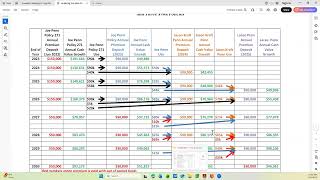
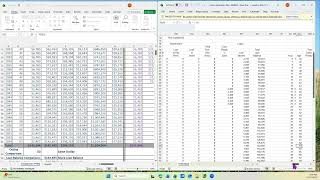
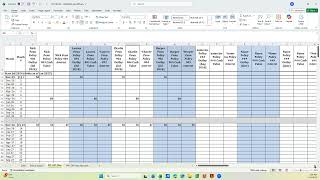
All right. And we can talk. All right, so what I'm going to do is I'm going to start at the top left and go through it and how it's, you know, what's on there. If you have questions as I go, stop me and I'll answer them. And then at the end we'll take care of what other questions we haven't addressed. Okay, so the top left, there's two columns, a month and a month number. That's what gives us our timeline of where we're at and where we're headed. We started it in March of 22, even though these policies are from 2017, so we don't go all the way back. And the debt sheet was as of May, so that's where we're counting from. On the March line, in the number column, you see a one in parentheses. That's year one of this spreadsheet. And then the other one is month one of the spreadsheet. And then it goes down. And we only cover 37 months or 4 years on this spreadsheet.
Okay.
And the reason we picked March is that was an anniversary of one of the policies. And that way we have a easier starting point, even though it's May right now. So you have two policies in existence. You got an AUL810 and you got an AUL580. And you're paying this outlier premium. You're paying both of them monthly at $800. Part of that is baked, part of that is paid up additions. And what we show is this. You had a conversation with Ray and I believe Michael on reducing your paid up additions at anniversary down to just $10 PUA and the base of the 320. So that's what this reflects in March of 23, going from 800 to 330. Is that what you remember or were thinking?
I guess. I mean, I'll be honest, like, I don't always understand all this. So, okay.
I mean, that's okay. So that's what. And the purpose of that was to free up some cash without changing your lifestyle. So you could add what we're showing a third policy with.
And what's the purpose of adding a third policy? Just to make it grow faster so.
You have more policies in your system so you have places to put more money in the future. And it also gives you more protection. But that's not the main. The main thing is to get you more Cash value growing with more vehicles because you're limited on these, they're eventually going to hit modified endowment contract status, which means you can't put in the pua. So you're going to be stuck with just putting in only about 600 into your system per month instead of a larger number. Okay. Does that make sense?
Kind of. Is that why they did the $10 so we don't hit that max?
The $10 keeps it where you have the option of still adding pua, as long as it doesn't become a modified endowment contract. And at some point you won't be able to put the 10 in either because it will become a modified endowment contract. Do you remember what that term even means? Are we calling mec? Okay. It changes your life insurance policy that's non taxable to a policy that has tax consequences. Such as if you took a loan against a policy and you had gain from a policy that's a mec, you end up having some taxes on that gain.
At what point does a policy become a mec?
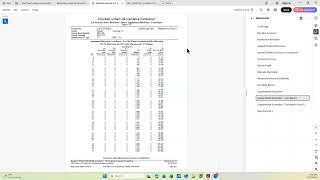
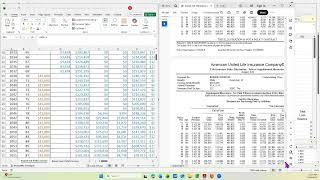
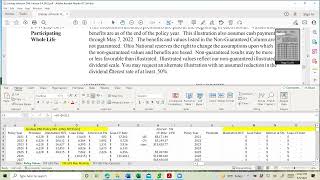
When your premium exceeds the test that the insurance company conducts on it to say if it's a mec, I can't tell you when it is. Like this Is this illustration on policy? Was that 810? That is what I'm looking for. That shows mec. No. And this allowed us. If I'm going down this column, I was able to keep it in through 20. After that, you notice it dropped by 120, so at that point we had to stop it. So it's a year by year look. And one of the things that AUL will do if you put too much in, they will send you a letter and then say, hey, Molly, you just converted your or you just changed your policy to a MEC policy. If you don't want to do that, here's the amount of money we can refund to you to keep it as a non mec. And that just happened to me personally on a policy that, you know, I thought I was fine putting in the full PUA, and it turned out I put in like $800 too much. So they refunded that and kept it as a non MEC policy.
Okay.
And now I know I can't put any extra PUA in that particular policy. I can just put base. So it's an insurance company does the test. You're protected in your contract that says prevent mec, so they're under an obligation to not let it mec, even if you put in too much premium.
Okay.
Okay. So this one we had it dropping in March. This one is a November anniversary. So we had it dropping this November from the 800 to the 330. And that freed up about 9, 960. And we just rounded it off to 1,000 for the premium for, for a new policy, just so you could see what that would look like.
Okay.
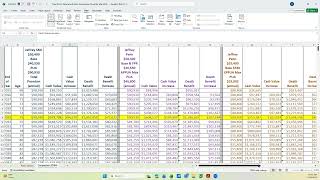
In these three policies, the second column for policy, that's the cash value or the money you have that borrow in May. We did it. So it's, this is an actual. Really you could borrow it at the day we did it. And the same with this policy. The future ones are projections based on those illustrations. So we always projected at 90% of what is on these illustrations from the company. We look at the total cash value, but we only take 90% instead of 100. And we do that to make sure that we don't over promise and show you having a lot more money than you really are going to have available. This is the first half of this year's money. After that's taken out, this is the second half. So that would be the rest of this year's policy money. And then if you notice, this is the first half of this year's policy money and the second half. And this is the third year, first half and second half. Because the way a monthly policy works, you get cash each time you're putting in premium. But the insurance company is not staffed to do monthly loans. So we show it every six months. If you needed money in between, you could get it. We just don't routinely show it as an every month type deal.
Gotcha.
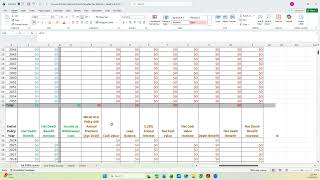
And this is the same way, that's the current. And this is the rest of this year's. This is the first half of the next year's money, the second half, the following year's money, first half, second half. So that's what these columns represent. And then on the new policy we did the same thing. The thousand dollars went in six months, this is the first half, the second half, then year twos. And you can see it each of these, they go up every time the length of time is longer. So like this now from three up to five. So what we do with these three, in this case only two, these numbers, we go over to the green column and that's the summation of what's available right now from just the two policies that you have in existence. And then I do a cumulative, if these numbers are the same, that means I didn't do anything with this money. We just left it in the policy until you had a use since this says it went from 43 to 20, I did something with the money and I put it in the note column from your debt sheet. You had a Chase Visa and a Club Wyndham, that you have enough cash to pay both of those off. And that's what this red zero signifies. But we have you paying that same cash flow that you were paying to them, we have them paying it to yourself and yourself is what we call the segregated account. I'm assuming you remember what the segregated account is or you have kind of.
But no, we never did it. Nobody ever helped me set one up.
Okay. It's a personal account at your commercial bank, normally the same bank you do your normal day to day checking.
Okay.
The purpose of it is so this money doesn't get commingled with your spending money. Otherwise if you normal it's in your spending account, it's going to get spent instead of saved for banking purposes.
Okay.
So that's an account that you set up and you control separate from.
So I see you say it really quick, you say 12:17, but I'm only seeing. Go back over to the right. I see 500 there. So I mean that's 817. Or we just add an extra 400 in.
Yeah, and I'll tell you about that. Yes. Because you have current policy loans of 31,000.
Yes.
And what we did is we said, okay, you're, I'm going to back up here, barclay. You're paying 600amonth on a zero percent.
Well, it's only zero percent till October though. I would like to have that one paid off sooner than all the rest because it goes up to like 25% come October 17th.
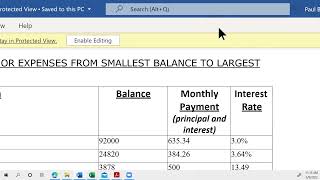
All right, well on your debt sheet we've maybe we misread it that I.
Put, maybe I put the wrong thing in there. Yes. Scroll on down there maybe.
Yeah, I gotta get where I can scroll. Okay, let's see. You, you put 25. October.
Oh, shoot. No, that's my wrong. It should have been 23 or 22, I mean, so that should. The typo.
So that's why I said, okay, we got time to play with this.
No, we don't. That's one we need to kind of.
Okay, well, if nothing else, I'd rather.
Pay it off before the chase one.
Well, you have enough money to pay it off now too, because that's only 3,000.
Do that.
So what I'll do is I'll revise this, but that, then that frees up $600 of cash flow because we're paying them 6. You would pay. And I'll change it. You would pay this 200 for to your segregated. And then there's 400 would go to your segregated, keeping the cash flow the same. But this is really a loan repay.
Right?
So that's why this says 12:17. It's the five, the three and the four. So okay, when I redo this, you'll see a red zero here. And it will change, you know it will. It won't. Yeah, I'll change this because now another 200 will be going here and it'll change some of the notes. But you read it the same way, even though the numbers are going to change and this number will go down by 3,000 because we'll use the cash that's available to get rid of the Barclays also.
Okay.
Let me see. So that's basically how to read this part. I didn't touch your mortgage, they didn't touch the van and I didn't touch the education. They can be down the road. But right now it didn't make sense to tie that money up.
No, I agree.
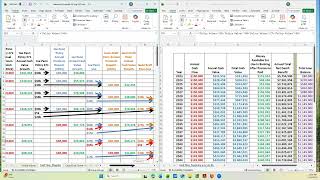
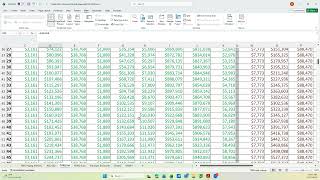
So what happens in the future? Let me get back here. When you have new money in September from this policy, you see the 2404, it appears here, but it also adds in the four months payments that you've made to your segregated. That's what the 4867 represents. So if you had 48 and 24, that's 68 and that's well 68. Why does that not work? 24 and oh, because that's 48, that's 72. Excuse me, not 6. So that's what this number includes the policy plus the segregated. And then that 7 would be added to this 20. That's where the 20 comes from.
Gotcha.
Then a few months later you have another policy that you're going to have more cash. So and this one. So there's a 23 and a 29 plus. I didn't put any of the segregated in at that time. I just did the two policy numbers together. And because you weren't using it for anything at that time, I just added it to the 27 to give us the 32. Does that make sense up to there?
Yes, that makes sense. The question I have is the segregated amount, when do I actually pay that to the policies?
Okay, you can set that up now where you can set this 400. And I would give you a different number because this is at 10% and the policy is only 5. So I would give you a smaller Number that you could set up as EFT payments back as a loan pay. And let me see, do you have both policies with loans or just one of them?
I think both have some.
Both loan. Yeah, that's 25. And the other one is. Let me get back to the other one has about a five. So I think initially, because it doesn't make any difference which policy, I would set it up just to the biggest loan, which is the policy in the beginning. This has, this one has the biggest loan balance and once it's paid back, they automatically stop it because you can't pay back a loan. That's right, yes. And then you could switch to 4, 400 or whatever I give you as the new number to this policy. And then those would be paid off by May of 27, assuming no new loans. Well, we are doing some new loans, right? We can, once we do that, these amounts, part of that would go to the policy. So I'll have to give you a new calculation of what the amount to the policy would be at their interest rate.
Okay.
And the reason we're doing that, I haven't gotten it yet. I'm trying to, at the end of this time frame, I'm trying to take that extra interest you charge yourself and putting it in as extra pua. Assuming the policy will take it without a mec. And that's why we give you the red number of what it is. But we ask you to call our office and have us check with AUL in this case, how much will they take at this anniversary without it becoming a mec? And they'll give us a number. If they say, okay, these two policies can hold 2,000 more each, well then you know you can put 2,000 into one of them. If they say the most you could put in without MEC is let's say 500 each, then you couldn't put all 2,000 into those. And this policy is too new. You'd have to wait to the anniversary to see if it can take extra.
Okay.
Let'S see. So all I kept doing was since I wasn't using the money, every time we had more money, I just kept adding it to your cumulative. So that's why this is going up and you get to the bottom, you're up to 92k the and you see this red number which is the amount of extra interest with these figures goes up not because you're paying more, but because there were more months. This only had 10 months worth of payments. This has 12 months worth of payments. And this one has 12 months worth of payments. Something I didn't talk about was interest. What we recommend is at anniversary, AUL will always tell you and Pen will do what the interest is on the outstanding loan balance. We calculate it. And we calculate it assuming you have 100% of the money borrowed out the entire 12 months, which is impossible to do because you can't borrow the dividend because it's not given to you to the end of the policy year. So this number should always be higher than the real interest. So if you're prepared to pay this out of pocket and you get the bill from them and it's less, you're, you're fine. You know what happens if you don't pay the interest at anniversary? Do you know what a well or Penn will do?
No.
Okay. They will just add it to your loan balance. And that's why they give you the money until they know the interest is covered, either as a loan or out of pocket. So if these numbers were correct and it was 2,500 in interest and you only had access to 24, you would have access to no new money for this policy because it would all get used up in interest.
Gotcha. Gotcha.
And so these numbers are high side, but they're there for your reference every anniversary. And that's why you don't see it here. It's only once a year. AUL is 4.76 in advance. So it's like a 5% interest. Penn Mutual is a 4% and it's at the end of the year. So we calculated these at 5 just to be on the high side, but their actual interest is only 4% right now. Okay, so these other debts, I show what their balances will be from your planned payments at that interest rate. So at the end of this sheet, those three debts are down to this balance.
Right.
And let's see, the notes here stayed the same. We, we always added them. This is Barclay paid off with no IBC dollars. That note will disappear because now we're paying it off front. Right, this note, because chase this 500, it would stop to them in January 23rd, that cash flow of 500. So I stopped it to yourself also in January 23rd. That's why it went from 12 to 7, because that $500 wouldn't be required anymore. You can always continue to pay yourself longer. It's, it's, there's no tax consequences. It just means you have more money set aside to use for premium than what we're showing here. Okay, so that pretty much explains how to read this questions that I haven't talked about.
Well, I'm still going back to the segregated account. I'm still extremely confused on it. Okay. I get where the money comes from. Okay, I don't understand. I understand. Like you said, I can set up to pay 400amonth. Okay. And that would come out of it. What do I do with the extra 817? Does it just sit there? Does it grow? I mean, what am I doing with it?
Okay. To my advantage, when I give you the number, it's going to be higher than the 400 because this includes these payments too. Okay.
Right.
What would be left at the end would be about the 2000, which is the extra interest. So it didn't grow at all in here. Unless that segregated account at the bank is giving you something. But most of them don't give you squat.
Exactly.
So it's sitting there. And then at the end of an anniversary, you're trying to put it in as extra pua to get it to grow. You can I show it every year? You can do it more frequently because your policy anniversaries are different. So this anniversary, the next time you have an anniversary is November. In November, you could ask Aul, hey, how much can I put into this policy? And when we ask them, it makes sense to ask for both policies. And if they say you can put in a number that's higher than what you have left in your segregated, then all of it can go in as premium and start growing sooner. Okay, So I don't show this going back into the policy, because I want to show you just the new dollars available, not the old dollars recycled. Because, okay, if you pay a loan back, two things happen. One, the dollar is immediately available to reborrow. Doesn't grow. It's just a loan repay. What it also does, though, is reduces your loan balance. So your interest charge at the end of the year will be lower than if you had it out as a loan.
Right.
The other thing Aul does, since you've paid the interest in advance at anniversary, if you make any loan repayments, they credit whatever interest you've already paid for that loan from that day to the end of the policy year. So you'll, you'll see a statement from them. Oh, you, you paid, I'm going to say 400, but you also got $3.22 interest credit. So it was like paying back 43 or $403 or whatever the numbers are for them.
Okay.
So you don't have to worry about calculating that the insurance company, you know, calculates it and they always credit you the interest back to your account for any loan paid before the end of the policy year.
Okay.
Does that answer your question on desegregated?
For the most part. I'm sure when the time comes, I'll have more questions.
Okay. What I will do here is I will give give you a below what the the amount would be to the insurance company and what the amount would be to your segregated so I'll put segregated account 500 insurance company whatever. 5% comes out. Let's say it's 480 that tells you of this 500. 480 would go back.