Paul Bohlen walks through a spreadsheet that compares two ways to use extra cash on a life insurance policy: paying for Paid-Up Additions until hitting a MEC limit, then switching to loan repayment, versus skipping PUA and repaying the loan from the start. Over 30 years, the loan-first approach builds more cash value (415 vs 396) while the PUA route delivers a higher death benefit (131k more).
Chapters
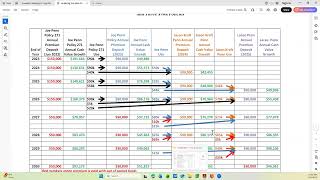
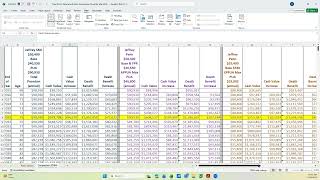
This is an example that can also be used as a template for a comparison of the same policy. The client asked the question is he better off paying PUA or repaying the loan? So this particular spreadsheet was built to try to address that question. The left hand side, it was where we were paying the PUA as far as we as long as we could until it would become a mec. And then we stopped the PUA and then kept the same cash flow but then it was going for loan repay from then on.
On the right hand side is no PUA and just pass paying the same outlay but for loan repay. And then once the loan was paid off, the payment went just to base. And that's the same way with the.
Left hand side. We stopped the extra payment at the same time we did on the right so we could keep the cash flow identical between the left and the right. And we did a 30 year period. And then at the bottom we did the math comparison. The outlay between the left and the right was same.
The loan balance, there is a loan balance on the left hand side and there's none on the right hand side. So there's that much more loan balance. On this case the cash value on the left was 396 and on the right is 415. So there is about 19k less cash. However, that's, that's with the net loan or the net cash value, not the gross cash value where the right hand side is a net cash but it's also the gross cash. You can't put anything more in. The death benefit on the left is about 131k more than on the right. So then the client can look at this and we'll discuss it with them and they can make the decision what do they think is best for them in their situation.
And you can compare it as you go down the years. You don't have to wait all the way to 30 years from now. So this is just one.
Type spreadsheet that we're asked to build. And you know, each one of them looks a little different depending on what we're comparing. But it's generally two different policies. Sometimes we'll have three options and then there's three comparisons. There'll be a left, a middle and a right.
So I'm going to now show you the how we built this for the template. So I'm going to get out of that.
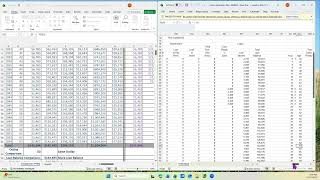
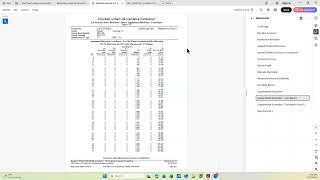
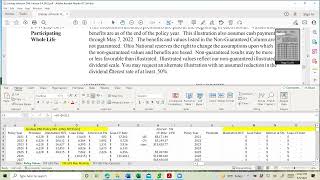
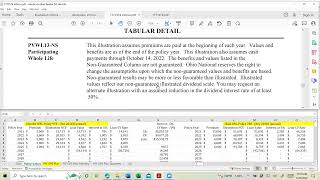
And now this is the left hand side is the Excel spreadsheet. The right hand side is the illustration for this particular Policy and it's a pen policy, so we were able to run it with Excel.
So left hand side, I'm going to compare the left to the illustration on this side. So here's my outlay. And the outlay in this case is both premium.
Base NPUA and loan repay. And I can see from the right hand spreadsheet of the illustration, my outlay doesn't agree on the first year because the illustration that's in force won't show you the first the payments that have already happened. So there's been $1,200 paid already. And then this is what's left, this policy year, because they were paying it monthly. So out of pocket is the same as what's here. So that's the 72, the 67 that goes down. Then it stops being 67 and it's 63 and then it's base only. And you can see this included PUA. And all of a sudden the PUA stopped right here at age 43. That was the last time it was paid. And that's because the policy would mec if we went any further. And to keep the cash flow the same, we went over here and once we weren't paying pua, we took the same amount of money that we were putting in for PUA and we, we did loan repay and we kept this identical with what we did in the, in the right side. So our outlays were the same. The loan balance came off of here and it goes down to age 63. So just to show you, we get to age 63. Go across.
Not too far.
63 is.
This line right here.
Which is line 50. Go across.
And that says the loan balance is 142, 655.
Let's check here.
Loan balance 142, 655. So that's where I've got my outlay and my loan balance. And then once those are set, I can go back to the regular part of the illustration again. This is going to be the.
The alternate dividend scale. So get to the right part.
Here it is with the alternate dividend scale. I'm looking.
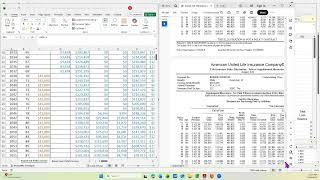
Guess I didn't go far enough. I want to get over to where I have my values. Here we go. Here's my alternate dividend scale. My loan balances are the same. Net cash value is what I'm looking for.
So that's here. I didn't do gross on this particular. I just compared net to net. So there's the 12, 150 and you get down to age 63 and it's 396. So we'll do the same here. Go down to age 63 and it's 396. And then the death benefit 1104 across.
1104. And there's your death benefit. So that's the left hand side. I'm going to get rid of this illustration.
And.
Put the other one up.
I'm going to go across to the outlay. There's my outlay column.
So I still have the same numbers going down. Only in this case.
All that was loan repay in the beginning and then eventually there was no more loans. What was paid off in that year. And so that's the same thing we did up here. We stopped the loan and from then on the net cash value and the net death benefit is the same as the gross since there's no loan value, loan balance. So go to the.
Alternate scale.
Okay. And here's our cash value.
121 50. The net death benefit 773. Go down to age 63.
And that's 950. And we have 415. Get over here. 415, 190. And then the death benefit 272. 972696.
So.
That is a, a comparison between.
PUA as long as we could and then loan repay versus loan repay. And then the client can decide which way they want to go and where they're looking near term or far term.
And this is also set up where you could put a third policy here or a third option and do that comparison. This particular case there was not a request for a third option to look at. So that completes this template and example of a comparison spreadsheet.